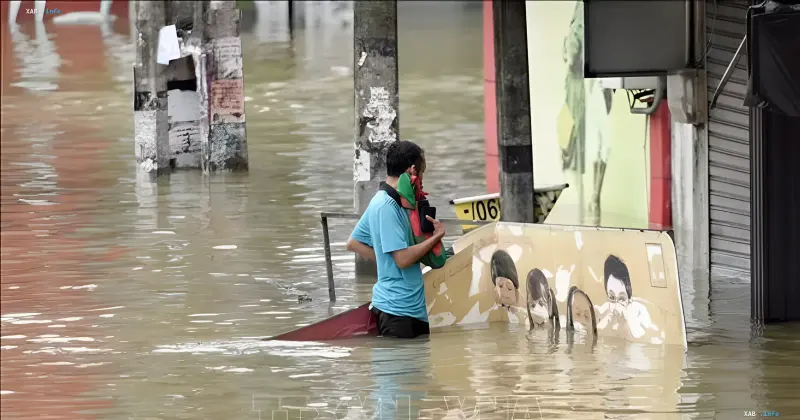
On October 16, during a visit to India, International Organization for Migration (IOM) Director General Amy Pope stated in an interview that climate change directly threatens the livelihoods of South Asia's population and forces millions of people to relocate. According to her, proactive government responses and the deployment of technologies will be decisive factors in mitigating these impacts. The statement came against the background of ongoing consequences from massive floods that hit the region in August 2026.
IOM Forecast: Up to 40.5 Million Displaced by 2050
According to IOM projections, under a worst-case scenario, up to 40.5 million people in South Asia could be forced to leave their homes by 2050 due to sea level rise, floods, and droughts capable of submerging agricultural land. The organization emphasizes that when people lose the ability to produce food and raise livestock, migration becomes their primary adaptation strategy. In India, Ms. Pope noted, extreme heat is further accelerating urbanization as the population massively moves to cities to escape harsh weather conditions.
August Floods as a Trigger
A direct illustration of these risks was the events of August 26, 2026, when mountain and glacier collapses in Nepal caused devastating flash floods affecting the northern areas of the region. According to international media, the death toll from the catastrophic floods in South Asia exceeded two thousand people, with more than 20 million left homeless; a significant part of Bangladesh was submerged, northern states of India were flooded, and casualties were also reported in China and Vietnam. Hundreds of foreign tourists were reportedly missing in the flood zone. Acute shortages of food and drinking water, as well as disease outbreaks in cities like Dhaka, have made the humanitarian situation extremely tense.
Funding Shortfall and Reliance on Technology
The IOM Director General pointed out that despite escalating destructive natural disasters, the world still lacks promptness in protecting vulnerable groups, and contingency funding remains severely limited. In South Asia, high population density and limited resources further exacerbate the risks. Ms. Pope noted that the costs of overcoming the humanitarian disaster amount to billions of dollars, while investments in resilience-building measures are significantly lower. To reverse this disparity, she stated, governments must utilize artificial intelligence and big data: by combining weather forecasts with information on local livelihoods, technologies make it possible to accurately identify populations most at risk of displacement and intervene early—by improving agricultural methods, retraining people for new professions, or relocating them at an early stage.
Migration as a Tool for Development
Despite the scale of challenges, the IOM chief expressed optimism regarding South Asia, particularly regarding technological investments and early warning systems in several countries, including India. At the same time, she emphasized that the issue requires coordinated action by the international community. Ms. Pope also pointed out that migration can be transformed into a development tool: provided that legal and safe employment pathways are created, it allows generating income while addressing global labor shortages, all while protecting the workers themselves.