Immediately after the launch of the flagship iPhone 18 Pro line, users around the world began reporting critical malfunctions in their devices. On the X and Reddit platforms, videos and screenshots are being posted en masse, demonstrating two main types of failures: a complete loss of display sensitivity and emergency reboots when activating the Face ID scanner. As of September 22, 2026, dozens of owners of the iPhone 18 Pro and iPhone 18 Pro Max models have confirmed the presence of both bugs, turning the discussion into one of the most talked-about tech threads of the week.
First mass failure: complete touchscreen shutdown
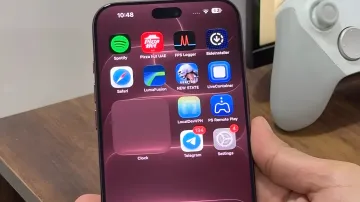
The first and, perhaps, most demonstrative problem concerns the total unresponsiveness of the display. Users report that the iPhone 18 Pro screen suddenly stops reacting to any gestures, swipes, or taps — the device turns into a "brick" with a working but useless display. According to owners, the failure most often occurs at the moment of opening the Notification Center or Control Center. In such a state, the standard shutdown via the slider becomes impossible, and the only way to bring the smartphone back to life is a forced reboot using a combination of physical buttons. Video recordings circulating on social networks clearly show a finger sliding across the glass without triggering any interface response.
Face ID becomes a trigger for emergency reboots
The second critical bug is related to the biometric authentication subsystem. When attempting to unlock the device or make a purchase via Apple Wallet, the smartphone tries to recognize the owner's face. If Face ID does not work within the allotted time, the iPhone 18 Pro completely freezes and initiates an emergency reboot. The system log, which users export and publish in specialized communities, records an entry about a critical operating system kernel error. The error reproduces on both the iPhone 18 Pro and the iPhone 18 Pro Max, indicating a systemic nature of the defect rather than isolated cases.
Hardware or software: the debate over root causes
Among experts and in user discussions, the debate over what exactly triggered the failures does not subside. One group of analysts points to a change in the hardware architecture: in the iPhone 18 Pro generation, the Face ID sensor was, according to their data, reduced in size and moved under the display layer. This decision was probably made for a more compact front-panel design; however, according to critics, it led to a degradation in the stability of the subsystem's operation. Another version links the problems to the software — specifically, to the iOS 27 update, which is preinstalled on the devices from the factory or was released simultaneously with the start of sales.
Contradictory data
It is important to note a discrepancy in assessments here. The main body of user reports and a number of specialized publications (including RBC-Ukraine, UNIAN, and "Moskovsky Komsomolets") emphasize that the failures are of a hardware nature and manifest regardless of the firmware version. Experts citing the relocation of the Face ID sensor under the screen believe that the problem is inherent at the hardware level. At the same time, the publication Zamin.uz directly links the identified malfunctions to the operation of iOS 27, pointing to the software nature of the defects. As of the time of publication, Apple has not released an official technical report that would unambiguously name the root cause. Thus, the question of "hardware or software" remains open, and users continue to gather data for statistics.
Response from Apple service centers
Despite the absence of a public press release, some buyers who contacted authorized Apple service centers have already received approval for device replacement or a full refund. In internal documents cited by owners, the cases are classified as a factory defect. This indirectly confirms that the company acknowledges the presence of a systemic defect in the first batch of iPhone 18 Pro, although it does not disclose the scale of the problem. It is expected that in the coming days Apple will release either a firmware update with a fix or announce an extended warranty for the affected serial numbers.