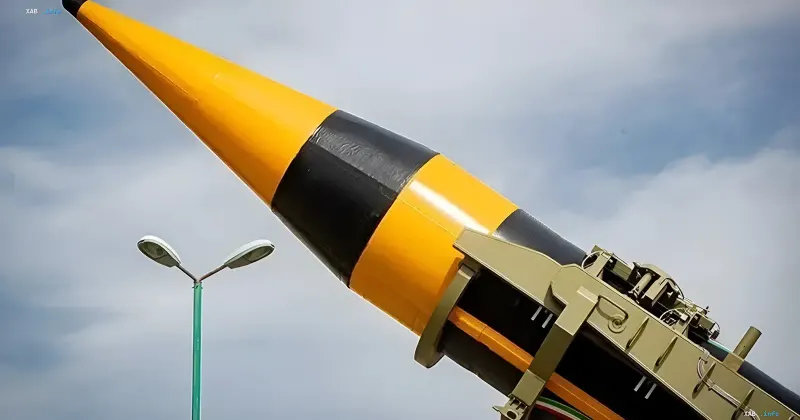
On August 19, American media, citing a NATO representative, reported that the alliance is ready to 'stand up to any threat' amid reports that Iran is considering striking American military facilities in Europe. According to the Financial Times, Tehran may expand the geography of its retaliatory measures beyond the Middle East if US President Donald Trump escalates the conflict. The statement came against the backdrop of ongoing negotiations over the Strait of Hormuz and a recent series of mutual strikes between Washington and Tehran.
NATO's Hard Warning
The alliance's representative emphasized that 'the threat and defensive posture are very reliable and effective,' referring to incidents 'earlier this year' when NATO air defense systems, according to him, intercepted ballistic missiles from Iran heading toward Turkey in four separate instances. This statement effectively positions the alliance as a party ready for direct military confrontation with Iran on the European axis, not just in the Middle Eastern region.
Expansion of the Threat's Geography
The Financial Times notes that potential targets of Iranian strikes could be American military facilities in Bulgaria or Cyprus. Both countries host bases that allow the use of American troops and equipment. According to the publication's assessment, such a step would significantly expand the scale of Iranian retaliatory measures, as Tehran had previously focused mainly on the Middle East. During the tense phase of the conflict in July, Iran intensified attacks on US allies in the region, striking Kuwait, Bahrain, and Jordan, where numerous American bases are located. The series of retaliatory measures prompted several countries to impose travel restrictions and issue warnings.
Timeline of Escalation
According to the provided data, the US and Israel launched an offensive against Iran on February 28. In June, Washington and Tehran signed a memorandum on an immediate ceasefire on all fronts, including Lebanon. However, early in the morning on July 8, the US resumed large-scale airstrikes on Iran, accusing Tehran of violating agreements concerning the Strait of Hormuz. Iran responded with a series of attacks on American military bases in the Middle East. On August 2, President Trump announced that he had agreed to cancel a large-scale attack on Iran in order to reach an agreement, stating that Tehran and other regional countries had asked the US not to continue the strikes, as the parties had agreed on the main points of a future deal.
Contradictory Data
There is a direct discrepancy in the accounts of the March incident. The NATO representative claims that the alliance's air defense systems intercepted four ballistic missiles, presumably of Iranian origin, on their way to Turkey. At the same time, Iran categorically denied launching these missiles. Thus, the fact of Iranian involvement in the March launches remains disputed: one side records the interception, the other denies the launch itself. Similarly, Iran's intention to strike targets in Europe is based on a Financial Times publication and has not been publicly confirmed by Tehran itself, making this part of the information dependent on sources rather than on official statements by Iranian authorities.
The Strait of Hormuz as the Key to the Deal
To date, shipping through the Strait of Hormuz remains the central issue of the negotiations. It is a vital route for the global transport of oil. Iran claims to be close to reaching a final agreement with Oman on defining new maritime routes between the two countries through the strait. Tehran also confirmed that the US must meet the conditions, including payment of compensation, lifting of sanctions and military threats, before the Strait of Hormuz is reopened. It is this economic lever, rather than military pressure, that may determine whether Iran moves from rhetoric about European targets to actual strikes.