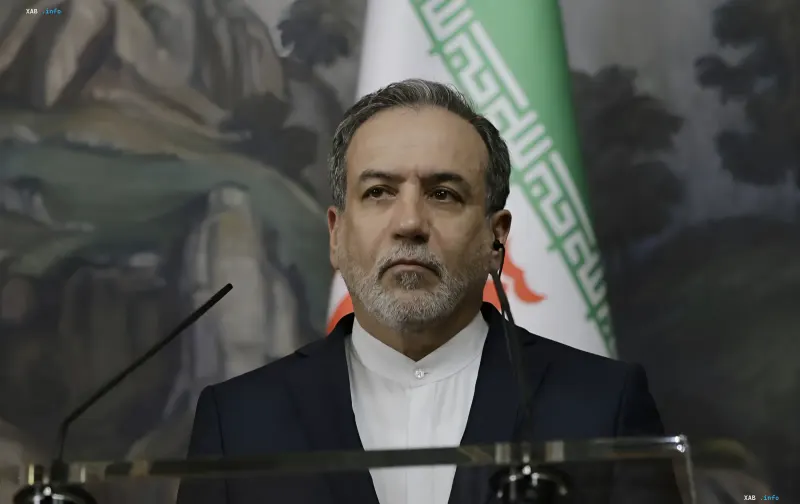
Iranian Foreign Minister Abbas Araghchi delivered a harsh message to Washington on November 9, 2026, publishing a post on the social network X that effectively issued a two-day ultimatum to the United States. According to him, Tehran is ready to fulfill its obligations—including opening the Strait of Hormuz—within 48 hours after the American side accepts Iranian terms. "Our proposal, which will remain in force for two days, stands: meet the demands, including ending the war on all fronts, and you will see results. Or choose war and watch our vigilant and battle-hardened warriors unleash hell upon you," Araghchi wrote. He also stressed that in the recent congressional midterms, Americans "made their choice," and now "it is time for the White House to make its own."
Two weeks of deadline compression: From seven days to two
As Israelinfo clarifies, citing Araghchi's interview with a Qatari TV channel, the two-day period is not arbitrary. Initially, Tehran proposed a seven-day implementation plan, but Qatari mediators insisted on shortening this period to five days, and ultimately the parties settled on two days. Thus, the ultimatum was the result of diplomatic bargaining in which Doha acted as a guarantor of the tight timeline. Araghchi confirmed that Iran agrees to open the Strait of Hormuz exactly two days after Washington accepts Iranian terms.
Washington's response: Three scenarios and the threat of resuming strikes
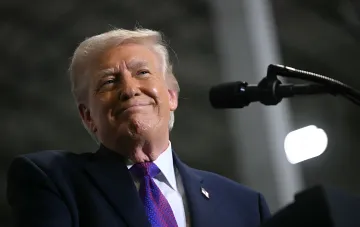
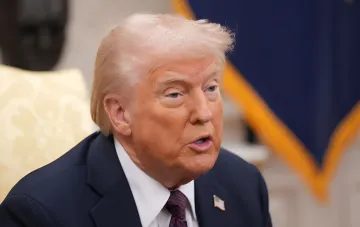
The day before, on November 8, US President Donald Trump stated that American armed forces would resume strikes against Iran if no progress was made in negotiations on the nuclear deal and the opening of the Strait of Hormuz. According to him, everything depends on whether Tehran agrees to sign an agreement. According to Axios, the Trump administration is considering three courses of action regarding Iran: first, resuming military strikes; second, continuing the economic strangulation of the Iranian regime; third, concluding a deal with significant concessions in Tehran's favor. Thus, Araghchi's two-day ultimatum coincided with a moment when the White House has not yet determined its final course.
Military threats and refusal of direct talks
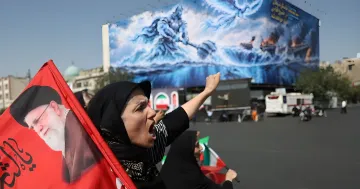
Alongside the diplomatic ultimatum, Iran has intensified its military rhetoric. Chief of the General Staff of the Iranian Armed Forces Ali Abdollahi threatened the US and Israel with a response "without geographical limits," which effectively means readiness to strike targets on the territory of both countries and, potentially, beyond. At the same time, Araghchi stated that Tehran has already discussed a letter from US Vice President JD Vance, calling the American attempt to return to dialogue "a positive step." However, he immediately made a caveat: "If Washington intends to sow discord, this will be another mistake to add to the previous ones." No direct negotiations are currently scheduled: "Right now we do not see the need to meet with them, our conditions are clear. Whether the negotiations are direct or indirect, we will decide after Washington agrees to our conditions," the Iranian Foreign Minister emphasized.
Economic pressure and Tehran's "dignity"
In his interview with the Qatari TV channel, Araghchi acknowledged that Iran does not deny the fact of economic pressure exerted on the republic, but stated that Tehran "will not surrender and will not give up its dignity." This statement underscores that, despite readiness for compromise regarding the opening of the Strait of Hormuz, the Iranian side does not intend to make public concessions that could be interpreted as surrender to external pressure. Thus, the two-day ultimatum represents Tehran's attempt to simultaneously save face before its domestic audience and create a strict timeframe for Washington, which, according to the Iranian side, must "make its choice" within the next 48 hours.