
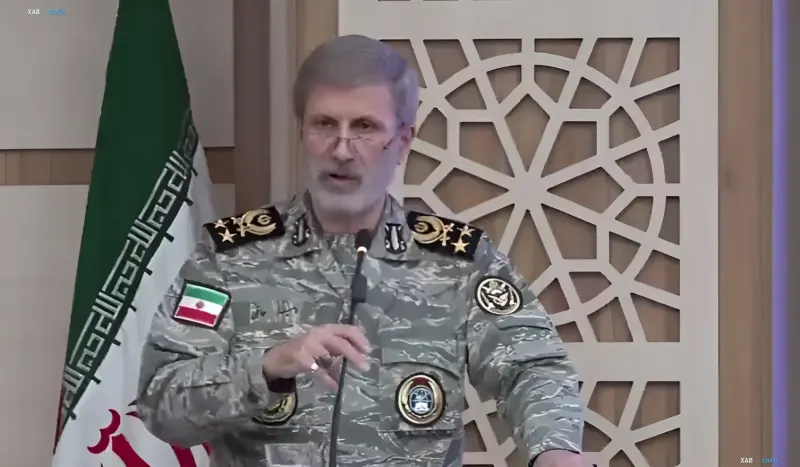
On August 16, 2026, the international community witnessed an unprecedented diplomatic crisis sparked by the rhetoric of the US administration. Amir Hatami, Commander of the General Staff of the Iranian Army, issued a stern statement in response to remarks by President Donald Trump, who had previously announced his intention to annex the Strait of Hormuz to the territory of the United States. The Iranian General Staff rejected any attempts to redraw maritime borders by force, warning of an inevitable military response.
Diplomatic incident: from "steel wall" to "joke"
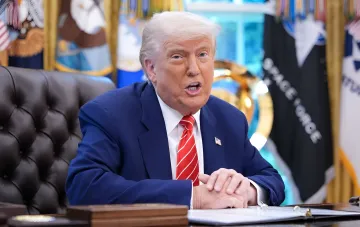
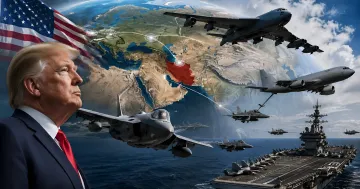
The conflict erupted following Donald Trump's speech at the Nassau County Police Academy (New York) on August 14. The US President stated that after defeating Iran, Washington intends to declare the Strait of Hormuz its territory, and the US Navy is already holding a "steel wall" blockade there. However, facing a sharp reaction from NATO allies and international law experts, the White House attempted to disavow the statement, calling it a "political joke" and "hyperbole".
In Tehran, this maneuver did not work. In his address, General Hatami emphasized: "The criminal US President says he wants to declare the strait part of criminal territory. Of course, after they realized what a huge mistake they made, they said they were joking. Even joking about this is a huge mistake. This is Iran, and it has defenders who will break your leg." Kazem Garibabadi, Deputy Foreign Minister of Iran, added that the strait cannot be captured by a tweet or a campaign speech.
Military deadlock: reality versus rhetoric
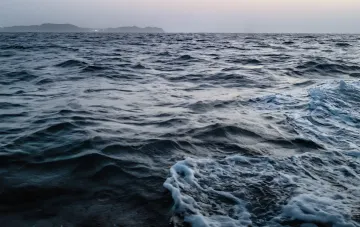
Claims of "full control" over the strait contradict the actual situation on the front. The war between the US and Iran has already lasted about six months, and the US Navy has failed to unblock shipping. Despite massive strikes by B-2 strategic bombers, Iran effectively uses coastal missile systems and anti-ship mines, keeping key nodes of the strait under its control. The operation to establish a "steel wall" has effectively reached a deadlock, and attempts to break through by the US fleet are accompanied by heavy losses.
Economic consequences: energy crisis and election arithmetic
The blockade of the Strait of Hormuz has led to a global economic shock. About 20% of the world's oil and liquefied gas volumes stopped passing through this choke point. Global fuel reserves are rapidly depleting, causing a sharp spike in energy prices. In the US itself, gasoline prices have reached historic highs, dealing a direct blow to Donald Trump's ratings ahead of the November midterm congressional elections.
"Tariff collection" strategy: commercial interest behind the threats
Analysts believe that behind the loud threats lies a specific commercial plan. As early as July 2026, Trump proposed making the US the "official guardian" of Hormuz and levying a 20% tariff on all passing commercial tankers. The statement declaring the strait "US territory" is viewed by experts as an attempt to legally justify future armed racketeering at the planet's main oil crossroads. Iran links the possible opening of the corridor exclusively to the payment of multi-billion dollar compensation for damage from bombings and the complete lifting of sanctions.
Contradictory data
There is a discrepancy in assessments of the degree of control over the strait. The US administration, in official statements, claims the actual establishment of a blockade and a "steel wall," implying dominance over the waters. At the same time, data from the Iranian side and independent military observers indicate that shipping is completely paralyzed by the actions of the Iranian Navy, and American ships cannot safely transit. Iran claims a total ban on passage for the US, while Washington insists on the right of freedom of navigation, which, in their view, is already restricted.