Against the backdrop of the ongoing conflict in the Middle East, Iran has, according to US press reports, restored part of its missile capabilities. The Wall Street Journal, citing sources in Washington and the Middle East, reports that Tehran has resumed the production of ballistic missiles at underground facilities following large-scale US and Israeli strikes on the country's industrial infrastructure. The corresponding information was also carried by Ukrainian media outlets, in particular RBC-Ukraine.
Resumption of production in underground facilities
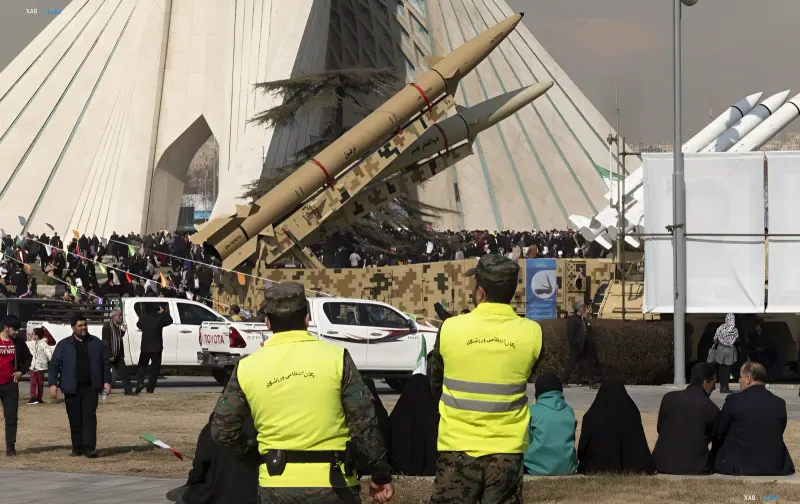
The intelligence data cited by the publication points to the resumption of munitions production at the Khodjir underground complex in southeastern Iran. According to sources, it was precisely these protected facilities that allowed Tehran to preserve and restore part of its production lines, despite the strikes on above-ground infrastructure. The photo shows a demonstration of ballistic missile systems in Tehran, reflecting Iran's public rhetoric about maintaining its missile dossier.
Two types of munitions and production volumes
According to WSJ sources, Iran is currently actively producing two main types of missiles: liquid-fueled ones, which are fueled immediately before launch, and solid-fueled munitions, which are ready for use. A US official stated that Tehran is capable of manufacturing at least several hundred ballistic missiles from existing components. At the same time, according to sources, current production volumes remain below pre-war levels.
Blockade and supply restrictions
Some Iranian enterprises were disabled as a result of US and Israeli strikes. In addition, the naval blockade has complicated the supply of components and raw materials needed for the production of solid rocket fuel, further hindering the restoration of the full production cycle.
Link to negotiations and Washington's position
A US official suggested that Iran may have moved to limited production following a preliminary agreement with US President Donald Trump regarding the opening of the Strait of Hormuz and negotiations on ending the war. Previously, Trump stated that the conflict in the Middle East could end immediately after the US midterm elections, and expressed confidence that after the end of the war, gasoline prices would drop sharply.
Contradictory data
There is a discrepancy in versions here. On the one hand, US authorities had previously characterized Iranian missile production as effectively destroyed as a result of the strikes. On the other hand, new intelligence data from WSJ speaks of a resumption of production, albeit in smaller volumes. Moreover, the claim of a "preliminary agreement" with Trump is the speculation of a single US official and has not been confirmed by Tehran or by official documents. The exact production figures also vary: from an estimate of "several hundred" potential missiles to a general characterization of "below pre-war levels."
Regional context: oil and the Houthis
Against the backdrop of these events, oil prices continue to rise rapidly. At the same time, the Yemeni Houthis under Iranian influence have, according to reports, reached the strategic island of Perim in the Bab el-Mandeb Strait, which is of key importance for global oil trade. This increases pressure on logistics and energy markets.