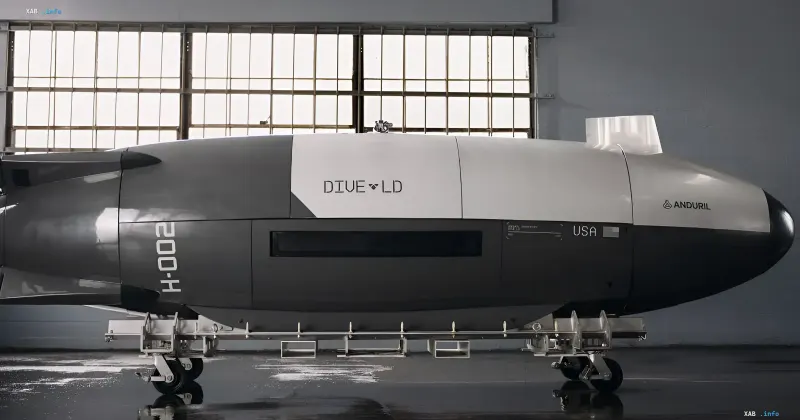
Iran's Islamic Revolutionary Guard Corps (IRGC) has announced its intention to reverse-engineer an advanced American unmanned underwater vehicle captured in the strategically vital Strait of Hormuz. IRGC spokesman Brigadier General Hossein Mohebbi confirmed that the Iranian military has obtained an autonomous underwater vehicle (UUV) model Dive-LD developed by Anduril, equipped with cutting-edge intelligence gathering and seabed monitoring technologies.
Background and Strategic Context of the Incident
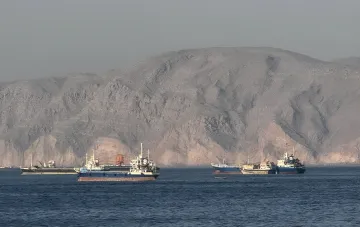
The capture of advanced US underwater equipment took place on September 8 against the backdrop of rising tensions in the Strait of Hormuz region, which had previously been accompanied by harsh political statements from US leadership and Tehran's response. Iran openly states that the acquired technologies can not only be studied by local engineers to upgrade its own submarine fleet, but potentially transferred or sold to third countries.
Technological Potential and Re-engineering Capabilities
The Dive-LD vehicle is a reusable autonomous platform capable of performing tasks at significant depths for extended periods without a crew. Experts note that if the hull and mechanical components of the device are undamaged, Iranian specialists are fully capable of reproducing them. Of particular interest to the Iranian side are underwater navigation systems, propulsion units, and hydrodynamic architecture, since working underwater precludes standard GPS usage.
Contradictory Data
Despite confident statements from IRGC representatives regarding large-scale copying of the trophy equipment, specialized international experts express deep skepticism regarding the complete reproduction of the entire system. In particular, analyst Bryan Clark from the Hudson Institute emphasizes that mechanical copying is entirely feasible, but modern software protection measures, complex control algorithms, specialized sensors, and data encryption could become an insurmountable barrier to full reverse engineering by the Iranian military-industrial complex.
Implications and Conclusions for Regional Security
A similar precedent occurred in 2011 when Iran intercepted an American RQ-170 Sentinel stealth drone, which subsequently allowed Tehran to accelerate the development of its own unmanned aerial program. In the case of the Dive-LD underwater drone, successful study of even some components will allow Iran to reduce its technological lag in marine unmanned systems, posing new risks to navigation safety and military operations in key Middle Eastern oil choke points.