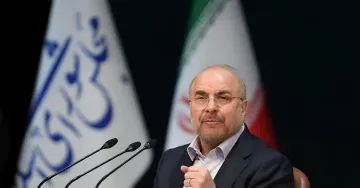
On August 19, the Chief of the General Staff of the Iranian Armed Forces, Ali Abdollahi, issued a sharp warning to the states of the Persian Gulf. According to the Mehr News Agency, he stated that any support or assistance to US military forces by countries in the region would be considered by Tehran as direct participation in Washington's military operations. Abdollahi emphasized that Iran is "closely monitoring the situation" at US military bases located on the territory of several Gulf states, and added that the mass basing of military aviation, including refueling aircraft, at these facilities is unlikely without the knowledge of the host countries.
Trade Break with the UAE as a Trigger for Escalation
The statement came just hours after the United Arab Emirates announced the suspension of all trade, business, and financial operations with Iran until further notice. According to Abu Dhabi, the decision was made against the backdrop of accusations against Tehran for launching two ballistic missiles aimed at maritime targets in the Persian Gulf. Iran categorically denied these accusations. Iranian Foreign Ministry spokesperson Esmaeil Baghaei, on August 19, called the UAE's claims contrary to the principle of good neighborliness and undermining efforts to strengthen trust and prevent the escalation of instability in the region, urging neighboring countries to refrain from "unfounded" accusations against Tehran.
Contradictory Data
The key discrepancy between the parties concerns the ballistic missile incident. The UAE claims that Iran launched two missiles at maritime targets in the Persian Gulf, and that this, according to them, was the basis for freezing trade and financial operations. Tehran, in turn, completely denies the fact of the launch, calling the accusations unfounded and politically motivated. Thus, a publicly recorded opposite interpretation of the same event has been fixed: one side declares the existence of a missile incident, the other — its complete absence. There is no independent confirmation or refutation of the missile launch in the provided sources, which makes this episode disputed.
The Strait of Hormuz and the Diplomatic Dead End
Against the backdrop of mutual accusations, regional tension is concentrated in the Strait of Hormuz — a strategically vital shipping route through which a significant share of global oil and gas trade passes. According to available data, attacks on merchant vessels continue, and the diplomatic efforts of the US and Iran to restore safe navigation along this vital waterway have so far yielded no results. It is precisely this situation that forms the backdrop against which Tehran addresses its warning to its neighbors: Iran is in effect demanding that Gulf states not allow their territory and infrastructure to be used in the interests of the US military machine.
Economic Ties and Long-Term Consequences
The UAE and Iran have historically been linked by close economic and trade relations: despite US sanctions against Tehran, Abu Dhabi long remained one of Iran's important trade partners. However, after the start of the conflict, relations between the two countries have noticeably deteriorated, and the current suspension of operations has become another stage in this distancing. For regional markets and supply chains, this means an additional factor of uncertainty: against the backdrop of risks in the Strait of Hormuz and the threat of conflict expansion, even at the diplomatic level, Gulf states find themselves in a difficult position, forced to balance between economic interests with Tehran and military-political commitments to Washington.