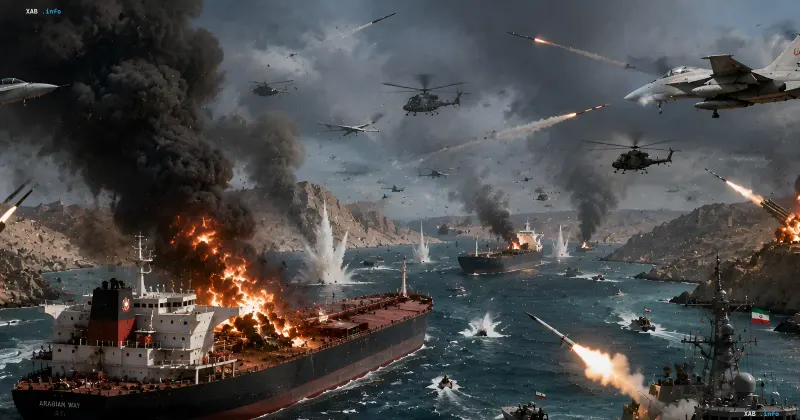
Iran has issued a warning to the states that, in Tehran's assessment, are supporting the naval blockade declared by the United States. As reported in an episode of the international news podcast VietnamPlus, the Iranian side directly linked these countries' participation in the blockade mechanisms to "consequences," without specifying a concrete list of measures. The statement came against the backdrop of an ongoing crisis around Iranian ports and shipping routes, where, according to conflict participants, incidents involving attacks on civilian and commercial vessels are being recorded.
Context: the blockade declared by the American side
According to RFI materials, the US military had earlier officially announced the start of a naval blockade of Iranian ports. This step became a key event in the escalation and defined the framework within which Tehran now operates: blocking access to the ports is viewed by Iran as an act of economic and military aggression aimed at paralyzing its foreign trade. It is precisely against this logic that the current warning to the countries allegedly providing logistical or political support to the blockade is constructed.
The negotiation track and Washington's rhetoric
In parallel with the military pressure, a tense but still existing diplomatic framework is maintained. According to the newsru.co.il outlet, Donald Trump publicly stated that "Iran has been dragging out the negotiations for too long," indicating that in Washington the blockade is seen as a tool of pressure at the negotiating table rather than an end in itself. Accordingly, Tehran's warning to US ally states can be interpreted as an attempt to broaden the circle of parties held responsible and to show that the costs of supporting the blockade will fall not only on Iran and the US but also on third countries.
Contradictory data
The body of sources contains a notable inconsistency in assessing the nature of Iran–US relations. On the one hand, VietnamPlus and RFI describe an active phase of the naval blockade and direct threats from Tehran, i.e. an escalation scenario. On the other hand, TASS, citing N12, reported that Iran would gain "unprecedented benefit" from a memorandum with the US, implying the existence of agreements and a de-escalation track. These two pictures are hard to reconcile without additional confirmation: either the memorandum was signed before the blockade was declared and is now effectively not being implemented, or the news items reflect different temporal phases of the conflict. Until official clarifications are received, both versions should be treated as competing.
Parallel international context
Against the backdrop of the Iranian crisis, the same VietnamPlus episode highlighted another significant international story: the European Union approved the allocation of aid to Ukraine amounting to more than 6 billion euros. This decision demonstrates that European support for Kyiv continues regardless of the Middle East escalation and forms a separate vector of financial and political pressure on the EU budget. The combination of these two stories — the Iranian blockade and the Ukrainian aid — sets the main tone of the international agenda for the current period.
Thus, Iran's warning to the countries supporting the American naval blockade is not an isolated statement but an element of Tehran's broader strategy to redistribute responsibility for the escalation. The key factor in the further dynamics will be whether the blockade remains in an active phase or the parties return to negotiations, as well as how third states will react to Tehran's direct threats.