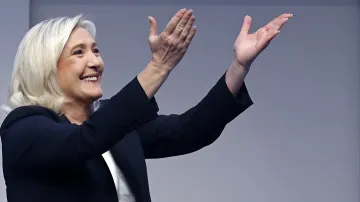
Against the backdrop of the presidential campaign in France, a sharp public conflict has erupted between two presidential candidates — Marine Le Pen and Édouard Philippe. The trigger has been the fate of financial and military aid to Ukraine, which, according to reports, the leader of the National Rally intends to halt in the event of her victory. RBC-Ukraine reports this, citing statements by both politicians posted on the social network X.
The spark: Louis Aliot's statement
The conflict began after words by Louis Aliot, the vice-president of the National Rally, who stated that Le Pen wants to "turn off the tap" of financial and military aid to Ukraine. Édouard Philippe, the former French prime minister and candidate from the right-of-centre Horizons party, reacted instantly, turning the question of aid to Kyiv into a central theme of the pre-election exchange.
Philippe's response: "serving Russia"
"Turning off the tap" to Ukraine means serving Russia. The weakening of Ukraine, which Marine Le Pen is pursuing, poses a threat to the security of Europe and France. I will do everything to prevent this, — Philippe promised, directly linking his opponent's position to Moscow's interests.
Le Pen's counterattack and the mention of Versailles
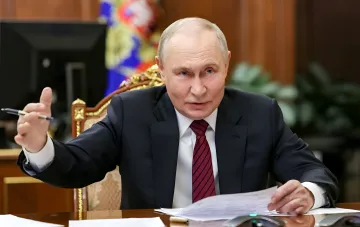
In response, Le Pen lashed out at her opponent with accusations, including about the results of his work in government, which she called "pitiful." She also reminded that during his premiership, Russian leader Vladimir Putin was received at the Palace of Versailles and then at Fort de Brégançon. Against this backdrop, the far-right leader reiterated her position: since the Russian aggression, she has been calling on France to urgently convene a broad peace conference to promote not the continuation of bloodshed, but a diplomatic settlement of the war.
Accusations of "tailoring to the Kremlin"
In reply, Philippe accused Le Pen of excessive adherence to the Kremlin's position and called her "the voice of weakness and criminal tailoring to the Kremlin." He reminded that she had opposed arms deliveries to Ukraine and sanctions against Moscow, and stated: "If you were elected, Ukraine would have been abandoned long ago. You may rewrite your speeches about Russia, but no one will be able to forget your ties with Russia."
Contradictory data
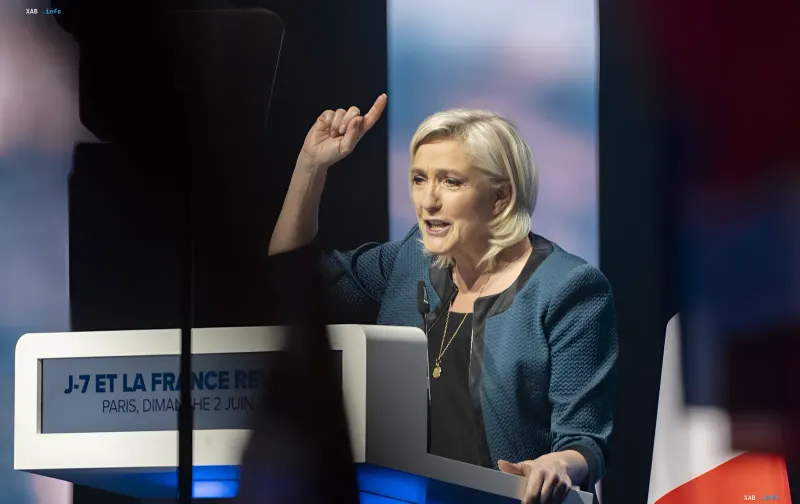
It is important to note a discrepancy in the chronology here. The campaign's visual materials (a podium with the inscriptions "J-7" and "PARIS, DIMANCHE 2 JUIN") record an event in early June 2026, while the current publication date is 5 September 2026. The provided sources describe an active pre-election campaign and polls, according to which Le Pen has noticeably strengthened her position and may win, however none of them confirms whether the vote has already taken place and what its outcome is as of the publication date. Thus, the assessments set out above reflect the parties' statements at the campaign stage, rather than a confirmed election result.
Previously, RBC-Ukraine reported that Le Pen had sharply strengthened her position ahead of the French presidential election, and a number of polls cited by the media predict her victory over any of her rivals. In this context, the public exchange with Philippe looks like a battle for the electorate, for whom the position on Ukraine and Russia remains one of the key electoral issues.