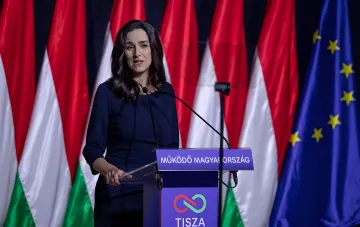
The Court of Justice of the European Union rejected Hungary's lawsuit on 9 September, which challenged the decision to use frozen Russian assets for military aid to Ukraine. As reported by Ukrainian and European media citing the text of the court's ruling, the key ground was procedural: the court found that the decision to allocate the funds was taken by the committee of the European Peace Facility, not by the Council of the EU. On this basis, the court ruled that it lacked jurisdiction to hear Budapest's case.
Procedural aspect: why the court did not examine the case on the merits
The court's ruling emphasizes that Hungary did not take part in the vote on the allocation of aid to Ukraine from frozen Russian assets. According to the court's finding, the committee of the European Peace Facility decided that the Hungarian side should not take part in adopting this decision. It was precisely this procedural construction that deprived the lawsuit of grounds for examination on the merits: the court did not assess the lawfulness of the use of the assets themselves, but limited itself to noting its lack of competence.
Political and strategic nature of the decision
The court also noted that the committee of the European Peace Facility took a political decision in response to Ukraine's appeal for assistance. In the court's assessment, this decision is of a strategic nature for the interests of the European Union as a whole. On this basis, the challenge to the committee's actions was deemed to fall outside the court's competence, which in fact closes off Hungary's ability to contest the mechanism through a judicial body.
Timeline: the lawsuit was filed back in 2024
It is noted that Hungary filed its lawsuit challenging the decision on the use of Russian assets with the court as early as 2024. Thus, the court's ruling was issued a significant period after the lawsuit was filed and records the judicial body's position on procedural, rather than substantive, grounds of the dispute. This ruling is important for understanding how legal protection is constructed in the EU for decisions taken at the level of fund committees rather than the Council.
Diplomatic context around Budapest
The court's ruling fits into the broader context of Hungary's relations with Russia and with its EU partners. Previously, Hungary expelled ten staff members of the Russian mission, explaining this by stating that the diplomats had been engaged in activity impermissible under the Vienna Convention. Moscow reacted to this step with a promise of a firm response. At the same time, Budapest had earlier agreed to help Germany counter hybrid threats from Russia, expressing concern over the growing intensity of Russian hybrid activity on European territory.