
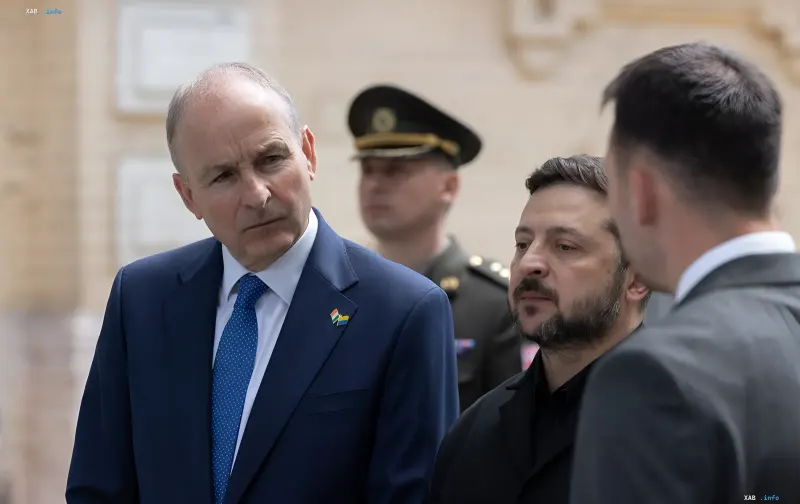
On July 23, a significant event took place in Kyiv within the framework of international support for Ukraine: the Taoiseach (Prime Minister) of Ireland, Micheál Martin, and the Minister for Foreign Affairs and Trade, Simon Coveney, announced a new package of bilateral aid. According to official data from the Irish government, this involves the allocation of €125 million, calculated for the year 2026.
Prime Minister's visit and assessment of the frontline situation
Micheál Martin arrived in the Ukrainian capital on the morning of July 23 to express the solidarity of the Irish people with Ukraine amidst the ongoing war. During the visit, the Prime Minister personally assessed the scale of destruction caused by Russian aggression.
"The people of Ireland stand by Ukraine and its people in the face of Russia's immoral and unprovoked war of aggression. It is terrifying to see with one's own eyes the consequences of the Russian Federation's air attack campaign on Ukrainian cities and villages," Martin stated.
The Irish leader paid particular attention to critical infrastructure, which is under attack in the run-up to the winter season. He recalled the tragic events of last winter, when millions of Ukrainians were left without heating and electricity during extremely low temperatures. According to the politician, the new funding will be directed towards restoring this damage and ensuring the safety of citizens.
Scale of support and humanitarian aid
Ireland has already proven itself as one of Ukraine's active allies. Since February 2022, the country has provided over €550 million in financial assistance. Additionally, the Irish Defence Forces are making a significant contribution by transferring military equipment.
An important aspect of cooperation remains the humanitarian sphere: Ireland has accepted a very large number of Ukrainian refugees on its territory. In the context of the migration crisis, the country supported the European Union's decision to extend the validity of temporary protection status for Ukrainian asylum seekers for another year — until March 4, 2028.
Position on EU accession
In addition to financial and humanitarian aid, Irish officials voiced their position on a key geopolitical issue — Ukraine's membership in the EU. The Minister for Foreign Affairs, Simon Coveney, expressed serious concerns regarding the initiative by German Chancellor Friedrich Merz to grant Ukraine associated member status.
In Coveney's opinion, such an idea could block the country's real accession to the bloc for many years, pushing the prospect of full integration further away.