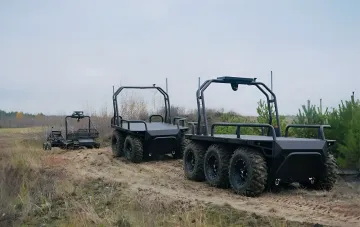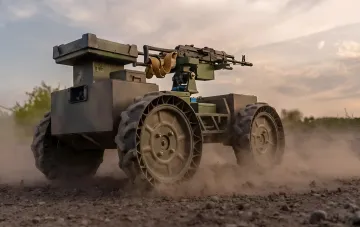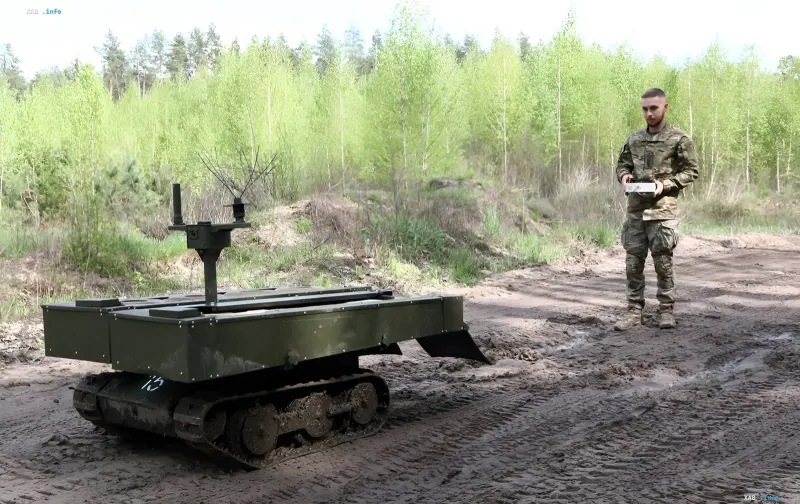
A quiet but fundamental revolution is taking place on modern battlefields. If armored vehicles were recently considered a guarantee of survival, today, under the crosshairs of FPV drones and in conditions of dense minefields, the role of classic armor is changing. Experts note that Western countries have not yet fully realized the critical importance of ground robotic complexes (GRCs) in this new type of warfare.
Western skepticism and the Ukrainian experience
According to RBC-Ukraine, Western partners are showing interest in robotics, but their perception remains superficial. According to Oleksandr Fedoryshyn from the company DevDroid, the West has not yet undergone the rethinking of the transformation of combat operations that the Ukrainian army has already experienced.
The expert notes that a true understanding of the role of robots will come to allies only after they encounter the reality of prolonged combat operations and a massive drone threat. History knows many examples where the attitude towards new technologies changed only after the first large-scale operations and significant losses.
The scenario with interceptor drones
As a vivid example, Fedoryshyn cites the situation with air defense systems. Interest in interceptor drones in the West soared only when it became obvious that expensive missiles are ineffective for shooting down cheap mass targets.
A similar scenario awaits ground robots. Large-scale implementation of GRCs in the armies of NATO countries will begin when they face real challenges: a Russian offensive in Europe, a conflict over Taiwan, or another protracted confrontation. Only direct experience will force partners to reconsider their doctrines.
Mortal vulnerability of armored vehicles
The US military is already observing how FPV drones, previously considered a secondary threat, are capable of hitting even expensive helicopters. Taras Ostapchuk, CEO of Ratel, emphasizes: the experience of the war in Ukraine has proven that classic armor in itself no longer guarantees safety.
In conditions of mass use of drones and aerial reconnaissance, any heavy equipment remains an easy target. It is impossible to completely write off armored vehicles, but their function and place on the battlefield are irrevocably changing. They can no longer be the only shield for personnel.
Logistics under the crosshairs
The situation with logistics is particularly worrying. The danger zone for civilian transport has expanded to 40 km from the front line. At such distances, the enemy is increasingly hunting for supply routes, using drones to intercept convoys.
The use of ordinary pickups and trucks in such conditions leads to unjustified human casualties. This is why an understanding is gradually forming in the US and Europe: GRCs are not just an auxiliary tool, but a key element of the modern army, capable of replacing humans in the most dangerous tasks, such as evacuation and cargo delivery.