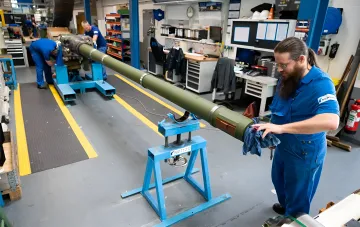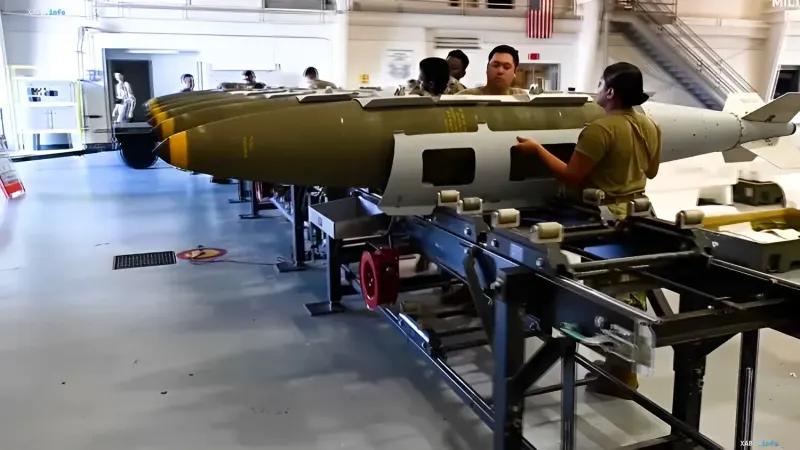
According to the technology outlet Ctech, Israel's Ministry of Defense has tasked two defense corporations — Rafael and Elbit Systems — with developing a new type of guided munition tailored to the features of the American JDAM guided bomb system. The program has already been launched, and the start of serial production is, according to available data, expected by mid-2027. The specific technical specifications of the new bomb were not disclosed at the time of publication.
Shifting from Imports to Domestic Production
According to Ctech, the move toward domestic production was made against the backdrop of Israel's reassessment of its dependence on foreign arms supplies. The key trigger, as noted, was the temporary suspension in 2024 by the administration of U.S. President Joe Biden of a shipment of heavy bombs to Israel, motivated by concerns related to the military operation in Gaza. This episode, according to the source's assessment, accelerated the course toward reducing critical dependence on American supplies in the segment of heavy aerial bombs.
Why JDAM Specifically, and Who Will Develop It
The American JDAM system — a module that converts an unguided bomb into a guided one — has been chosen as the technological basis for the new munition. Development has been entrusted to Rafael and Elbit Systems, Israel's two largest defense companies. According to Ctech, the program is in its launch phase, with serial production planned for mid-2027; detailed tactical and technical specifications are not yet being published.
Parallel Purchase from Boeing as a Safety Net
Importantly, the course toward domestic production does not mean abandoning imports in the short term. According to reports confirmed by a number of agencies, Israel has signed a contract with Boeing for the supply of 5,000 precision-guided bombs. Thus, the purchase from Boeing serves as a temporary coverage of needs until the domestic production capacity under the JDAM-based program reaches serial level by 2027.
Strategic Context of 2025–2026
According to Ctech, in 2025–2026 Israel increased its investments in expanding its own defense production capacity, making precision munitions and air-to-ground weapons a priority. At the same time, as noted, the missile, air defense, and military electronics sectors still depend to a significant extent on U.S. supplies for a number of types of heavy aerial bombs, which makes the domestic production program strategically significant.
What This Means for Munitions Stockpiles
If the program is implemented according to plan, Israel will be able to begin domestic production of a key group of weapons by mid-2027. This, according to the source's assessment, will allow Tel Aviv to build up and maintain stockpiles of precision munitions in the conditions of protracted conflicts, reducing the vulnerability associated with possible export restrictions on the part of suppliers.