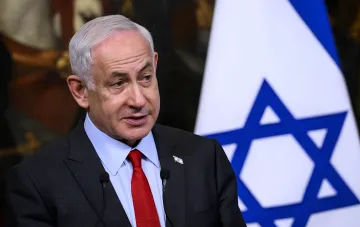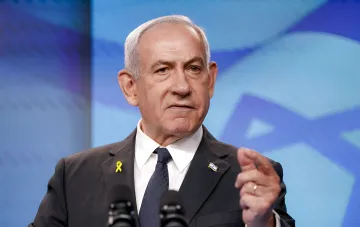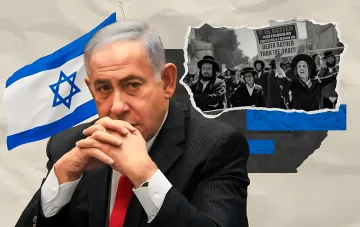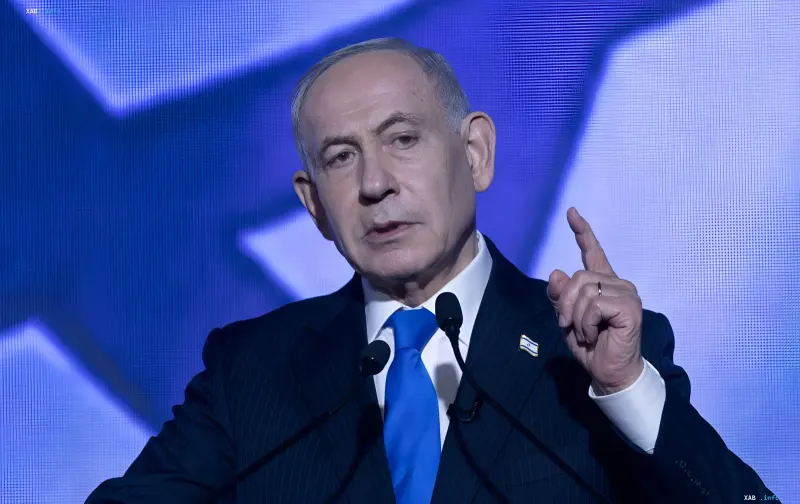
The parliamentary elections in Israel held the day before brought results that in the first hours after the closing of polling stations did not match poll predictions. The main message of the Israeli opposition in the first hours after the vote was «Netanyahu has lost and must step down», and some supporters of opposition parties celebrated victory by bathing in fountains. However, by morning there was no trace of euphoria left: as the votes were counted, it became evident that the Likud party was securely taking first place, and the pro-government bloc of parties overall was significantly ahead of the Zionist-opposition block.
Counting at 85%: Figures That Change the Balance
According to data at the time of writing, nearly 85% of the votes have been counted. Netanyahu's party and its allies have 54 seats in the future Knesset, the Zionist opposition has 49 mandates, and two Arab parties together receive 17 seats. Ahead is the opening of the so-called «double envelopes», meaning the counting of votes from Israelis who voted away from their place of residence. The lion's share of such ballots belongs to army reservists, who were more numerous in this election than ever due to the tense security situation. Their votes are estimated to be distributed in various proportions between Likud, ultra-nationalist Itamar Ben Gvir's party, and the Zionist opposition, but en masse will not go to either Arab parties or ultra-Orthodox factions exempt from military service.
The 61-Vote Threshold: Why 17 Mandates of Arab Parties Do Not Solve the Task
In Israel, winning first place in elections is only the beginning. The main task is forming a coalition of at least 61 deputies in the 120-seat parliament. Israeli society is extremely fragmented, and the electoral threshold for the Knesset is only 3.25%, so more than a dozen parties enter the relatively small parliament. In another country, 17 mandates of Arab parties would become a «golden share», allowing either of the two camps to form a confident majority. However, in Israeli political reality, any format of cooperation with Arab parties, representing about 20% of voters, is often regarded by voters as «treason». Among Netanyahu's allies are ultra-religious Jewish parties and ultra-nationalists openly advocating for the discrimination of the Arab population. Zionist opposition members are on average slightly less radical, but on the eve of the election, a number of politicians from this camp also categorically rejected the possibility of any alliance with Arab parties. A stalemate arises where neither of the two main blocs can independently gather 61 votes.
Four Scenarios: From Coalition to New Elections in Spring
According to analysis, events could develop according to several scenarios. The mandate to form a coalition will first be given to Netanyahu, who has 28 days with an option to extend for another 14. If he fails, the right to form a government could pass to one of the opposition representatives. If he also fails, Israel will have to go to early parliamentary elections next spring. A precedent already exists: in 2019–2021, the country went through a series of four votes in less than two calendar years. An additional factor remains the practice of so-called «tushkaing» — the defection of deputies from the opposition to the coalition individually or in groups. Although due to extreme societal polarization this mechanism is not as widespread in Israel as in some other parliamentary systems, it is not excluded.
Record Turnout and Confrontational Rhetoric
These elections in Israel recorded the highest turnout since 1999. The active confrontational rhetoric of the pro-government bloc, built on the principle of «us or them», clearly mobilized both Arab voters and those most hardline toward them to the polls. The opposition's main unifying slogan in these elections was directed against the incumbent prime minister, but as the counting shows, this was not enough for a change of power. The election results and the subsequent coalition-building process could have consequences extending far beyond Israel's internal political life, including an impact on regional security and the course of the war in Ukraine, on which Israel has a significant military and intelligence impact.