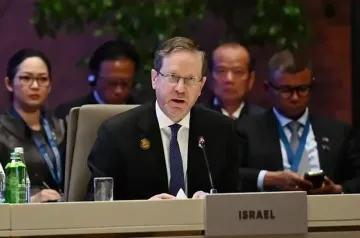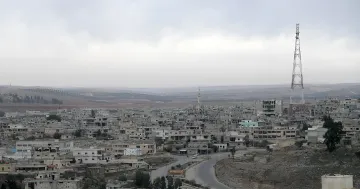
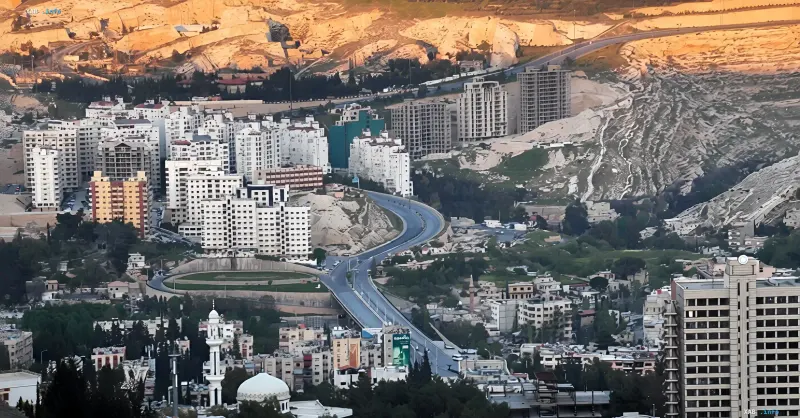
On August 18, 2026, Israeli forces struck the runway and storage facilities at Abu al-Duhur air base in the Idlib province, located roughly 60 kilometers from the Turkish border. According to the office of Prime Minister Benjamin Netanyahu, Israel believed the base was being prepared to host Turkish troops, and a military delegation from Ankara had visited the site just hours before the attack. Netanyahu stated publicly: "We will not tolerate an increase in Turkey's military power in the south of the country. We have conveyed this in every possible way." The strike, in essence, carries a dual message: to Damascus — about the need to honor previously reached agreements on the security status quo, and to Ankara — about the existence of clearly defined Israeli "red lines" that are not open to revision.
The ghost of 2015: a mechanism that worked for nearly a decade
To grasp the scale of the current crisis, the Jerusalem Post draws a direct parallel with the events of September 2015. On September 30 of that year, Russian fighter jets, for the first time since the end of the Cold War, carried out airstrikes in the Middle East, flying over the Syrian city of Homs. Nine days earlier, on September 21, Netanyahu, who had intelligence data on Moscow's plans, made a swift visit to the Kremlin. There, he and Vladimir Putin agreed on the creation of a conflict de-escalation mechanism intended to prevent accidental clashes between Israeli and Russian pilots in Syrian airspace. Formally, the tacit understanding looked like this: Israel would not interfere in Russia's interests, while Moscow would allow Tel Aviv to defend its own — primarily by countering Iran and Hezbollah on Syrian territory. The mechanism functioned for nearly ten years, until in December 2024 forces led by Syria's current president Ahmed al-Sharaa overthrew Bashar al-Assad, destroying the very foundation of that security architecture.
Erdogan's Turkey is not Putin's Russia: the fundamental difference
Analysts at the Jerusalem Post emphasize that, although in theory the logic of a de-escalation mechanism could be applied to relations with Ankara — both sides are highly interested in preventing an unintended war — there are fundamental differences between the 2015 and 2026 situations. In 2015, Putin was not intervening in Syria to harm Israel: his goals were to save Assad, preserve Moscow's positions in the Mediterranean, demonstrate global influence, and prevent extremist Islamic forces from taking control of Syria. Erdogan's direct goal in strengthening his position in Syria, by contrast, may be not only the defense of Turkey's southern border and the containment of Kurdish influence, but also the shaping of a new Syrian state according to his own design. The ideological and historical ambitions of the Turkish president, according to the Jerusalem Post, push Ankara toward confrontation with Israel, which Turkey views as a haven for Hamas and a key figure in diplomatic pressure on Tel Aviv.
The tacit status quo with Damascus and its limits
Netanyahu's office stated on August 18 that Israel and Syria had agreed on a security status quo that Damascus intends to violate by allowing the Turkish army to be stationed at Abu al-Duhur. This fact indicates the existence of a tacit agreement between the two states regarding acceptable and unacceptable military presences on Syrian territory. From Tel Aviv's perspective, the deployment of Turkish troops — and possibly modern radar and air-defense systems — at the air base in Idlib directly violates these agreements. Thus, the strike on the base's infrastructure became not merely a military operation but a tool of diplomatic pressure, addressed simultaneously to two capitals. Syria, which had been counting on the resumption of negotiations on a security agreement, found itself in a difficult position: its new regime has not yet built a stable architecture of relations with its neighbors, while Israel has already made clear that violations of the agreements will be punished.
Contradictory data
Open sources contain discrepancies in assessing the scale and purpose of the Turkish presence at Abu al-Duhur. According to the Israeli government's version, the base was being prepared specifically to host Turkish combat units, and the visit of a military delegation from Ankara hours before the strike confirms this preparation. However, in public statements, as follows from reports by Russian and regional media (including inosmi.ru on August 20, 2026), Turkey emphasizes that its activity in northern Syria is of a "defensive" nature and is directed against Kurdish formations, not against Israel. At the same time, neither side has published independent intelligence data that would allow a definitive confirmation or refutation of the presence of specific air-defense systems or radar equipment at the base. The Syrian side, for its part, cites its sovereign right to determine the composition of its military presence and its intention to resume security negotiations with Israel, which is indirectly confirmed by a publication on theotherukraine.info on August 23, 2026.
Escalation risks and the absence of a 'de-escalation channel'
The main problem of the current crisis, as pointed out by the Jerusalem Post, is the absence between Israel and Turkey of an analogue to the very mechanism that Netanyahu and Putin built in 2015. In relations with Moscow, there was at least an informal communication channel that allowed the exchange of data on air corridors and warnings about planned operations. With Ankara, no such channel exists: Turkey has for years used sharp anti-Israeli rhetoric, supports Hamas, and is a leading country in diplomatic efforts against Israel on international platforms. Under these conditions, every incident — from an airstrike to a diplomatic note — carries the risk of uncontrolled escalation. Israel's strike on Abu al-Duhur became, in essence, the first "test" of a new reality in which Tel Aviv is forced to simultaneously hold "red lines" before two neighbors — Syria and Turkey — without possessing any of the proven de-escalation tools that had worked in the previous decade.