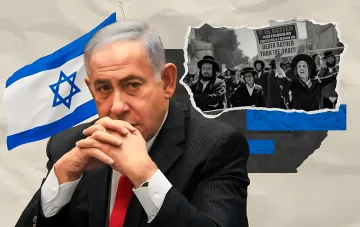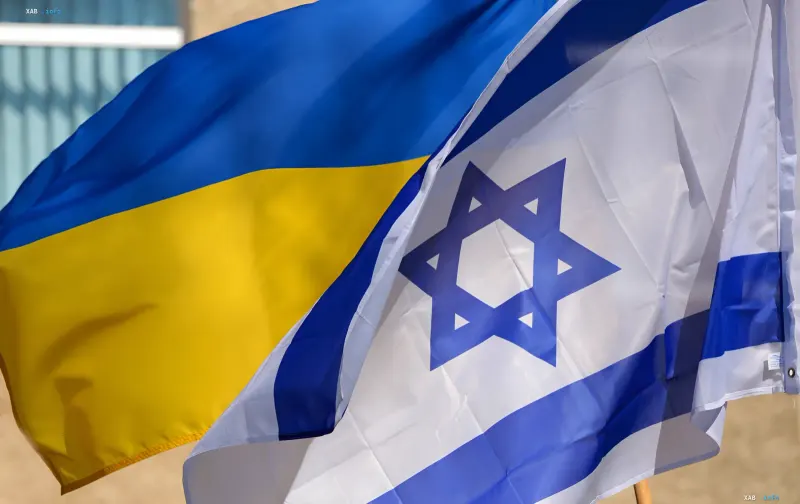
The Israeli election campaign is entering the home stretch in a tense atmosphere, and against the backdrop of confrontation surrounding Prime Minister Benjamin Netanyahu, increasing attention is being drawn to a key question: how a potential change of power in Tel Aviv will affect relations with Ukraine. According to experts, the united opposition — with four quite distinct forces opposing the prime minister this time — is noticeably more supportive of Ukraine on a declarative level than the current coalition. For Kyiv, this potentially means a more active dialogue on countering Iran and a more effective exchange of experience in combating drones.
Declarative Support for Ukraine
As Sofia Ron-Moria, an attorney and journalist for the Israeli publication Maariv, told RBC-Ukraine, "the opposition parties on a declarative level are much more supportive of Ukraine than the coalition parties." The declarative nature of this position is explicitly emphasized: it concerns public statements and the political rhetoric of the united bloc, rather than already adopted legislative or executive decisions. Nevertheless, for Kyiv, this is read as a signal that with a change of power, the tone of relations could become more constructive.
What Kyiv Might Gain
Among the practical consequences, experts highlight several areas. First, a more active dialogue on countering Iran. Second, a more effective exchange of experience in combating drones — a topic that has become one of the key issues for Ukraine during the war. Third, cooperation in other spheres. It is separately noted that the opposition seeks to restore relations with the European Union, which is also a positive signal for Ukraine given the EU's role in supporting Kyiv.
Security: Rhetoric Versus Format
In security matters, particularly regarding Iran and Hamas, the positions of the authorities and the opposition differ, according to experts, in little more than rhetoric. Ihor Semivolos, Director of the Center for Middle Eastern Studies, explained that "the only way opposition parties differ from the authorities is that they are still not ready to continue the war in the format that Netanyahu is waging it." Thus, the divergence between the parties concerns the style and scale of military operations rather than basic guidelines regarding the Iranian factor.
Analogy with Hungary and Campaign Atmosphere
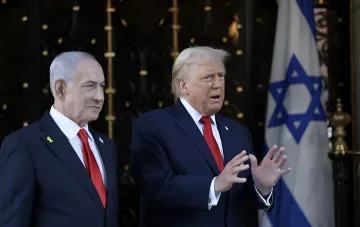
One of the interlocutors of RBC-Ukraine compares the potential changes to Hungary after Orban's departure: foreign policy changes noticeably, but within the limits of society's willingness to accept it. The campaign itself in Israel is characterized as fierce: ahead of the elections, Netanyahu published an AI-generated image of a nuclear explosion over Tel Aviv on social media platform X, while thousands of people took to the streets in the city to protest against the prime minister. Against this backdrop, it is worth noting that Netanyahu has secured Washington's backing — US President Donald Trump supported him ahead of the elections.