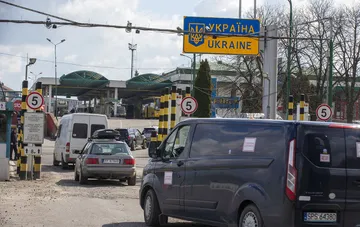
Analysts at the Institute for the Study of War (ISW) published an assessment of a Russian drone attack on a train near the Yagodyn border crossing in Volyn Oblast, which took place on September 13, 2026. According to RBC-Ukraine, citing the ISW report, the strike hit the locomotive of a train traveling from Kyiv toward Poland. Experts concluded that the totality of available data indicates a high probability that the target of the strike may have been European representatives, rather than civilian infrastructure as such.
What happened at Yagodyn station
According to the description of the incident, Ukrzaliznytsia managed to evacuate passengers approximately 15 minutes before the drone hit the locomotive. A Russian jet-powered drone struck the lead car of the train traveling from Kyiv toward Poland. Importantly, at the time of the attack, another train with passengers was at Yagodyn station, which, according to available information, included former CIA Director David Petraeus. Thus, the strike was delivered to one train, while the second, carrying a number of high-profile guests, was standing nearby.
Who, according to ISW, may have been the target of the strike
ISW analysts link the attack to the return to Europe of participants in the YES conference. Among the possible passengers of the struck train, experts name Germany's foreign policy advisor Günter Sautter, Bundestag member Robin Wagner, and former UK Prime Minister Boris Johnson. On this basis, the report concludes that there is a high probability the strike was directed against European officials, rather than against infrastructure as such.
Broader context: Moscow's border tactics
ISW places the incident in a broader picture: according to the institute, Russia is increasingly striking Ukrainian border crossings and intensifying drone incursions into European airspace in order to intimidate NATO and force the Alliance to abandon support for Ukraine. As parallels, analysts cite a series of attacks since August 2026 on four border crossings between Ukraine and Moldova, as well as the September 8 incident, when a Russian drone entered Moldovan airspace at the moment when Vladimir Zelensky's plane was preparing to depart from Chisinau.
Analysts' recommendations on defense
Against this backdrop, ISW considers it necessary to strengthen the defense of NATO airspace. The report proposes considering the possibility of destroying Russian targets while they are still over Ukrainian territory, as well as accelerating the reinforcement of Ukraine's air defense. The authors emphasize that border infrastructure and transit routes are becoming a tool of pressure on Western allies, which requires a revision of the Alliance's air defense doctrine.