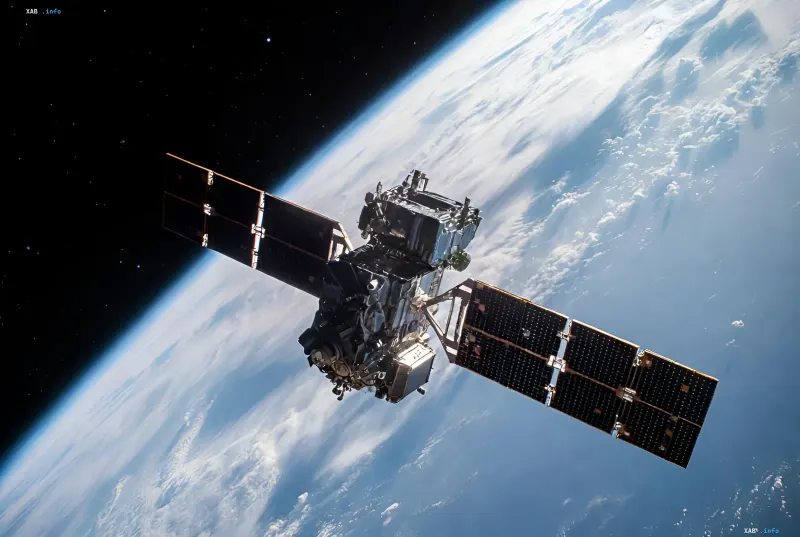
The Italian Space Agency (ASI) has officially signed a contract with Thales Alenia Space for the development of a new radar Earth observation satellite. The spacecraft, weighing approximately 2.2 tons, will feature a Synthetic Aperture Radar (SAR) operating in the L-band and will become an important addition to the Italian X-band and C-band systems currently in operation. The new observation channel will expand the country's capabilities in environmental monitoring and national security.
General contractor and system architecture
Thales Alenia Space will act as the general contractor for the project and will be responsible for creating the entire satellite system, from the platform to the radar instrumentation. The company will also develop the payload electronics and the antenna independently. The satellite is planned to be launched into a sun-synchronous orbit, allowing it to regularly obtain images of the entire planet and perform targeted imaging at the request of users if necessary.
Key feature — antenna area of over 26 m²
The main technical innovation of the unit will be a large deployable antenna with an area of over 26 square meters. It is this feature that will enable the L-band radar operation, which has several advantages over higher-frequency systems: its signals penetrate vegetation better, lose less power during propagation, and provide more stable results for interferometric measurements.
Applied tasks: from landslides to soil moisture
Thanks to these properties, the satellite will be able to track deformations of the Earth's surface, landslides, and other geological threats, as well as assess the condition of forests, biomass, and soil moisture. The acquired data will be in demand for scientific research, environmental monitoring, civil protection services, and territorial control.
Data continuity and compatibility with European systems
The new system will ensure the continuity of data previously obtained as part of the Argentine SAOCOM program and will allow for broader use in the Euro-Mediterranean region. Compatibility with other L-band radars, as well as with COSMO-SkyMed and Copernicus systems, is provided. This is expected to simplify the integration of satellite data for government, scientific, and commercial users and strengthen Italy's position in European space monitoring.