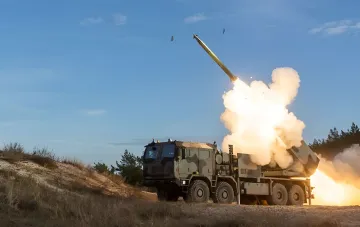
Japan is taking another major step toward a fundamental overhaul of its defense capabilities by announcing plans to develop a new low-cost long-range cruise missile. This project aims to produce large quantities of weaponry capable of effectively overcoming modern enemy air defense systems through mass deployment and unconventional engineering solutions.
Strategic Role and Design of the New Missile
The new ground-based system is being designed specifically to target surface targets, including enemy warships, as part of Tokyo's broader strategy to expand its strike capabilities. A key priority of the project is maximizing production cost-efficiency. To achieve this, engineers plan to use readily available commercial components, such as off-the-shelf cameras, alongside lightweight warhead designs. Utilizing cheap materials and stock parts inevitably entails a slight reduction in accuracy and firepower compared to elite models, but this drawback is offset by sheer volume.
Application Tactics and Exhaustion of Enemy Arsenals
According to the defense strategy, the new missiles will act as "decoys" and an effective tool to deplete expensive enemy interceptor arsenals. The mass launch of such projectiles will divert air defense attention, clearing the path for more powerful and expensive weapons. The domestic Type 25 surface-to-ship missile or the American Tomahawk cruise missile, which costs about $2.54 million per unit, will serve as the primary heavy-hitting elements in tandem. This tactic is modeled on the successful experience of using inexpensive American developments, such as the Rusty Dagger project.
Timeline and Interim Foreign Procurements
The practical implementation of this ambitious program will begin in the 2027 fiscal year, spanning from April 1, 2027, to March 31, 2028. Direct production of test batches is scheduled for fiscal year 2029, with full-scale serial production expected to launch in 2030 for the Japan Ground Self-Defense Force. Competition for the main contractor role will unfold between the nation's leading industrial giants, Mitsubishi Heavy Industries and Kawasaki Heavy Industries. As an interim measure before domestic developments are completed, Tokyo is considering purchasing foreign alternatives in fiscal year 2029, specifically the Barracuda-500 model from American company Anduril Industries.
Contradictory Data
Analyzing current reports from leading specialized media as of October 2026, experts note discrepancies in estimates regarding the cost of basic components and the ultimate effectiveness of future systems compared to American counterparts. While official sources emphasize the economic viability of using commercial parts to reduce costs relative to expensive Tomahawk missiles, independent observers express skepticism regarding the actual resilience of such missiles against modern electronic warfare systems.