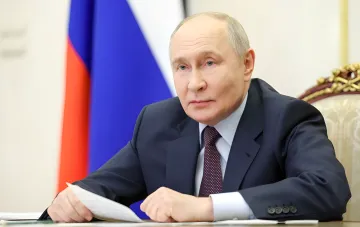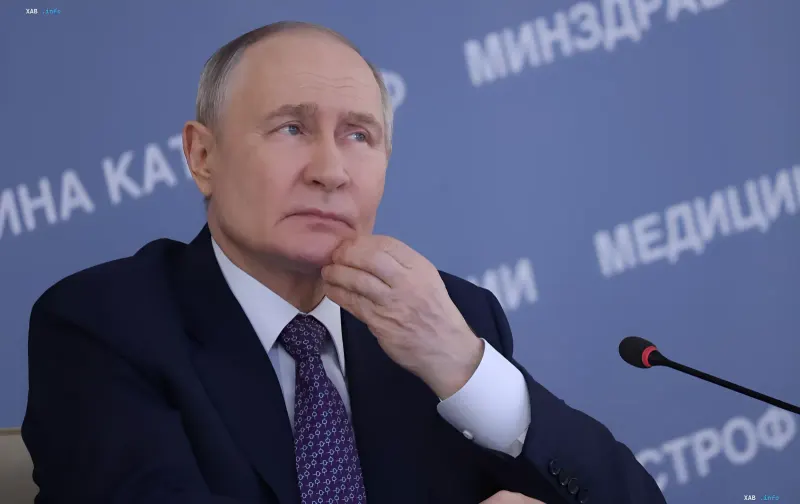
A diplomatic scandal is unfolding in Tokyo following the visit of Russian President Vladimir Putin to the island of Iturup, which Japan considers its occupied territory. On August 13, 2026, the Russian leader visited one of the Kuril Islands, a move that serves as a direct challenge to the Japanese government's position. Japanese Prime Minister Sanae Takaichi condemned the step in strong terms, stating that it is "absolutely unacceptable" and strikes a blow to the public sentiment of the Japanese people.
Diplomatic Protest and Threat of New Sanctions
The Ministry of Foreign Affairs of Japan reacted immediately to the event. Foreign Minister Toshimitsu Motegi summoned the Russian Ambassador to Tokyo, Nikolai Nozdrev, to deliver a firm protest. During the meeting, the Japanese minister emphasized that the unilateral trip by the Russian President has an extremely negative impact on bilateral relations. Motegi demanded that Tokyo's position be conveyed to the Russian government, pointing out that Iturup is an integral part of Japan in terms of historical facts and international law.
According to sources, Tokyo is considering the possibility of introducing new retaliatory countermeasures. In particular, there is discussion of tightening the sanctions regime against Russia. It should be noted that Japan has already imposed restrictions on Moscow together with international partners due to Russia's full-scale invasion of Ukraine. However, the current incident could become a reason to expand the list of sanctions, affecting not only the economic but also the political sector.
Historical Context: 'Northern Territories' and the Breakdown of Negotiations
In Japan, four islands of the Kuril Archipelago are called the 'Northern Territories'. Tokyo considers them illegally occupied by Russia after World War II. Putin's visit to Iturup (known as Etorofu in Japan) is perceived as an attempt to cement de facto control over the disputed lands. In 2022, Russia announced the suspension of negotiations with Japan on a peace treaty after Tokyo imposed sanctions on Moscow. The negotiations also covered the territorial issue, which remains a key obstacle to the normalization of relations.
Despite the tension, the Japanese government continues to maintain minimal contact with Russia. Last month, Motegi briefly spoke with the head of the Russian Foreign Ministry, Sergey Lavrov, in the Philippines. However, analysts expect a further escalation of the situation. Putin's visit could complicate the resumption of relations between the countries in the medium and long term, which is particularly painful for Japan, which is striving for stability in the region.
Contradictory Data
There are discrepancies in the assessment of the consequences of the visit. On the one hand, Japanese authorities insist that Putin's trip "harms public sentiment" and requires immediate retaliatory measures. On the other hand, some analysts believe that Tokyo may limit itself to a diplomatic protest in order not to provoke an escalation of the conflict. Furthermore, there is uncertainty regarding exactly which sanctions will be introduced: whether it is about new economic restrictions or a revision of existing rules. These contradictions reflect the complexity of the situation in which Japan is trying to balance between a tough stance and the need to maintain dialogue with Moscow.