The Japan Aerospace Exploration Agency (JAXA) has achieved a breakthrough in space technology development. On July 11, 2026, the first successful flight test of the experimental vehicle RV-X (Reusable Vehicle eXperiment) took place at the Nosiro test range in Akita Prefecture. This event marked a significant milestone in Japan's ambitious plans to develop its own reusable launch vehicles.
First Flight: Vertical Takeoff and Soft Landing
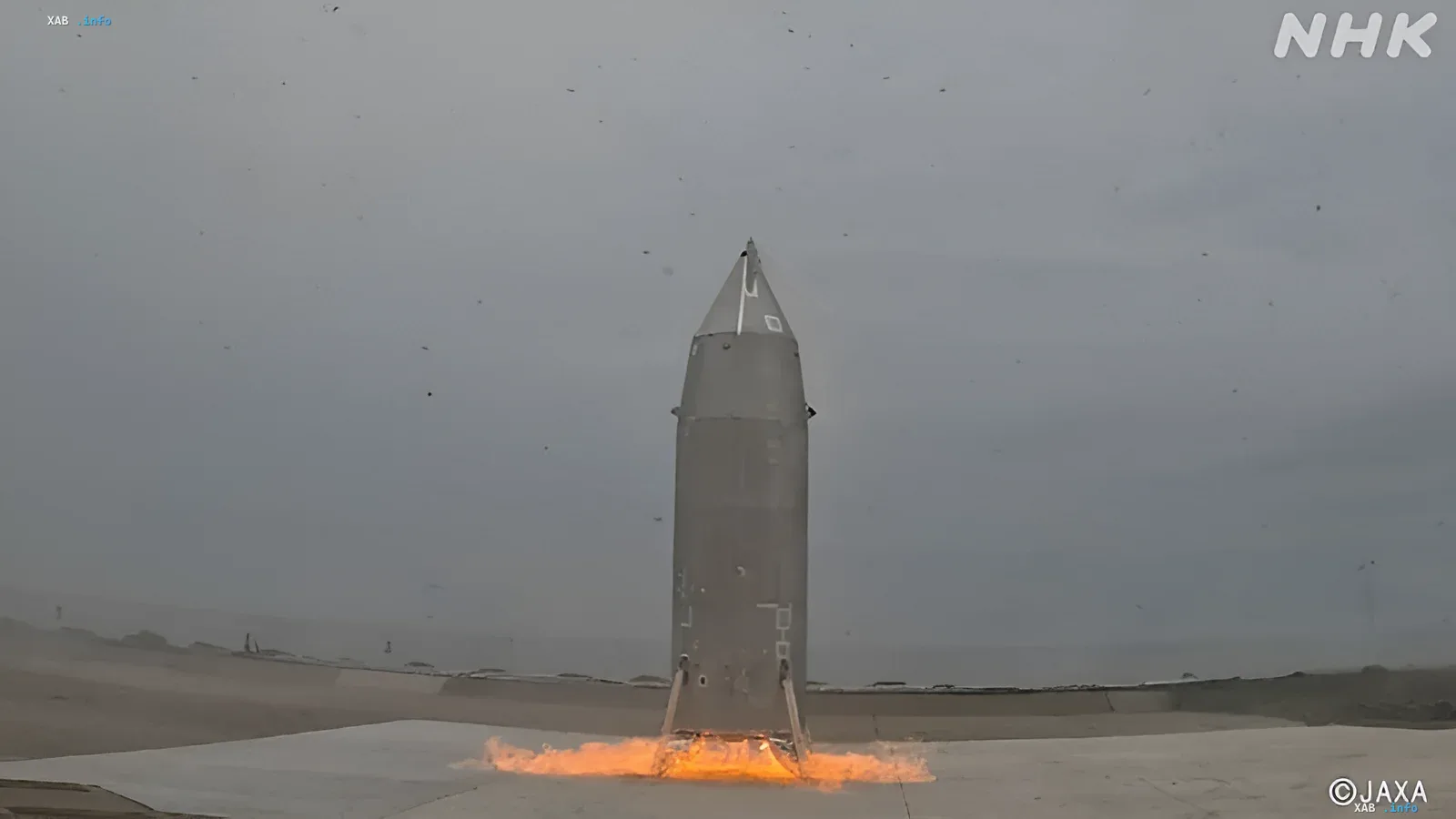
The test followed a scenario reminiscent of the famous Falcon 9 stages. The RV-X vehicle performed a vertical takeoff, reaching an altitude of approximately 11 meters. Subsequently, the rocket shifted horizontally by 16 meters and successfully executed a soft landing maneuver, touching down vertically on its landing legs. The total flight duration was 40 seconds.
Although the altitude seems insignificant, this result is critical for the maiden flight. It allowed engineers to verify the coordinated operation of all key systems: the engine, navigation, thrust control, and landing gear. Extensive data was collected following the test, which is necessary for a comprehensive evaluation of the prototype.
Technical Features and Fuel Selection
It is important to understand that RV-X is not a full-fledged launch vehicle, but rather a flying testbed for developing technologies for a reusable first stage. The vehicle stands 7.3 meters tall and has a diameter of 1.8 meters. Upon landing, it rests on four shock-absorbing struts designed to dampen residual vertical and lateral velocities.
A distinctive feature of the design is the choice of fuel. The RV-X propulsion system operates on a cryogenic pair of liquid hydrogen and liquid oxygen. Operating hydrogen engines is significantly more complex than kerosene or methane engines due to extremely low temperatures and hydrogen's tendency to leak. However, this choice is justified by the high specific impulse, making the engine more efficient.
To perform a precise landing, the engine must be capable of varying thrust over a wide range, balancing the mass of the nearly empty vehicle and smoothly reducing speed before touching the ground. Project leader Takashi Ito confirmed that the installed engine had already withstood 165 hot-fire tests by the time of the flight, proving its suitability for multiple uses.
From "Dreams" to Reality: The Path to Reusability
The history of Japanese experiments with reusable systems dates back to the late 1990s. At that time, such projects were considered wasteful and unrealistic fantasies. A turning point occurred only after Elon Musk's success with the Falcon 9 rocket. This prompted JAXA to reconsider its position: in 2014, the topic of reusable launches became a subject of discussion again, and in 2016, research was officially resumed.
A decade later, Japan was able to test its "grasshopper" — a prototype that proved its ability to hop and land on its own legs. JAXA plans to gradually increase the flight altitude of the RV-X to 100 meters, expanding the range of speeds and horizontal movements.
The Future: The CALLISTO Project and H3 Successor
The data obtained will form the basis of the international CALLISTO project, which Japan is developing jointly with the French CNES and the German DLR. The next stage will be the creation of a larger demonstrator, approximately 13 meters tall. It must verify not only vertical landing but also engine relight, aerodynamic control during descent, and rotation towards the landing pad.
In the long term, these technologies are intended to become the foundation for a reusable successor to the current expendable H3 rocket. Implementing such systems could significantly reduce the cost of launching satellites into orbit.
Context: The Situation in Europe
Against the backdrop of Japan's success, it is worth noting the situation at the European Space Agency (ESA). On June 30, the scheduled deadline for the first flight test of the Themis reusable rocket prototype expired. The vehicle, which is four times larger than the Japanese RV-X, is standing on the test pad in Sweden, ready for launch. The liquid cryogenic "Prometheus" engine was tested separately, but the flight itself did not take place. The reasons for the postponement and the new test date have not yet been disclosed.