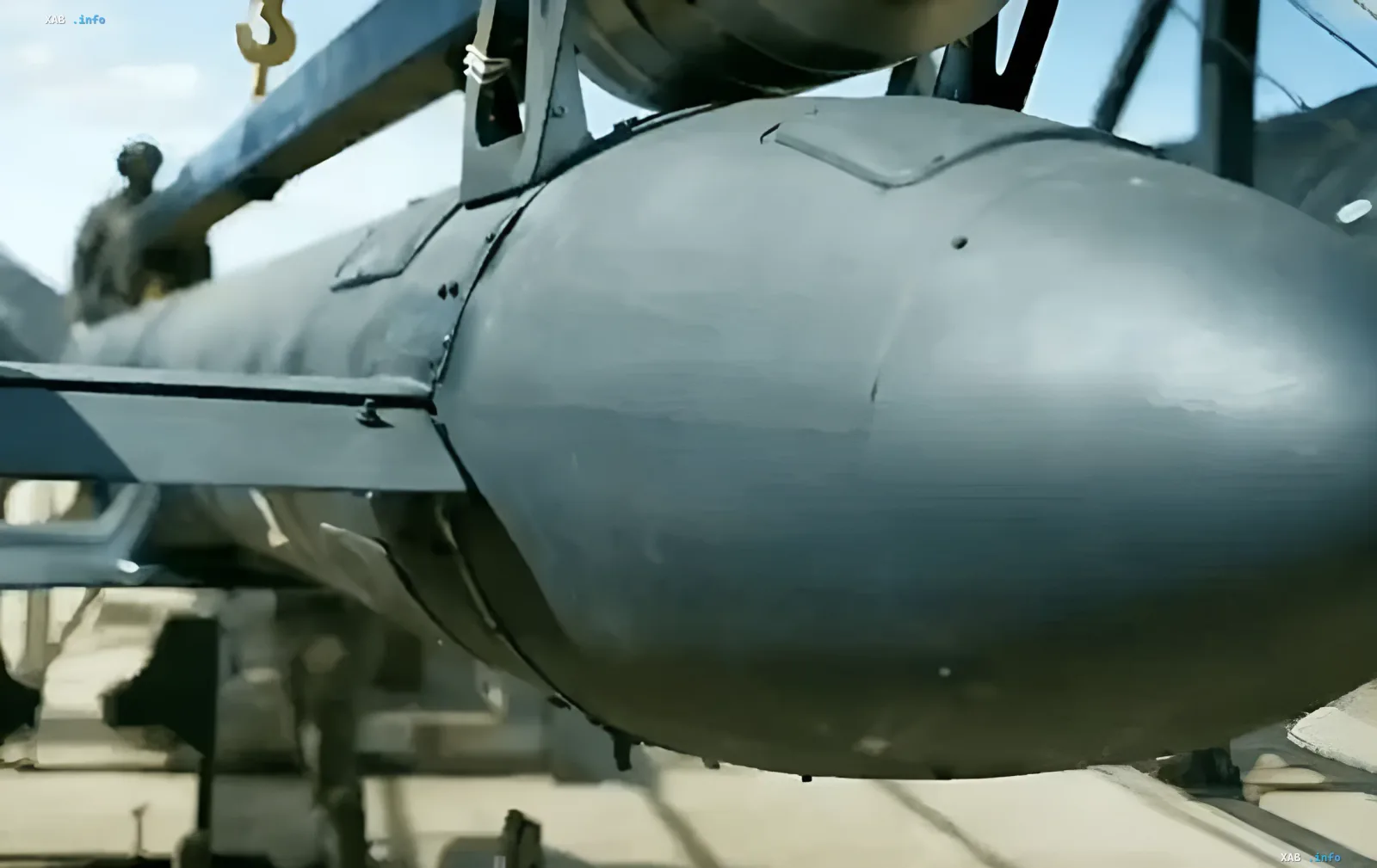
Jet-powered 'Shahed' drones, whose speed exceeds 400–450 km/h, are becoming one of the most challenging targets for Ukraine's air defense system. As Tymofiy Yurkov, co-founder of Contra-Drone, a company producing electronic countermeasures (ECM), explained in an interview with RBC-Ukraine, most interceptor drones used for the physical interception of UAVs are simply not designed to operate at such speeds. According to him, successful shootdowns of jet-powered 'Shaheds' by interceptors have been recorded very rarely — the few existing cases look more like coincidence than a sustained tactical trend.
The physics of interception: why catching up is impossible
The navigation principle of a jet drone, according to Yurkov, is fundamentally no different from that of a regular 'Shahed': the inertial navigation system and the CRPA antenna are retained, so the spectrum of ECM means applicable against both types of aircraft is virtually identical. The critical difference lies in the physics of interception. The interceptor operator does not need to 'catch up' with the target, but rather to accurately calculate its trajectory and reach the intersection point — so-called lead interception. This requires high skill and precise data on the target's course and speed, and at 400–450 km/h the allowable margin of error in calculations approaches zero. Moreover, the interceptors themselves face engineering limitations: once a speed of around 350 km/h and above is reached, problems arise with structural components, and the onboard batteries are not always able to maintain the required operating mode throughout the entire maneuver.
ECM as the main tool: suppression instead of destruction
Under these conditions, navigation suppression remains, in the assessment of Contra-Drone experts, one of the most optimal solutions, especially when a large number of drones simultaneously approach a city or facility. Yurkov emphasizes: 'The overwhelming majority of "Shaheds" lose the ability to reach their target precisely because of suppression, not because of successful physical damage.' This means that even if an interceptor does not have time to or cannot physically destroy a jet-powered aircraft, timely ECM action can divert it from its course and deprive it of the ability to deliver a strike. In addition to ECM systems, Contra-Drone produces personal radar units for firing groups, and, according to Yurkov, it is precisely their combination with interceptors that will make it possible to detect high-speed targets and guide the interceptor not behind the target, but to the trajectory intersection point.
The scale of the threat and air defense plans
The problem of intercepting jet-powered drones has become one of the key challenges for Ukraine's air defense against the backdrop of a sharp increase in the intensity of attacks. President Volodymyr Zelenskyy stated that by autumn the level of damage to jet-powered 'Shaheds' must be raised above 90%. In just four days at the end of August 2026, Russia launched almost 1,500 drones at Ukraine, of which about 800 were jet-powered. Defense Minister Hennii Humenyuk reported that four potential interceptors for countering high-speed UAVs have already been tested in Ukraine and that their production is planned to be scaled up to thousands of units. Meanwhile, presidential adviser Serhiy 'Flash' Beskrestnov drew attention to the fact that jet-powered 'Shaheds' fly to Kyiv along the same route along the border with Belarus, which, in his assumption, may be linked to their navigation being tied to the network of Belarusian mobile operators.
Contradictory data
The provided sources contain a minor discrepancy in the description of Serhiy Beskrestnov's position: in the main text of the interview he is identified as a 'presidential adviser,' whereas in the Ukrinform publication (source 3) he is listed as a 'Defense Ministry adviser.' This does not affect the substance of the data he provided on the flight routes of jet-powered drones, however, when citing it is recommended to clarify his current position. In addition, the stated goal of 'raising the level of damage above 90%' is a political directive, not a verified statistical indicator, and its achievement has not been verified by independent sources to date.
Outlook: radar plus interceptor
Contra-Drone experts believe that the future of high-speed drone interception lies in the 'personal radar + interceptor' combination, where the radar provides early detection and precise trajectory determination, while the interceptor delivers the strike at a pre-calculated point. 'The question of intercepting the target — not chasing it, but intercepting it along its trajectory — will become increasingly relevant as the speed of "Shaheds" increases,' Tymofiy Yurkov summarized. For now, given the current level of development of interceptor platforms and the absence of mass deployment of radar systems at the firing-group level, jet-powered 'Shaheds' retain a significant speed advantage, which Ukraine's air defense is forced to compensate for predominantly with electronic countermeasures.