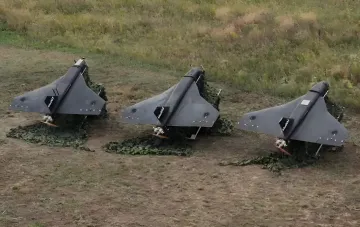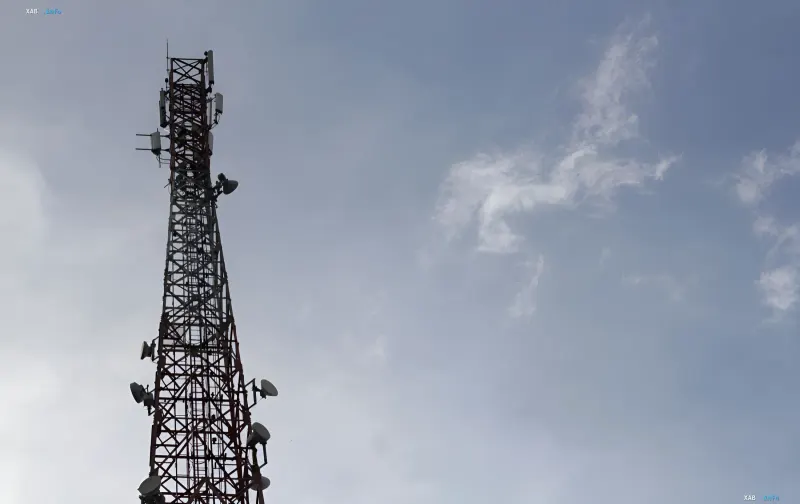
The Russian Federation is actively utilizing special infrastructure on the territory of the Republic of Belarus to coordinate and control jet-powered strike drones that regularly attack Kyiv and its surrounding regions. This was reported by prominent aviation expert Anatoliy Khrapchynsky during the analytical podcast 'TSE BAZA'. According to him, the key element of this strategy is repeater towers, which provide a stable communication channel and telemetry data transmission over long distances.
Operational Range and Tactical Features
According to expert estimates, a single repeater tower of this type can reliably cover a zone with a radius of about 140 kilometers. Objects located in close proximity to the Ukrainian border, specifically in the Belarusian 'appendix' near the Chornobyl exclusion zone, hold particular strategic importance. This provides a direct radio horizon directly over the Kyiv Reservoir. The expert emphasizes that this is not about total airspace control, but rather about maintaining a high-quality radio signal and real-time video feed.
Bandwidth and Scale of the Threat
An analysis of air raid intensity shows that Russian forces launch drones in waves of 4 to 5 units per hour. According to Anatoliy Khrapchynsky, this tactic is directly dictated by the bandwidth of existing communication channels: a single tower can simultaneously ensure stable data transmission for two to four jet-powered 'Shaheds'. After completing their combat mission or intercepting the first group, the next wave enters the airspace. Furthermore, there is a risk of scaling this infrastructure along the borders with European Union countries, including Poland and the Baltic states.
Position of Official Agencies
The issue of using Belarusian territory to amplify signals for Russian drones has repeatedly been raised by Ukrainian security structures. In particular, State Border Guard Service spokesperson Andriy Demchenko previously stated that the operation of repeaters on adjacent territory has been periodically recorded. This factor significantly complicates the tasks of air defense forces, requiring the prompt implementation of new technological solutions and electronic warfare equipment to suppress enemy command channels.