Taras Vysotsky, the Minister of Agrarian Policy and Food, told RBC-Ukraine in an interview that restrictions on the sale of certain products in supermarket chains are premature and can only stoke artificial panic among shoppers. In his words, the Cabinet of Ministers considers such retail steps unjustified at the current stage, as there is no basis for introducing limits due to a physical shortage of products.
The Cabinet's position: the restrictions are premature
Vysotsky stressed that, first and foremost, such measures are "certainly premature," and secondly, it is necessary to analyse whether they create additional panic. The minister gave a typical example of consumer behaviour: seeing the restrictions, a shopper may decide that "if limits have been introduced, then I should buy all six packs, even if I originally planned to take just one." He also noted that the retailers' decision had not been discussed with the relevant authorities, making it difficult to assess its impact on consumer behaviour.
What exactly the retailers have restricted
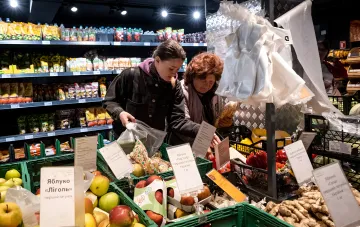
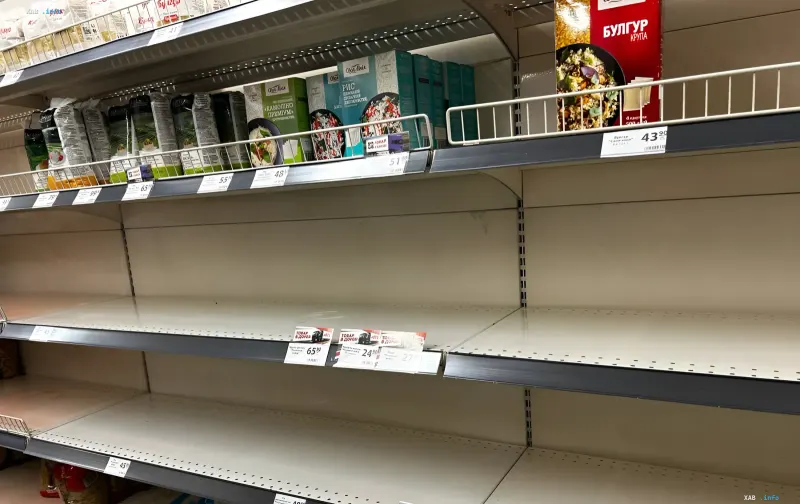
Last week, the "Auchan" chain announced the introduction of restrictions on the sale of a range of goods: canned food, oil, vinegar, salt, sugar, flour, grains and pasta. The maximum volume per receipt is up to six items, or up to six kilograms of weighed goods, and up to six dozens of eggs. Earlier, the ATB chain introduced similar limits of six items per receipt, covering canned goods, oil, instant food, pasta, salt, sugar and eggs. Shoppers, noticing empty shelves and new signs with restrictions, often interpret these steps as a signal of an impending shortage.
Shortage or panic: assessing the stocks
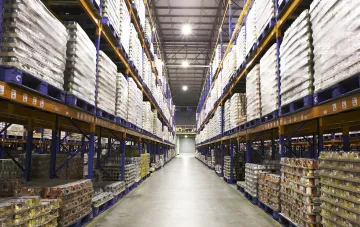
In response to these sentiments, Vysotsky pointed out that the products in question are of social significance — sugar, grains and oil — and that their production volumes are "more than sufficient." He acknowledged that local problems may arise in certain regions, including against the backdrop of systematic shelling that also hits food warehouses, but on a national scale there is no large-scale shortage. The minister added that there is also no reason to fear a prolonged disappearance of grains, oil, flour, sugar or eggs from the shelves in the current situation.
Contradictory data
Here there is a clear discrepancy in the assessments of the two sides. By introducing limits, the supermarket chain is effectively signalling problems in logistics and the preservation of stocks: against the backdrop of shelling that affects food warehouses, retailers are trying to smooth out possible supply disruptions and distribute the limited flow of goods among shoppers. The position of the Cabinet of Ministers and of Minister Vysotsky personally is the exact opposite: he asserts that there is no physical shortage of products, that the production of socially significant goods is sufficient, and that the restrictions were not coordinated with the relevant authorities and are therefore premature. Thus, one side sees a risk of local supply disruptions, while the other sees a risk of artificial panic, which in itself can create a shortage where none objectively exists. Both versions are set out in public statements, and there is no independent public audit of warehouse stocks by region in the materials provided.
What this means for the shopper
The practical conclusion drawn by the relevant authority is that there is no need for panic buying: the limits of six items per receipt do not reflect a real shortage, but merely reflect temporary logistical difficulties at individual outlets. At the same time, retailers reserve the right to regulate sales in specific stores depending on the actual level of warehouse stocks. For the consumer, this means that when signs of restrictions appear, it is more rational to focus on one's own needs rather than on the fear of "buying while there still is," which, according to the minister's own assessment, is the main source of panic.