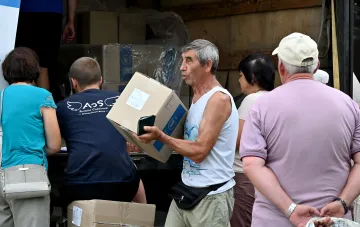
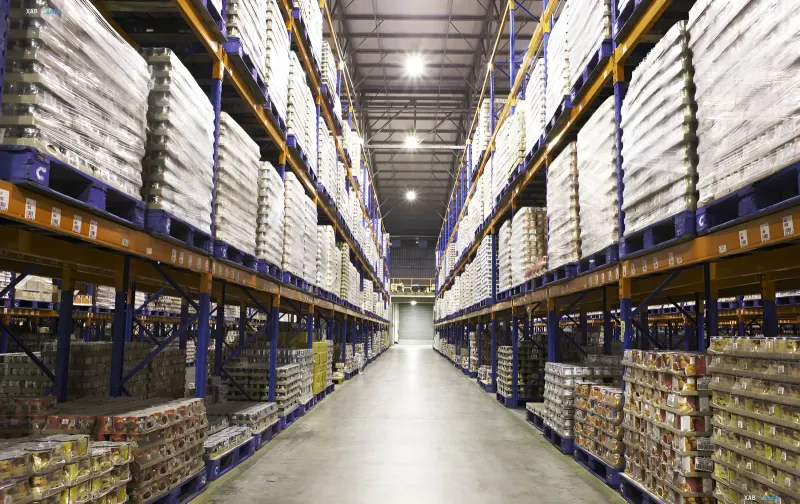
Taras Vysotsky, Ukraine's Minister of Agrarian Policy and Food, told RBC-Ukraine in an interview that the country does not need to build large-scale state reserves of food products. In his words, the experience of the wartime period, taking into account Ukraine's actual production capacity, has convincingly shown that there is no need for centralized food reserves. Agricultural production in the country is spread across virtually all regions, which rules out the threat of systemic hunger and makes logistics, rather than production volumes, the key challenge for the market.
Why state reserves do not work: lessons from the past and the economics of storage
Vysotsky reminded that Ukraine previously had a state food reserve system, but it did not demonstrate adequate efficiency. The minister pointed to the specific economic costs of this approach: reserves require additional spending on storage, and the products must be constantly renewed if the stockpiles are not used for a long time. This means that previous batches have to be sold off, which creates additional pressure on the market and the budget. According to the minister, creating food reserves could only be justified in one scenario — if Ukraine depended on imports of one of the main product categories, which in theory could lead to risks of supply disruptions or a physical shortage of certain goods. However, given the current structure of the domestic agricultural sector, this scenario is not relevant.
Competition among hundreds of producers as a natural price regulator
In response to a question about the need for a large state operator on the food market — by analogy with a state company on the fuel market — Vysotsky drew a clear comparison. On Ukraine's fuel market, around a dozen large national operators operate, whereas the country has hundreds of food producers. In the minister's view, this number of participants significantly complicates the possibility of a cartel agreement: if one producer sets an inflated price, competitors can offer a lower one and take a share of its market. This is why, according to the Ministry of Agrarian Policy, there is no need for either additional regulation or the creation of a large state operator given the current structure of the food market.
The ten-percent markup: a "social contract" with the market
Instead of administrative pressure on prices under martial law, Ukraine applies a 10% cap on the retail markup for certain socially significant goods. The State Service of Ukraine on Food and Consumer Protection is supposed to monitor compliance with this rule. Vysotsky clarified that the cap applies to an exhaustive and small list of products, including vegetable oil, C1-grade eggs, wheat flour, chicken, and baguette. The goal of the mechanism is to prevent an unjustifiably high markup precisely on socially significant items. According to the minister, large-scale price abuses have not been recorded to date: in 99% of cases, retail chains comply with the established norm. "This tool is more of a signal to the market. Such a social contract works: the state has set the framework, and market participants are observing it," Vysotsky summed up.
Logistics — the main challenge, not a production shortfall
Separately, RBC-Ukraine noted that there is no shortage of food products in Ukraine — production volumes are sufficient to meet consumer needs. The main challenge for the food market under current conditions remains logistics. The traditional model, in which products moved along the "producer — large warehouse — point of sale" chain, has been disrupted or become unavailable in many cases. This confirms the minister's thesis that the decentralized production of food across the country means there is no threat of hunger, but it requires flexible adaptation of supply chains.
Contradictory data
No significant contradictions in figures or dates were found in the provided sources. At the same time, a methodological caveat should be noted: the minister cites the "wartime experience" as the evidentiary basis for the inefficiency of state reserves, yet does not provide specific quantitative indicators — volumes of written-off products, amounts spent on storage, or the share of reserves sold with a loss of quality. The "99% markup compliance" estimate is also given without specifying the observation period or the calculation methodology, which leaves room for alternative interpretation by independent monitoring organizations.