Ukraine is fully supplied with basic food products of domestic production — from bread and grains to meat, vegetable oil, and sugar. This was stated by Taras Vysotsky, Minister of Agrarian Policy and Food, in an interview with RBC-Ukraine. According to him, the country maintains an export-oriented model across a number of categories; however, against the backdrop of the current situation, the state still has product groups with a short shelf life, where potential logistics risks and sales problems are most likely.
Bread, Grains, and Sugar: 100% Stocked
The minister emphasized that Ukraine is 100% supplied with baked goods and flour. The country grows more than 24 million tons of wheat against domestic consumption of about 6 million tons, while only 3–3.5 million tons are needed for food purposes. According to Vysotsky, a certain import in this category is not critical. There is also enough pasta — only certain types are imported based on consumer preference. For grains (wheat, barley, oat, buckwheat, and corn), production exceeds domestic consumption many times over; at the same time, rice is imported due to the small volumes of its cultivation given the natural and climatic conditions. Ukraine remains export-oriented in sugar and oil: vegetable oil production exceeds domestic consumption by roughly ten times.
Meat, Dairy, and Eggs: An Exporting Country
The main volumes of the borscht-set vegetables — potatoes, carrots, beets, onions, and cabbage — are produced in Ukraine, and there are no problems with their supply, although a certain import is possible in this group. The balance for dairy products is neutral: cheeses are imported more, while dry and condensed milk, as well as butter, are exported; at the same time, even with a complete absence of imports, the basic need would be met. Ukraine exports eggs, is supplied with pork from its own production, and is a net exporter of poultry meat. Separately, the minister noted that salt is imported because its main deposits are tied to "Artemsali" (Artem Salt), which ended up in the temporarily occupied territory.
Where the Real Risks Lie: Vegetables, Fruits, and Chilled Products
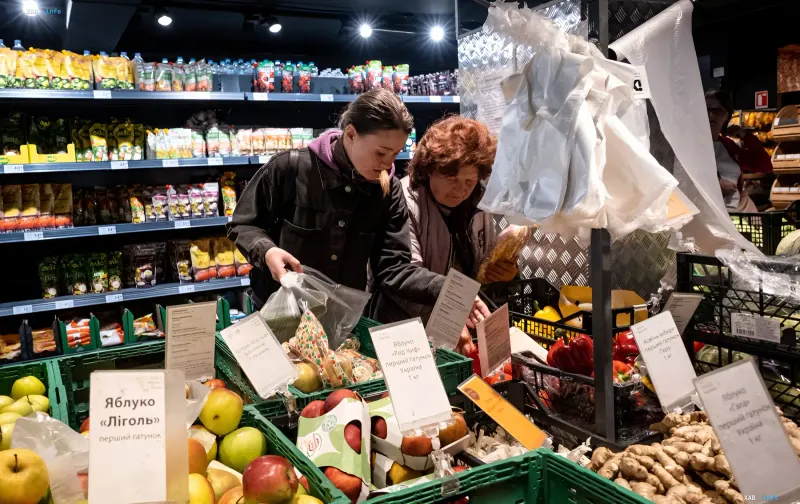
The most likely occurrence of a shortage, according to Vysotsky, concerns goods that must be sold quickly — vegetables and fruits. They have a relatively short shelf life and are bulky in terms of transport, so it is precisely here that logistics risks and sales problems are most likely. This partly also applies to fresh and ice-chilled products — fresh meat and fish. For the rest of the goods, the minister added, there are no such risks.
Contradictory Data
Between the statements about full supply of basic products and market assessments of prices, there is a difference in emphasis. On the one hand, the agricultural policy minister emphasizes that no shortage of basic categories is expected and calls for not hoarding food. On the other hand, a number of publications note the risk of rising food prices, linking it to strikes on infrastructure and logistics, rather than to a lack of raw materials. In other words, the discrepancy concerns not the presence of goods on the shelf, but the dynamics of prices and the resilience of supply chains: stocks in basic categories are declared sufficient, while price and logistics risks for perishable products and under conditions of attacks on infrastructure remain a matter of discussion.
Thus, according to the assessment of the relevant ministry, there is no systemic shortage of basic food products in Ukraine, and the zone of greatest vulnerability is limited to perishable and bulky-in-transport products, where logistics and speed of sale play the key role.