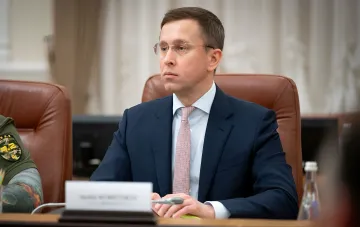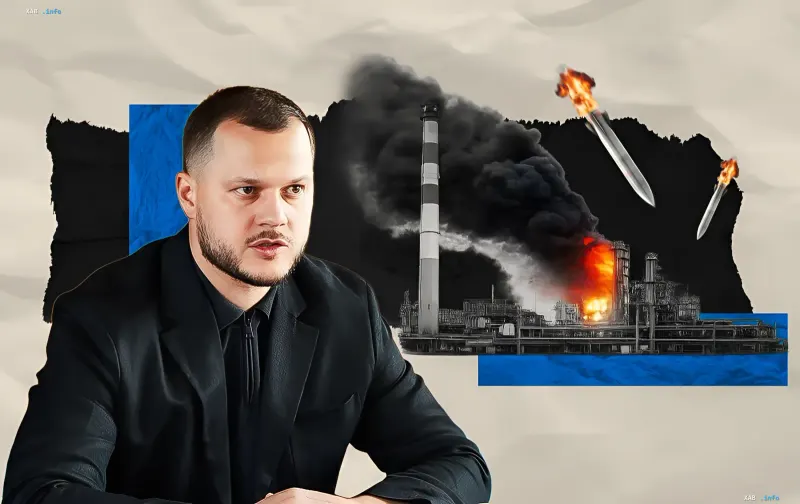
On October 30, Minister of Reconstruction Mykola Kalashnyk spoke in the Verkhovna Rada during the Government Question Hour. The speech came against the backdrop of intense Russian strikes on energy infrastructure in several regions and the capital, which led to hours-long power outages. Back in July, the President designated preparation for winter as one of the main tasks of the new Cabinet of Ministers, and it was in this context that the minister presented the results of his first 100 days in office. However, comparing the voiced figures with previous reports from the agency and government documents published before his appointment paints a different picture: a significant portion of the results was formed under the previous leadership, while the new minister's own initiatives remain mostly in the planning stage.
Roads and Water: Figures That Barely Move
According to Kalashnyk, nearly 19 million square meters of state-designated road surface have been repaired this year. It sounds impressive, but back on July 20, the ministry reported 18.1 million square meters. Thus, over the three and a half months of the new minister's work, the increase was only about 900,000 square meters — a volume that does not indicate a noticeable acceleration in pace. Virtually all the results cited in the report were achieved before his arrival. A similar situation is observed in the water supply sector: Kalashnyk announced 30 projects in 14 regions designed to provide drinking water to about 10 million people. The previous team reported on 29 projects in the same 14 regions with the same expected population coverage. We are talking about the continuation of an already established program, not the launch of a new direction.
Thermal Generation: 3.2 GW on Paper and 13.5 Billion UAH in the Budget
In his report, the minister announced that 343 distributed generation facilities with a total design capacity of about 3.2 GW are in progress. At the same time, it is important to understand: this is the total capacity for which facilities at various stages of implementation are designed, rather than the volume of generation already put into operation and available to consumers. 13.5 billion UAH has been allocated for these projects. The schedule provides for the commissioning of about 1.5 GW in the coming months and 800 MW in the first quarter of 2027. No specific deadlines have been named for the remaining approximately 0.9 GW. How many new capacities are actually working at the start of the heating season was not mentioned in the report.
Procurement and Reserves: A Program Started Before Kalashnyk
Procurement of heat-generating equipment was prepared in advance. Back on April 30, the government supported the proposal of the previous ministry to direct 3 billion UAH to advance the purchase of equipment. At the same time, the need for 247 modular boiler houses with a total capacity of more than 1.3 GW was reported. That is, the practical implementation of this program began before the appointment of the new minister. A similar picture is seen with backup power for utility companies: according to Kalashnyk, available capacities exceed 1 GW against a demand of 1.4 GW. The report did not mention new household support programs. The supply of boiler equipment with Italy's support is also not new: back on January 29, Ukraine received 78 units of industrial equipment with a capacity of more than 112 MW, and the previous ministry leadership had already reported on negotiations for the next batch.
"Resilience Plans": 67.6 Billion UAH Without Regional Breakdown
Even under former Minister Oleksiy Kuleba, the budget for regional "resilience plans" — critical infrastructure protection projects worth 67.6 billion UAH — was formed. Kalashnyk confirmed this amount and reported that about 70% of the funds had been absorbed. However, from the coordinator of a program of this scale, it is logical to expect not only the overall absorption percentage, but also a regional breakdown: who among the contractors is lagging behind, where bottlenecks arise, and what specific measures the ministry is taking to accelerate the work. This information was not included in the report.
Winter as the Main Exam
Kalashnyk's report demonstrates continuity of the previous policy rather than the emergence of a new course. Among the key "achievements" are projects launched before his appointment, and the cited figures give no reason to speak of a significant acceleration of work or qualitative changes. The ministry's own initiatives are mostly in the planning stage, and answers to some critical challenges remain uncertain. This issue becomes especially acute on the eve of winter, when the agency will have to answer not for promises and design capacities, but for the actual readiness of the infrastructure for the heating season amidst ongoing strikes on the energy sector.