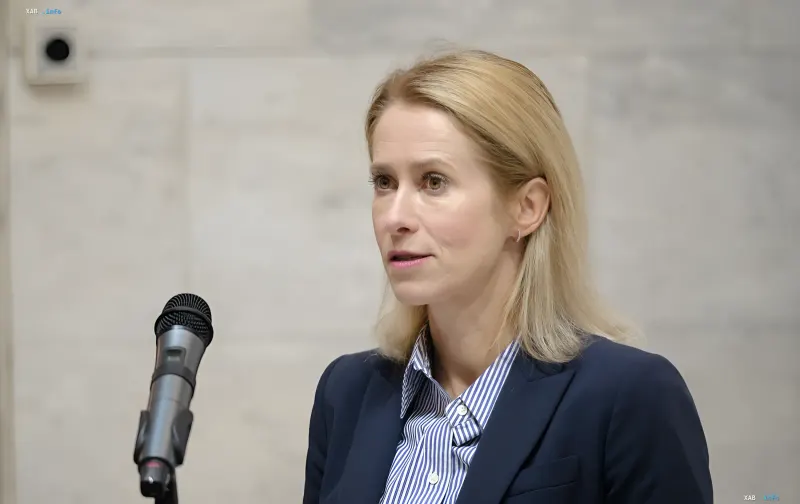
High Representative of the European Union for Foreign Affairs and Security Policy Kaja Kallas has made a sharp statement regarding the role of the US in resolving the conflict in Ukraine. Speaking on October 20 during plenary debates in the European Parliament in Strasbourg, the EU diplomatic chief directly accused the American negotiating team of long-standing attempts to impose conditions for ending the war on Kyiv that essentially amount to capitulation to Moscow.
"A Year and a Half of Pressure"
"Although US negotiators have been trying to push Ukraine toward capitulation for nearly two years now — and now a year and a half — the reason Ukraine did not capitulate on Putin's terms is that Europe supported Ukraine," Kallas stated. According to her, it was the steady support from European countries that prevented Russia from achieving Kyiv's surrender, and Europe has no other choice but to continue this support. Kallas also emphasized that Ukraine strives for peace, having faced Russian attacks for four years, while Moscow, in her assessment, shows no readiness to stop the war.
Europe's "Maximalist Plan"
The EU diplomatic chief recalled her "truly maximalist plan," which she presented to EU foreign ministers back in February 2026, concerning Europe's participation in peace negotiations between Ukraine and Russia. "If Russia puts forward its maximum demands and requests, we must also put our maximum demands on the table to balance these negotiations," Kallas explained. She pointed out that Russia demands the lifting of sanctions, and the decision on this issue falls within the exclusive competence of the EU, making it mandatory for the bloc to be represented at the negotiating table.
"We must state very, very clearly that we also have demands toward Russia. We are not giving these things away for free, because this is not only about achieving peace, but about ensuring that this peace is lasting and fair," she added. Thus, Brussels is effectively cementing the position that any settlement must guarantee not a formal ceasefire, but sustainable and fair conditions for Ukraine.
Context: Washington's Contradictory Stance
Kallas's statement came against the backdrop of several steps by the US administration that Kyiv and Brussels perceived as pressure on Ukraine. Recently, the US suspended part of the sanctions against Russia and agreed to purchase Russian diesel fuel, which President Donald Trump explained by a desire to "lower" fuel prices. At the same time, it became known that Washington is delaying the transfer of critical missiles for Patriot air defense systems to Ukraine: although funds were already paid for them under the PURL program, the Pentagon has not yet approved the deliveries. Against this backdrop, the US leader accused Ukrainian President Volodymyr Zelenskyy of unwillingness to conclude a peace deal with Russia.
What This Means for Negotiations
Together, Kallas's statements and the described actions of Washington paint a picture of diverging approaches between Ukraine's two key allies. Europe, according to its diplomatic chief, insists on being a full party to any negotiations and putting forward its own "maximalist" demands, whereas the American side, in her estimation, is focused on swiftly compelling Kyiv to make concessions. For Ukraine, this means that the further course of the settlement will largely depend on how successfully Brussels and Washington synchronize their positions and whether they can provide the support that, according to Kallas, has prevented Ukraine from capitulating for a year and a half.