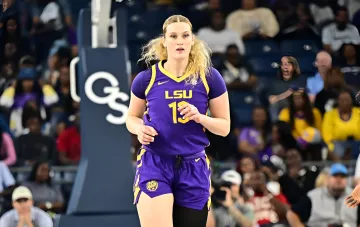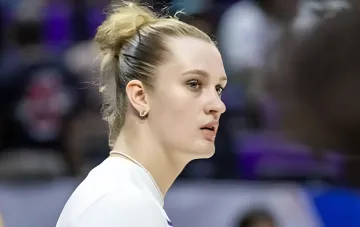
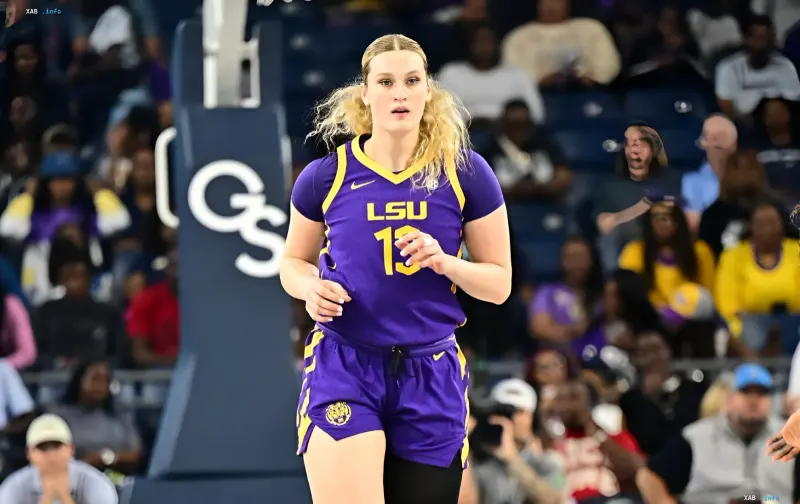
Promising Ukrainian basketball player Kateryna Koval has made one of the most consequential decisions of her young career in the American NCAA college league. The 20-year-old athlete publicly announced the termination of her agreement with Louisiana State University (LSU Tigers) after the club's management signed a contract with Russian Anna Minaeva. This is reported by Sport RBC.UA, citing the basketball player's personal Instagram account. The decision was motivated not by sporting, but by deeply personal and moral reasons, which turned the transfer story into a wide public resonance in the United States and in Ukraine.
Personal statement: the war is close by
In her official statement, Koval emphasized that for her the war is not an abstract event. According to her, her father is currently serving in the ranks of the Armed Forces of Ukraine and "feels immense pride in defending his country from Russian aggression." The athlete's close ones have been killed and wounded as a result of Russian shelling, and the places where she grew up and first started playing basketball were destroyed by missile strikes. "The timeliness of this situation and its deep personal impact on me, my family, and those we care about and who continue to live and fight in this war have ultimately made me reconsider whether LSU is still the right place for me," the Ukrainian wrote, explaining why playing on the same team as a representative of the aggressor country was unacceptable to her.
Coach's reaction and a skeptical refusal
An attempt to smooth over the conflict was made by the team's head coach Kim Mulkey. The coach publicly called on the Ukrainian and the Russian to become "ambassadors of unity" and, in her words, help stop the war. However, Koval responded to this offer with a skeptical refusal and withdrew her documents from the educational institution, effectively ending her stay at LSU Tigers. Thus, the public rhetoric of the coaching staff about "unity" met with the firm stance of the athlete herself, for whom playing alongside a Russian was morally impossible.
Legal uncertainty and the risk of missing the season
The most difficult part for Koval has been the legal dimension of the situation. Because the Russian was signed after the official transfer window had closed, the Ukrainian found herself in a gap in the rules: she cannot simply transfer to another club. Now the 20-year-old basketball player risks missing the 2026/27 season entirely. Her future depends on a special waiver from the NCAA administration: if the organization takes into account the force majeure and moral-ethical circumstances, Koval will be able to enroll at another American university. Until this decision is made, her career status remains uncertain.
Contradictory data
In the public sphere, two markedly different narratives have emerged. On the one hand, the LSU coaching staff and part of the American sports community presented the situation as an opportunity for "dialogue" and "ambassadorship of unity," insisting that sport should be above geopolitics. On the other hand, Koval herself and Ukrainian media emphasize that her decision is dictated by direct human losses in her family and the destruction of her hometown, not by an abstract political stance. Moreover, there is still no definitive NCAA verdict: some sources say the Ukrainian "risks missing the season," while others note that the decision on the special waiver has not yet been made. As long as both versions coexist, the final status of the transfer remains open.
Statistics and context
Last season, Kateryna Koval played 35 games for LSU Tigers, averaging 8.3 points and 6.3 rebounds per game — figures that confirm her status as one of the team's most promising players. Her departure against the backdrop of the signing of a Russian has become another loud precedent in which an athlete's personal circumstances intertwine with an international conflict. Earlier, the Ukrainian basketball community had also discussed other examples of players' principled stances, and the Ukrainian men's national team recently made a leap in the FIBA ranking after wins in the 2027 World Cup qualifiers, which makes the topic of the moral choices of Ukrainian athletes in foreign leagues especially resonant.