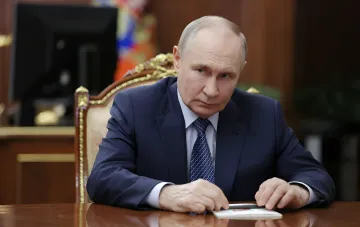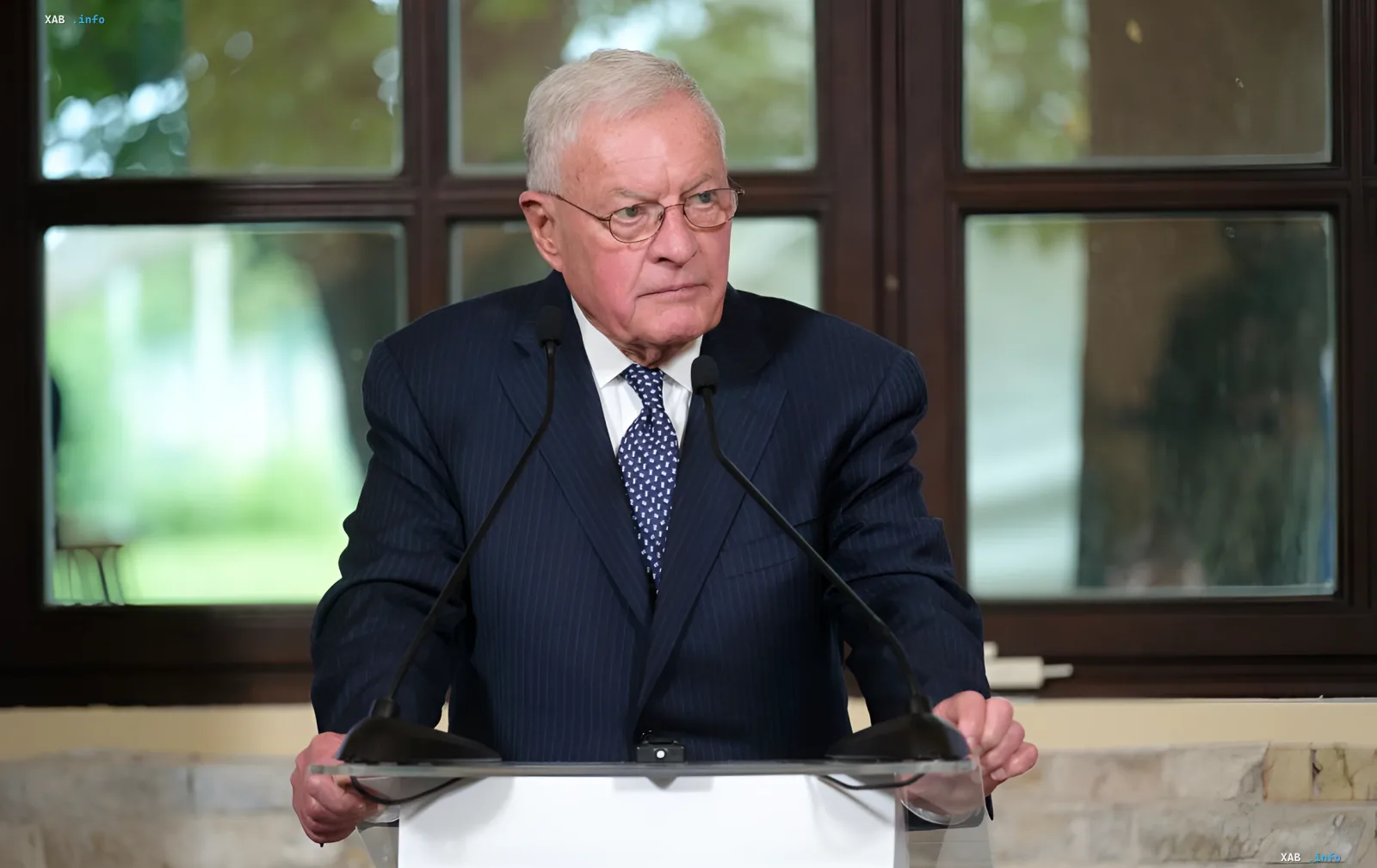
Former special envoy of US President Donald Trump, Keith Kellogg, in an interview with journalist Natalia Mosiychuk published by RBC-Ukraine, stated that a swift end to the Russia-Ukraine war is not expected, as, in his assessment, Vladimir Putin «simply does not want» it to stop. The diplomat acknowledged that on Ukraine's Independence Day last year he had believed the conflict would end within a year, but that prediction did not come true. «The problem with this war is that Putin simply does not want to end it. He has had numerous opportunities and summits, as we say, to stop and freeze the conflict», Kellogg emphasized. According to him, Ukraine has done «incredible work» repelling Russian aggression, but the Kremlin leader, in the former special envoy's view, will not stop until he seizes not only Luhansk Oblast but also Odesa and Zaporizhzhia Oblasts. Crimea, Kellogg reminded, is already under Russian control.
«No one will give it to him for free»: the Kremlin's territorial ambitions
Kellogg directly pointed to specific regions that, in his assessment, are among Moscow's priorities. In addition to the already partially occupied Luhansk Oblast and Crimea, the general named Odesa and Zaporizhzhia Oblasts as targets for further expansion. «I have always noted: if he wants it, he will have to fight for it. No one will give it to him for free», the former special envoy stated. Thus, Kellogg effectively described a scenario in which Russia will not limit itself to the currently seized territories but will continue its advance toward the south and southeast of Ukraine. This warning aligns with what other US military and diplomatic sources had previously emphasized, noting that the Kremlin views control over coastal territories as a strategic priority.
Historical analogy with Hitler and the Sudetenland
Particular attention deserves the historical parallel that Kellogg drew in the interview. According to him, he is «always concerned by the analogy with World War II, when Adolf Hitler told the British that he only needed the Sudetenland region of Czechoslovakia. And the British replied: but we now have peace. How wrong they were!» The expert emphasized that he does not believe Putin's statements about «limited goals» and does not think the Russian leader will stop once he obtains some territories. On the contrary, Kellogg is convinced that Moscow will strive to push further. «Answering your question directly, I do not know [when the war will end]. Putin must realize that he cannot win this war. He simply cannot. That must sink into his mind», the diplomat explained. At the same time, he added that the longer the conflict lasts, the more it works in favor of the Ukrainian side, as over time the Kremlin comes to understand the impossibility of a military victory.
US position at the UN: «there is no military solution»
Against the backdrop of Kellogg's statements, Deputy US Ambassador to the UN Dan Negrea, during a Security Council session, called on Russia and Ukraine to cease strikes on civilian objects and return to the negotiating table. According to him, Washington emphasizes that there is no military solution to the conflict, and the US is ready to facilitate peace negotiations. This position formally aligns with Kellogg's rhetoric, who, despite his harsh assessment of Putin's intentions, does not rule out a diplomatic track and emphasizes the role of European countries, which, in his words, «have risen to the challenge and support Ukraine not only for the West but for the whole world».
Economic context: what will bring millions of Ukrainians back from abroad
In parallel with discussions on the prospects for a ceasefire, as reported by RBC-Ukraine, economists are debating which economic model is capable of bringing millions of Ukrainians back from abroad. According to experts, high salaries alone are not enough — security, affordable housing, and work in one's field of expertise are needed. This factor, in essence, becomes an additional argument in favor of the protracted nature of the conflict: until security is ensured, Ukraine's demographic and economic potential remains partially «frozen» abroad, affecting the country's long-term recovery prospects.