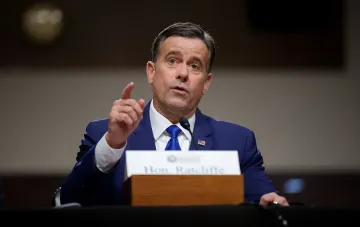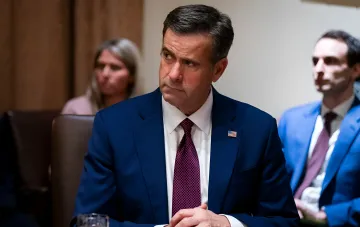
Behind the scenes of world politics on 25 August 2026, a scene unfolded that is usually reserved for spy thrillers. CIA Director John Ratcliffe — for the first time since the start of the major war at such a level — landed in Moscow on a US Air Force military plane, and Vladimir Putin signed three decrees on that same day, which instantly disappeared from public access and were granted classified status. The visit, which no one had announced, forced the Kremlin to urgently rework the president's schedule, and the White House to turn to Kyiv with an unprecedented request for "silence." What exactly is hidden in the documents numbered 605, 606 and 607, and why Washington needed this — we break it down by the facts.
How the "gap" in the numbering was uncovered
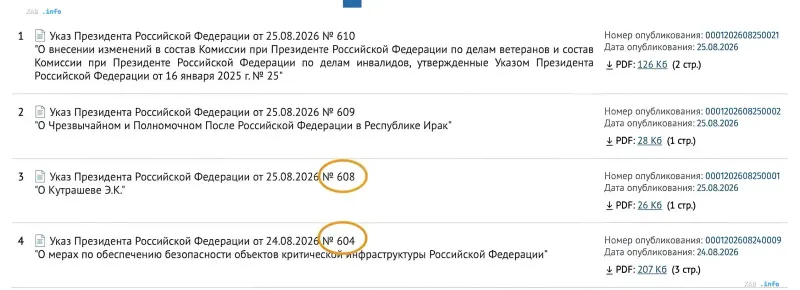
The secrecy was not exposed through leaks, but through the arithmetic of state document management. On the official legal information portal, 25 August saw the publication of open decrees numbered 608 and 609 — personnel rotations at the Russian embassy in Iraq — and 610, concerning the composition of committees on veterans' and disabled persons' affairs. Meanwhile, the last published document of 24 August bore number 604 — the resonant decree on the compulsory seizure of enterprises that had not protected themselves against Ukrainian drone attacks. Documents 605 through 607 were signed but fully removed from public access. In the practice of the Russian executive branch, such a "gap" means the complete classification of acts that, as Western analysts note, are directly linked to the agenda brought by the CIA director.
Urgent flight to Vnukovo and the "drone ceasefire"
According to Kremlin pool correspondent Alexander Yunashev, Ratcliffe's visit was so urgent that Putin cancelled a major domestic event, the preparation of which had taken "hundreds of people" several days. The US Air Force Boeing C-17A Globemaster III, which took off from Andrews Air Force Base and made an intermediate stop in Riga, landed at Vnukovo on the morning of 25 August and departed the same day, spending about eight hours on the ground. For the safety of the mission, the Donald Trump administration engaged channels of direct influence on Kyiv: according to the Financial Times and Axios, Washington officially asked Ukraine to introduce a three-day silence regime (from 24 to 26 August) and to fully refrain from drone strikes on Moscow, Saint Petersburg and the northern regions of the Russian Federation. Kyiv met this condition, ensuring a safety corridor for the American aircraft. In sync with the CIA director, Vatican Secretary for Relations with States Paul Richard Gallagher also arrived in Moscow, holding a meeting with Sergey Lavrov and stating the search for "points of contact" for a settlement.
Three scenarios of the closed negotiations
Official bodies in the US and Russia maintain complete silence on the meeting's agenda, so leading world media operate with three basic scenarios. The first, according to The Wall Street Journal, is an ultimatum against a new mobilization: US intelligence recorded the Kremlin's covert preparation for a new large-scale wave of mobilization and planned provocations against NATO countries, and the secret decrees could institutionally launch this process, accompanied by the transfer to Putin of a package of classified satellite data. The second scenario, linked to the statement by former spokesperson of the Ukrainian President's Office Yulia Mendel, is an energy pact: discussion of a mutual moratorium on strikes on Russian refineries and Ukraine's energy infrastructure ahead of winter, which for Washington means curbing the rise in gasoline prices within the States. The third scenario, pointed out by the iPaper outlet, is a global prisoner exchange: the CIA traditionally oversees the final stages of such deals, and the closed decrees could have concerned the pardon of a group of American citizens and Russian political prisoners.
Contradictory data
Here it is important to honestly lay out two lines of inconsistencies. The first — on numbering: fact-checking confirmed the very fact of the classification of three decrees, but with a caveat on the exact sequence of numbers. Monitoring resources initially recorded a "gap" in document management, and the final linking of documents 605–607 to the visit date (with open 604 of 24 August and 608–610 of 25 August) was refined during verification; both sides agree that exactly three acts were removed from access, but the numbering details in early reports diverged. The second — on content: the WSJ version (mobilization), iPaper (prisoner exchange) and Mendel's statements (energy pact) are mutually exclusive and represent competing interpretations of the same closed documents, not confirmed facts. None of the scenarios had received official confirmation by the time of publication from either the Kremlin or the US State Department, so all three should be considered as analytical hypotheses, not as established reality.
Analytical conclusion
John Ratcliffe's visit in August 2026 is a mirror repetition of the famous trip by William Burns in November 2021, when the CIA director was sent to deliver final warnings. Putin's signing of three secret decrees "blindly" on the day of the American aircraft's landing proves that decisions on critical issues of war, mobilization or shadow agreements are made in a regime of maximum isolation. For Ukraine, this episode became yet another signal of the pragmatism of the Trump team: the White House is ready to directly limit Kyiv's sovereign right to strike territory of the Russian Federation if this is required to ensure direct American diplomacy. How successful the negotiations turned out will become clear in the coming weeks — by whether covert mobilization mechanisms are launched in the Russian Federation or whether the parties announce unexpected humanitarian and energy compromises.