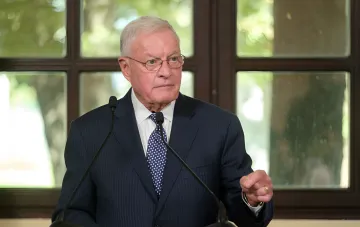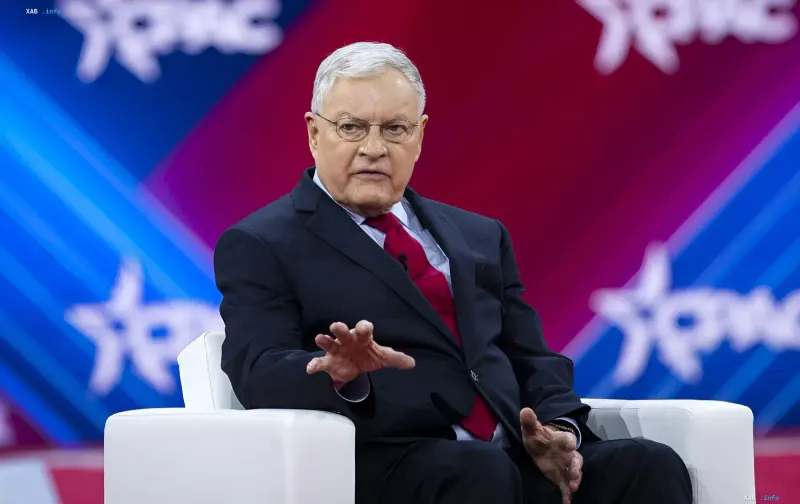
Kit Kellogg, former special envoy of U.S. President Donald Trump, gave a detailed assessment of the current state of bilateral relations between Washington and Kyiv in an interview with journalist Natalia Moiseychuk, published by RBC-Ukraine. According to him, the interaction between the two presidents has noticeably improved over the past period: in Kellogg's words, a "relationship of restrained respect" has formed between Trump and Zelensky. At the same time, the American diplomat emphasized that for effective cooperation between the two capitals, it is not enough to limit contact to the level of heads of state — Kyiv needs to build a systematic engagement with the key figures of the U.S. administration who directly shape the White House agenda.
"Like poles of a magnet": the psychological portrait of the dialogue
Kellogg drew attention to the similar character traits of both leaders, which, in his apt observation, makes their interaction at times resemble the behavior of like poles of a magnet — attraction and repulsion follow one another with predictable periodicity. Despite this complex dynamic, the former special envoy called Volodymyr Zelensky a "man of courage" who is leading a country amid a full-scale war. Earlier, in February 2025, Kellogg used a similar formulation in an interview with RFI, calling Zelensky a "brave leader of a country at war," which confirms the consistency of his assessments over several months.
Who in Washington Kyiv should be calling
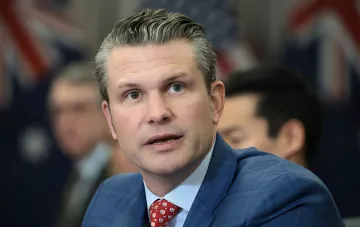
The central practical piece of advice from Kellogg was a recommendation for the Ukrainian side to redirect part of its diplomatic efforts toward working with specific advisors to the U.S. president, whose influence on White House decisions, in his assessment, substantially exceeds the formal channels. As priority contacts, he named Secretary of State Marco Rubio, Treasury Secretary Scott Bessent, and Secretary of Defense Pete Hegseth. "If you really want to have influence, work with the advisors," Kellogg stated, emphasizing that it is at this level that concrete changes in Washington's policy can be achieved. He also explained that one of the key reasons for his own work in Ukraine was the need to better understand the situation on the ground and determine what exact message should be conveyed to Trump so that it would be received adequately.
Kellogg's version of the Oval Office conflict
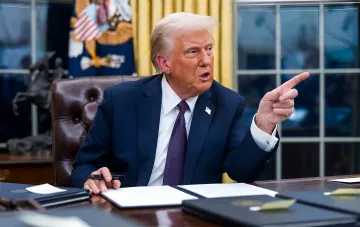
A separate part of the interview is devoted to the incident in the Oval Office that took place in February 2025, after which claims appeared in the public space that the American side had allegedly discussed the possibility of replacing the Ukrainian president. Kellogg categorically rejected this version, emphasizing that he was personally present at that meeting and heard no such proposals from Trump or from anyone else present. In his assessment, what happened was the result of the two presidents having, at a certain point, "lost contact" with each other, although both were subsequently ready to resume the dialogue. Kellogg also noted that Trump is striving to end the war and is deeply affected by human losses, which, in his words, is an important factor in shaping the American position on the Ukrainian settlement.
Prospects for a settlement: why there will be no quick peace
Concluding the interview, Kellogg offered a cautious but unambiguous assessment of the prospects for ending hostilities: one cannot yet count on a swift end to the war, since, in his words, Russian leader Vladimir Putin is not ready to stop the fighting. This statement fits into the broader context of Kellogg's public remarks, in which he had earlier, in particular in conversations recorded by Ukrainian TV channels TSN and 24tv, explained Washington's position on territorial issues, using the formulation "You want the Donetsk region — fight for it," which underscores the rigidity of the American approach to Kyiv's negotiating positions.