Ukrainian agricultural holding Kernel, in partnership with the international scientific initiative NASA Harvest, has completed the first phase of testing an advanced satellite monitoring technology for domestic fields. Specialists from the University of Strasbourg, the European Bank for Reconstruction and Development, and the Food and Agriculture Organization of the United Nations also took part in this large-scale project. The new digital system remotely verifies adherence to sustainable agricultural practices, which is critical for securing funding from international partners and operating within the European market.
Algorithm Calibration Based on Real Data
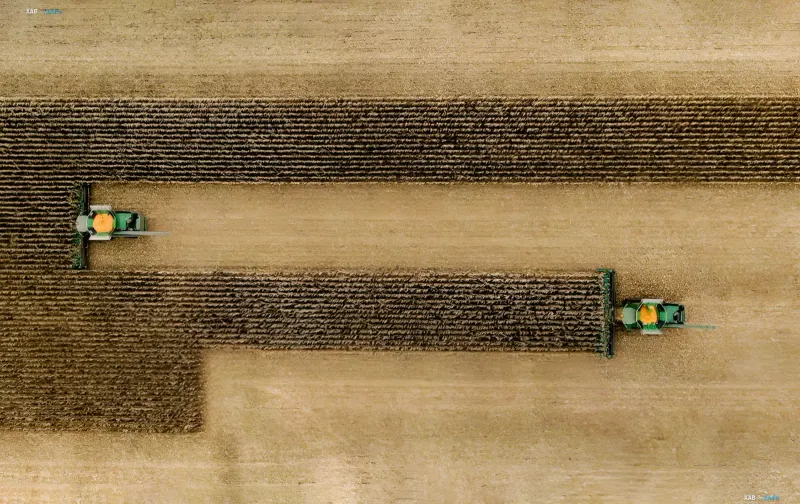
To successfully calibrate the technology, the agricultural giant provided researchers with detailed information on 87 land plots. These fields are part of the company's carbon project and are already undergoing independent international validation. This approach allowed direct comparison between automated satellite analysis results and actual data regarding cultivated crops and field operations.
Scientists analyzed land arrays in the Sumy and Chernihiv regions, reconstructing crop rotation histories over several years. A significant improvement in agronomic indicators was recorded: specifically, the share of monoculture, where the same crop was grown on the same field for two consecutive years, dropped from 16.5% in the 2017–2020 period to 0.8% in 2021–2025. Most of the studied plots demonstrated stable crop rotation, contributing to soil fertility preservation.
Benefits for Farmers and the Financial Sector
The development aims to solve one of the main problems in the modern agricultural sector—the high cost and complexity of traditional audits. Digital confirmation of crop rotation based on satellite imagery makes verifying the history of a specific field quick and affordable. This provides Ukrainian producers with direct access to sustainable financing, long-term contracts with foreign buyers, and simplifies certification processes.
Marta Trofymova, Head of Sustainability at Kernel, emphasized the practical significance of the initiative for the entire industry. According to her, the experience gained by the company helps create universal tools that will allow domestic farmers to easily prove compliance with stringent European standards and market requirements.
Scaling Prospects and New Monitoring Parameters
In the near future, the developers plan to launch the second testing phase, which will cover even more complex parameters of remote analysis. In particular, the system will learn to determine tillage methods and assess areas occupied by cover and catch crops. Eventually, the developers plan to scale this digital tool across the entirety of Ukraine.
These solutions can be effectively utilized not only by private producers but also by commercial banks, government institutions, and international organizations. The strategic cooperation between Kernel and NASA Harvest, which officially started in April 2026, lays a solid foundation for the digitalization of the agro-industrial complex and its full integration into the global economy.