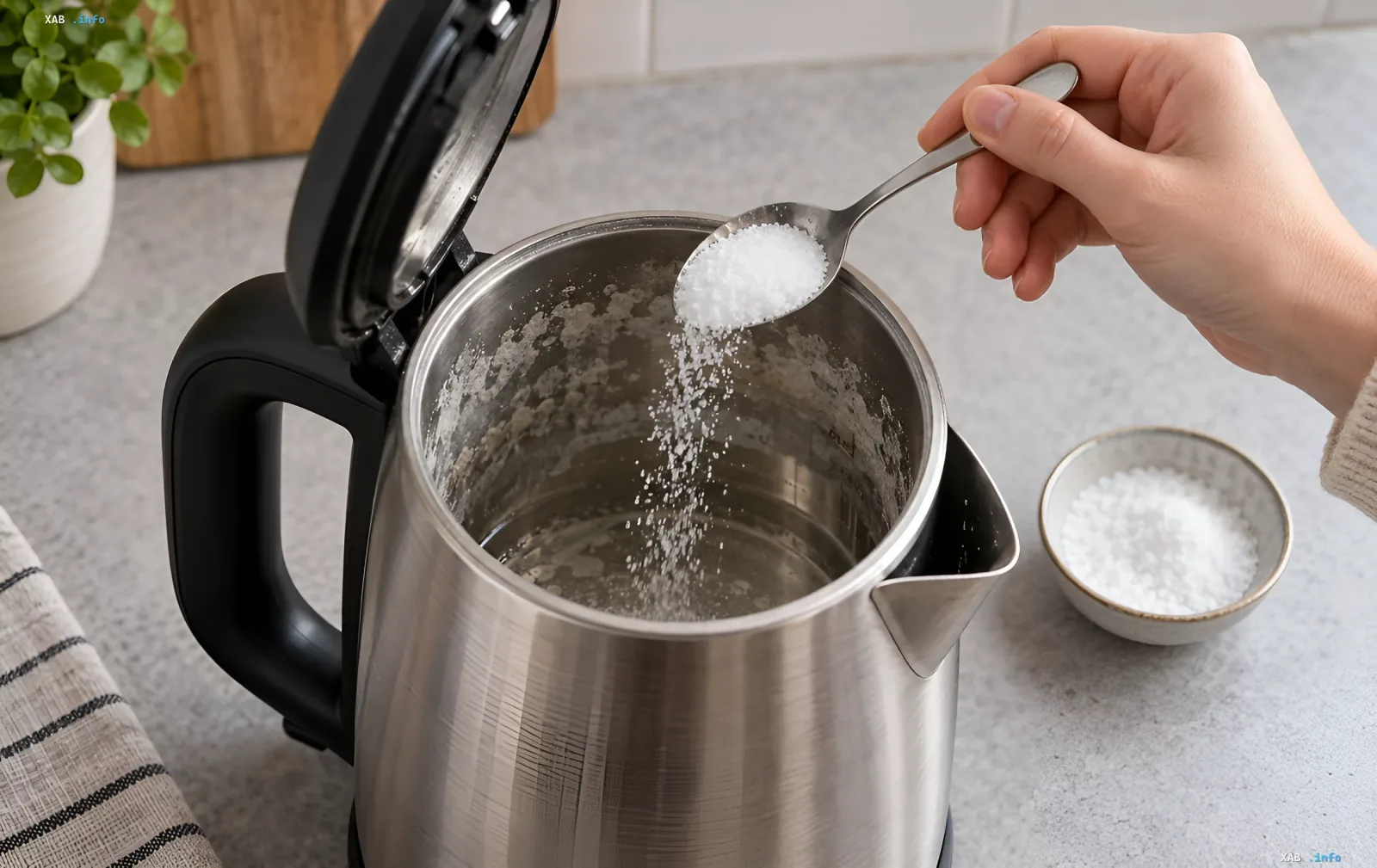
Limescale in an electric kettle is not just an aesthetic issue affecting drink purity, but a factor that reduces appliance efficiency. Mineral deposits on the heating element significantly increase boiling time, leading to wasted electricity and accelerated wear of the heating element. Regular cleaning helps prolong the device's service life and prevents lime particles from ending up in your tea or coffee.
Preparation and Basic Safety Rules
Before proceeding with limescale removal, it is crucial to study the manufacturer's manual. It specifies not only permitted cleaning agents but also acceptable concentrations and material considerations. Always disconnect the kettle from the power supply before cleaning and allow it to cool down completely. Important rule: never immerse the base or the appliance itself in water, as this can cause a short circuit and damage the electronics.
Using Vinegar and Citric Acid
Vinegar or citric acid solutions are traditionally used to fight limescale. However, the British consumer organization Which? warns that vinegar concentration must be strictly regulated: using highly concentrated vinegar essence can damage seals and plastic components. In some cases, such as the Tefal KO3308KR model, a non-boiling cleaning method is recommended to avoid excessive vapor and surface damage.
Contradictory Data
There is a disparity in expert approaches regarding the "best" agent. While conservative methodologies insist on using only specialized cleaners or mild acids, popular advice often suggests alternative methods, including using carbonated drinks or high-concentration citric acid. Experts emphasize: the use of abrasive tools like metal brushes or knives is strictly prohibited, as they leave micro-scratches where scale accumulates even faster.
Final Care and Filter Maintenance
Don't forget about removable filters, which often trap large scale particles. Cleaning should be done regularly—ideally once a month, though more frequent cleaning is needed if you use hard tap water. After finishing the chemical cleaning, always perform a boiling cycle with fresh water and discard it to ensure all cleaning residues are removed from the system.