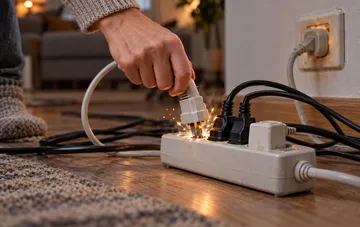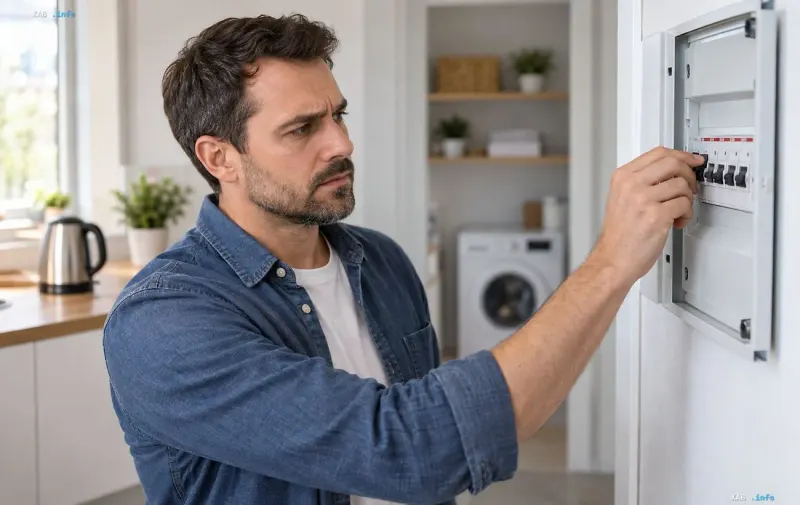
Turning on the kettle, starting the washing machine, or running several powerful appliances simultaneously often leads to a loss of electricity in part of the apartment or throughout the entire house. Most users automatically blame the appliances in such situations; however, as electrical equipment manufacturers explain, the activation of a protective device does not always mean the appliance is broken. Most often, it is a matter of exceeding the permissible line load, current leakage, or damaged insulation. You can figure out the cause without disassembling appliances or contacting a service center if you understand which specific element of the fuse box cut off the power.
Circuit breaker, RCD, and RCBO: what exactly tripped
In everyday speech, various protective devices are often called "breakers," even though they react to fundamentally different problems. According to Schneider Electric, a standard circuit breaker protects the line from overloads and short circuits. A separate residual current device (RCD) reacts to current leakage, which can occur, for example, due to damaged wire insulation. Electrical equipment manufacturer Hager notes that there is also an RCBO (residual current circuit breaker with overcurrent protection), which combines both functions in a single housing. The tripping of any of these devices should not be automatically attributed to turning on too many powerful appliances at once: to find out the cause, you need to know which specific protection turned off the power.
Total load and a single line: the main factor in disconnection
If the kettle is turned on while the washing machine, water heater, or space heater is running, the total load on the corresponding line may turn out to be too high. The Lviv Regional State Administration reminds in its recommendations of the risk of simultaneously operating powerful appliances. Electrolux lists the simultaneous operation of several devices on a single electrical circuit among the possible causes of protection activation. It is important to consider not only which outlet the plug is inserted into, but also which line that outlet is connected to: different outlets in an apartment may belong to the exact same line. Therefore, moving the kettle to a neighboring outlet does not in itself guarantee a reduction in the load on the circuit breaker.
When the appliance itself is at fault
If the shutdown happens repeatedly with just one appliance, even without the simultaneous operation of other powerful equipment, both the appliance itself and its connection need to be checked. Bosch lists motor or heater malfunctions, wire short circuits, or water getting onto electrical parts among the possible causes of protection activation during washing machine operation. However, from the mere fact of disconnection, it is impossible to determine which specific component is faulty: this requires professional diagnostics using measuring equipment.
What to do and what not to do
In its recommendations, Samsung advises unplugging the washing machine before inspection and not turning the protection back on repeatedly if it trips. There is no need to intentionally repeat the start to "clarify the moment of shutdown." If the RCD trips when the washing machine is turned on, a burning or melting smell is felt, or water is visible near the appliance, the manufacturer recommends stopping operation and not reconnecting the machine to another outlet for testing. The outlet, wiring, and fuse box should be checked by an electrician; malfunctions of the device itself are fixed by a service technician. If the cause is unclear, you should first contact an electrician to check the line and its protection.
Dangerous mistakes to avoid
Replacing a circuit breaker with a device having a higher rated current without checking the wiring does not eliminate the cause of the trip: the protection must correspond to the electrical line and its permissible load. You must not bypass the protection, disconnect grounding, or tamper with protective devices to keep the equipment running. Electrical equipment manufacturer Fuji Electric emphasizes: the cause of repeated trips must be determined by a qualified specialist with appropriate measuring equipment. If smoke or fire appears, do not attempt to turn the power back on or reach a dangerous outlet: you must move to a safe place and call 101.