On the night of July 30, a Russian Kh-101 cruise missile flew over Polish territory. This incident, which triggered an air raid alarm in the east of the country, could become a turning point in relations between Warsaw and Kyiv, as well as influence NATO's strategy in the region.
Testing the Alliance's Reaction
Stanisław Żelichowski, a candidate of political sciences and international relations expert, told RBC-Ukraine that Russia's actions are not accidental. In his opinion, the Kremlin is testing the reaction of NATO member states to violations of their airspace.
"Russia did this for a reason. This is not the first time the Russian Federation has violated the airspace of EU and NATO member states. I would like to remind you that recently, at least three times, the Romanian Air Force shot down drones. I think that in fact, Russia is testing what the reaction of NATO member states could be to such incursions," the expert noted.
Crater in Lublin Voivodeship and Government Response
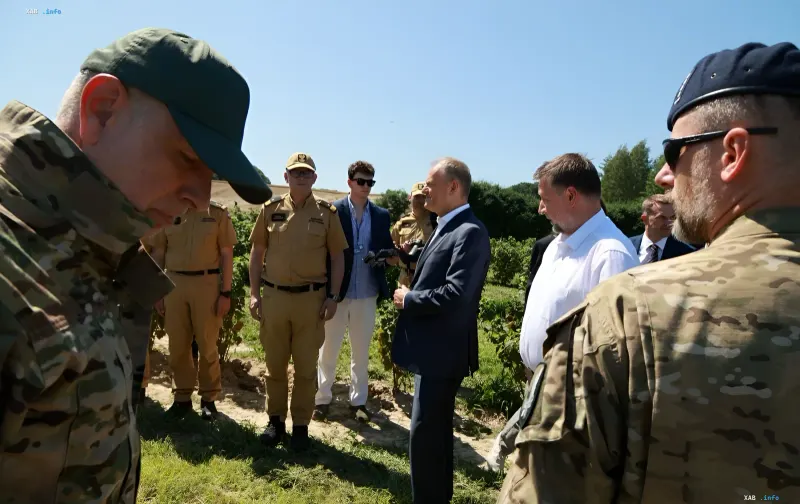
The incident occurred against the backdrop of a massive Russian attack on western regions of Ukraine. Residents of the Lublin Voivodeship reported powerful explosions. Later, a large crater was discovered in a field near the village of Tarnawa-Kolonia, which, according to preliminary data, could have been formed as a result of the fall of an unidentified object.
Polish Prime Minister Donald Tusk confirmed that a coordination group was urgently convened in the country due to the airspace violation by an unidentified object. Acting Minister of Foreign Affairs of Ukraine Andriy Sybiha officially stated that at night a Russian Kh-101 cruise missile flew over Polish territory.
New Vector of Cooperation
The expert emphasizes that such provocations oblige Poland and NATO to take care of their own security. According to Żelichowski, the most effective step to increase defense capabilities is to deepen partnership with Ukraine.
"Understanding this should change the Poles' views on the situation, on our bilateral relations. And this means that there is hope that Warsaw will indeed go for more intensified cooperation in various areas, but first of all we are talking about the defense industry," he added.
Change in Rhetoric and the Role of Elites
In this context, the expert considers the recent negotiations between Volodymyr Zelenskyy and Donald Tusk a positive signal. Żelichowski notes that the discourse in Poland regarding Ukraine is already beginning to change, and Poles are ready for new contacts.
"The fact that President Zelenskyy still flew to Poland after visiting the United States says a lot, as there were questions as to why President Zelenskyy had been visiting other countries through Moldova recently," the expert emphasized.
As for public opinion, according to the analyst, the mood in Polish society depends directly on the actions of local elites. The wave of criticism and rejection of Ukrainians arose largely due to the rhetoric of representatives of the Polish authorities. Strengthening cooperation between the countries could change this situation and replace aggressive rhetoric with a more constructive one.