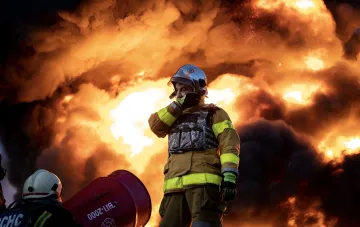
Kharkiv, located in immediate proximity to the front line and the state border, has faced a unique challenge since the first days of the full-scale war: ensuring the protection of citizens from regular air attacks without turning the city into a zone of permanent chaos. It is under these conditions, according to Bohdan Hladkykh, Director of the Department of Emergency Situations of the Kharkiv City Council, that the city had to seek innovative solutions to simultaneously respond to shelling and maintain normal life. The result was the work of the Kharkiv Situation Center — an underground hub that has been operating for nearly three years as a single point of coordination for all emergency and utility services of the city and is now being cited as an example to other Ukrainian cities.
From New York's 911 to an underground hub: The history of creation
The idea of creating the situation center, as Hladkykh told RBC-Ukraine, belongs to Mayor Ihor Terekhov. Back in 2017, while serving as the First Deputy Mayor, Terekhov was on a business trip to New York and personally observed the work of the 911 situation center. At that time, the vision for a large-scale project was laid: a large two-story glass building for which a site had already been selected. However, the war changed the plans — instead of a representative above-ground complex, the city built an underground safe facility in a record four months, using funds from the local budget and donor support. During this time, the center has become what Hladkykh calls the "heart of city management," where the situation across Kharkiv is monitored in real-time.
Who and how works under one roof
Representatives of all key emergency and utility services are concentrated in the situation center: the State Emergency Service, patrol police, emergency medical services, the gas service, Ukrenergo, and direct staff from the City Council's Department of Emergency Situations. The team includes dozens of specialists, including a separate headquarters that travels to the site of emergency response and coordinates the interaction of services on the ground. In addition to operational response, the center conducts analytical and predictive work, shaping management decisions based on data received in real-time.
Technological foundation: video surveillance, sensors, and differentiated alerts
The center's architecture relies on several technological components. Key to this is a developed video surveillance system, which Hladkykh calls the city's "eyes." It is complemented by a network of sensors, a traffic management system, and, crucially, a public alert system. It was Kharkiv that, in 2025, developed and became the first in Ukraine to launch a differentiated alert system, allowing for targeted and selective informing of residents about the nature of the threat, rather than triggering an alarm for the entire city. An additional element of the infrastructure is the city dispatch service 1562 — a single entry point for citizens' requests regarding utility and other issues, the data of which is also recorded and analyzed in the center.
Results: 42% fewer alerts, 15-second response time
The practical indicators of the center's work, according to its director, point to a significant effect. The total number of alerts in the city was reduced by nearly half — by 42%, which, according to Hladkykh, provided Kharkiv residents with the opportunity to lead a relatively normal life despite the proximity to enemy positions. The response time of city services to the arrival of a drone or shell has been reduced to 15 seconds: thanks to video surveillance and the coordinated work of services under one roof, utility companies and emergency brigades are sent to the incident site almost simultaneously with the detection of the threat. Kharkiv's experience is attracting interest not only from other Ukrainian cities but also from international colleagues.
Not just war: 60% of the workload is "ordinary" problems
An important aspect that Hladkykh emphasizes is that the situation center is not exclusively a military tool. According to him, 60% of all information processed by the center relates to "ordinary" urban problems: road accidents, utility emergencies, and resident requests through the 1562 dispatch service. This means that even after the hostilities end, the center's activities will remain relevant and in demand, and the resources invested in it will continue to work for the daily safety and comfort of citizens. Thus, Kharkiv's experience demonstrates how military necessity can transform into sustainable urban management infrastructure applicable in any conditions.