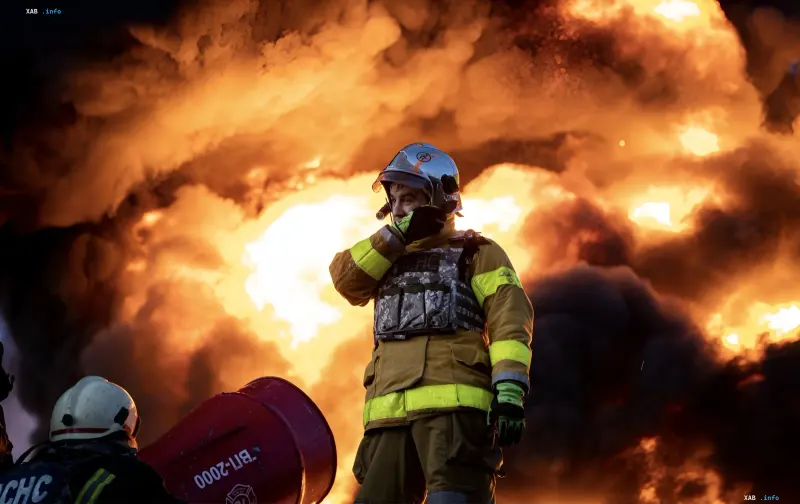
Over the first five days of the week, Ukrainian rescue workers and police officers responded more than 700 times to eliminate the consequences of Russian strikes across the country. According to emergency services, last night operations were underway simultaneously in 13 regions where occupation forces deployed ballistic missiles and drones. Firefighting efforts continued in the Kyiv and Poltava regions, while five days of shelling damaged 521 residential buildings as well as educational, medical, and social institutions. The operational situation remains tense: due to the constant threat of repeated strikes, rescuers and cynologists are periodically forced to halt the operation of specialized equipment.
Kamyshevakha: Almost a Week of Debris Removal
The epicenter of the humanitarian catastrophe was the settlement of Kamyshevakha in the Zaporizhzhia region, where 55 people were killed by an enemy airstrike. Debris removal operations have been ongoing there for almost a week. Dozens of residents remain missing, and DNA tests are continuously being carried out to determine their fate. The work of rescue teams is hindered by the fact that the zone remains under the threat of shelling, causing operations to be periodically suspended.
Deceased Ministry of Internal Affairs Personnel
While performing tasks in frontline Kamyshevakha, Ministry of Internal Affairs personnel — Mykola Balanda, Mykhailo Buzhenko, Dmytro Besedin, Mykhailo Romanov, Denys Konovalenko, and Oleksiy Sushchevsky — were killed. Two other police officers, Oleh Dubetsky and Serhiy Berezhko, were killed in a hostile drone attack. According to the source, all of them worked in the combat zone until the very end: rescuing the injured, delivering humanitarian aid, and helping local residents.
Interceptor Shortage and Strike on Kremenchuk
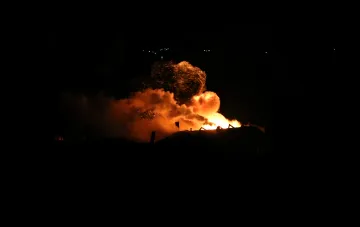
Last night, Russia deployed 36 missiles approaching their targets on a ballistic trajectory. According to the source, air defense forces destroyed only four of them due to a significant shortage of interceptors. Additionally, on November 7, the enemy massively attacked private enterprises in Kremenchuk, Poltava region, causing damage to the facilities. The combination of these factors — massive ballistic strikes, a lack of interception means, and the work of emergency services under continuing threat — defines the current burden on the response system in the affected regions.