Alexander Prokudin, head of the Kherson Regional State Administration, stated in an interview with RBC-Ukraine that the situation in the city has deteriorated significantly over the past month, and that the consequences of Russian strikes on critical infrastructure may be felt most acutely during the heating season. According to him, following the damage to the Kherson TPP (thermal power plant), it is no longer possible to ensure the city's supply of heat and electricity in the usual manner, and expecting these energy facilities to operate stably this winter is unrealistic. “The situation has worsened considerably over the past month. I believe we should be honest with adults,” Prokudin emphasized, adding that the authorities do not intend to wait until the city faces a large-scale collapse of basic utility services.
Strike on the TPP and the Threat of a Winter Collapse
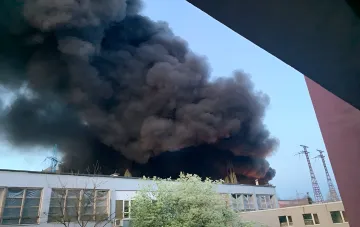
During a recent shelling, Russian military forces damaged the Kherson TPP — a key facility that supplies the city with heat and electricity. Kherson and the settlements of the region are regularly subjected to artillery strikes, attacks by guided aerial bombs, and drone strikes, with FPV drone attacks proving especially dangerous for civilians. Against the backdrop of ongoing strikes, regional authorities have begun warning residents of possible prolonged disruptions to electricity and heating. Prokudin clarified that this is not merely a matter of everyday inconvenience: a prolonged absence of basic services could create serious problems for the health and safety of residents, especially in the conditions of winter frosts.
Call for Evacuation: “Not Panic, but Responsibility”
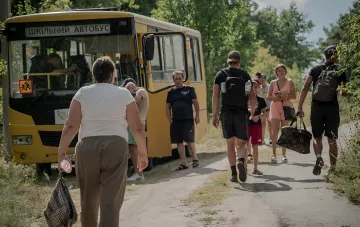
Responding to critical remarks about the call for evacuation, Prokudin emphasized that his goal is not to cause panic or to shift responsibility onto residents. “The task is to warn people in advance about possible consequences, give them time to prepare, and try to minimize the risks,” the head of the Regional State Administration explained. He separately noted that evacuation should be viewed as an opportunity to safeguard people in advance, especially families with children, for whom the authorities are offering to move to safer regions of Ukraine. “Property or walls can be rebuilt, but a human life cannot be returned. Therefore, the call for such an evacuation is not panic, it is responsibility,” Prokudin stated.
Organizing Departure and Searching for Alternative Solutions
According to the head of the regional administration, evacuation from Kherson has already been organized and is ongoing: residents are being transported by rail and by road, and other regions of Ukraine are ready to receive the city's residents. At the same time, regional authorities are seeking alternative solutions to ensure the city's supply of heat and electricity, however Prokudin stated outright that it is impossible to guarantee the usual level of infrastructure operation. “We understand that winter for Kherson could be the most severe,” he summarized, emphasizing that this is precisely why the issue of preparing for the heating season has been brought to the forefront right now, rather than after the first major outage.
Context: Systematic Destruction of Energy Infrastructure
The strike on the Kherson TPP became part of a broader campaign to destroy the energy infrastructure of Ukraine's southern regions. As Ukrainian media, including Focus and Gazeta.ua, note, following the damage to the plant, regional authorities moved to public warnings about a possible prolonged absence of electricity and heat. Slovodilo, citing data from the Regional State Administration, reported that the facility, by preliminary estimate, will not be able to operate fully during the winter period. Combined with regular shelling of residential areas and FPV drone attacks, this forms a comprehensive threat for Kherson's residents, which, according to local authorities, cannot be neutralized by the city's own resources alone.