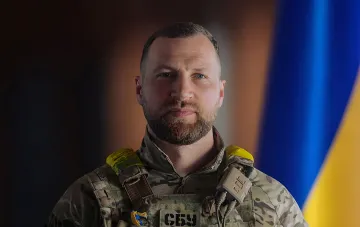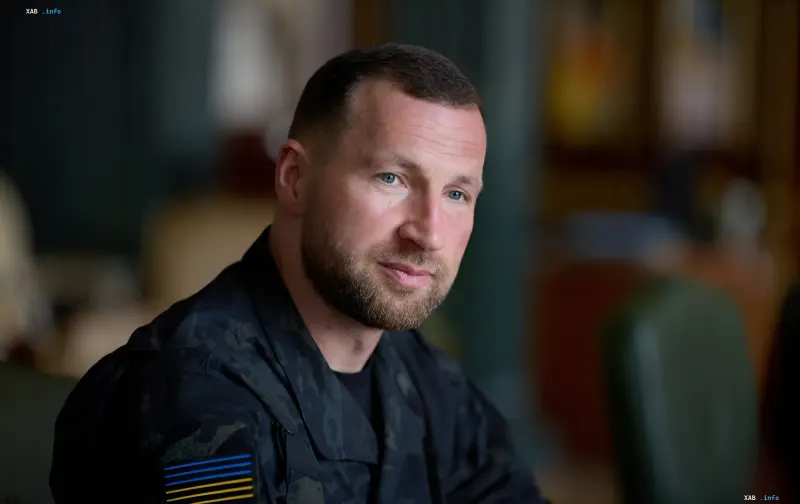
Ukraine's Minister of Defense, Yevhenii Khmar, outlined a key principle of managing military operations in a conversation with journalists: the strategic vision of the war and the plan for its conclusion cannot remain the exclusive prerogative of the top leadership — the Minister of Defense, the Commander-in-Chief, their deputies, or the General Staff. In his words, this vision must "trickle down" to the commanders and units that carry out combat tasks on the front line every day. As reported by RBC-Ukraine, it is precisely this vertical of decision transmission, in the head of the ministry's view, that is the condition for the effectiveness of the entire defense system.
The vision of the war must reach the front
Khmar emphasized that abstract plans, recorded at the staff level, do not turn into results until they are conveyed to the executors. In his assessment, commanders and units in the field already understand what to do: the troops have crews, experience has been accumulated, the personnel are ready to train people, adapt the available means, and quickly bring adopted decisions to effective application. Thus, the problem the minister points to is not the lack of competence in the field, but ensuring that the leadership's strategic intent is understood and reproducible at the level of a specific unit.
Control tools and a shared understanding
Separately, Khmar stated the need for control tools. In his words, without verification mechanisms, it is impossible to ensure that adopted decisions are actually being carried out, that all participants in the operation share a single vision, and that this vision is embodied in actions. The minister is effectively describing a transition from declarative planning to a feedback system in which command can verify execution at lower levels of command.
The request from the front line: means and preserving life
In response to questions about what exactly the troops need, Khmar noted that during his visits to the front line, the main request from the military remains the same — more means are needed. At the same time, he emphasized that there is already a personnel and organizational potential in the field to apply them. The minister separately highlighted the priority of "the right decisions and orders in the field," above all those that preserve people's lives, which he called one of the main criteria for evaluating the effectiveness of command.
Context of the appointment and the tasks set
Recall that the Verkhovna Rada appointed Yevhenii Khmar as Minister of Defense on August 19. The main task for the new head of the ministry, according to the President of Ukraine, is to restructure the entire defense system and prepare the country for winter. Statements about the need to convey the vision of the war to the units and to introduce control tools fit within this mandate for a systematic reorganization of the management of military operations.
Contradictory data
Fact-checking revealed a discrepancy in the dates. According to the RBC-Ukraine text, Khmar was appointed Minister of Defense on August 19, whereas the RBC (rbc.ru) article with his statement on the Ukrainian Armed Forces' plan to act "asymmetrically" in the conflict with Russia is dated July 29, 2026 — that is, before the stated appointment date. Two explanations are possible: either the rbc.ru publication reflects an earlier statement in a different capacity or in the context of a discussion, or a date error was made in one of the publications. Until the editors of both sides clarify this, the chronological difference should be considered unresolved, and the fact of the appointment on August 19 should be based on the RBC-Ukraine text.