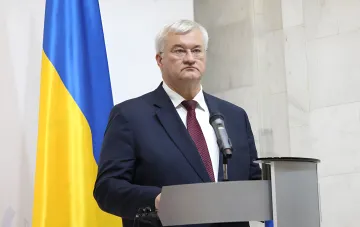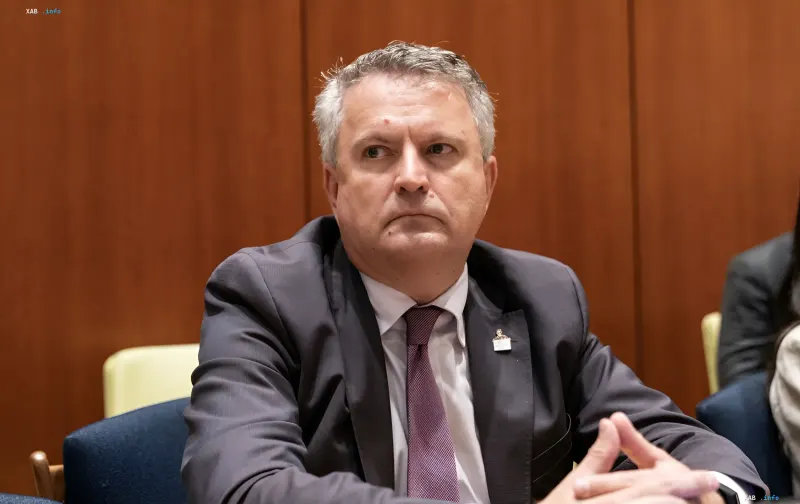
Serhiy Kyslytsia, the First Deputy Head of the President's Office of Ukraine, outlined his assessment of Moscow's negotiating position in an interview with RBK-Ukraine (citing the 'Ukrinform' program). According to him, Vladimir Putin has 'no desire whatsoever to sit at the negotiating table,' and after the onset of winter until its end—that is, until mid-March—the Kremlin's motivation for dialogue will, according to Kyiv's assessment, drop even further. Kyslytsia claims that the logic of the Russian leader's actions is based on the calculation that Moscow will believe Ukrainians are 'not strong enough as a nation to survive this winter.' Thus, the refusal to negotiate, according to Kyiv's version, is not principled but purely calculated.
Kyslytsia's Assessment: Why Moscow is Dragging Time, According to Him
Kyslytsia directly links the Kremlin's negotiating passivity with the seasonal factor. His thesis is that the winter period—with its strain on the energy system, logistics, and social sphere—is viewed in Moscow as a window of opportunity to pressure Kyiv without making concessions at the negotiating table. At the same time, the official emphasizes that Ukraine 'is still considering diplomatic ways to end the war' and does not abandon the peace track, regardless of how the opponent behaves.
Diplomatic Track and the Role of the US
Separately, Kyslytsia highlighted the importance of the visit to Kyiv by negotiators of US President Donald Trump, which, according to him, has been postponed several times. The official assessed the last two and a half months as 'very active,' pointing to 'very productive conversations'—both remote and in-person—between the Ukrainian and American presidents. In his opinion, 'the atmosphere and level of mutual understanding between Ukraine and the US, at least as it formally appeared, were unprecedented during the period from June to August.' Kyiv, according to Kyslytsia, continues to voice to partners its position of readiness for diplomatic settlement to prevent the narrative from taking root in world capitals that it is Ukraine seeking escalation.
Kremlin Position: Rejection of a 'Freeze'
Against the backdrop of Kyiv's assessments, the Russian side publicly fixes a different framework. Yuri Ushakov, Assistant to the President of the Russian Federation, confirmed, according to reports by RBK-Ukraine, that the Kremlin does not plan any 'freezing' of the war against Ukraine. In turn, Deputy Foreign Minister Mikhail Galuzin stated that Russia allegedly will never agree to 'freezing' hostilities without eliminating the so-called 'root causes' of the conflict. Thus, Moscow formally does not exclude dialogue but makes it dependent on conditions that Kyiv considers unacceptable.
Contradictory Data
There are significant inconsistencies in the statements of the parties and even within Kyiv's own position, which are important to consider. On the one hand, Kyslytsia states the complete absence of Putin's desire to negotiate and predicts a further drop in Moscow's motivation in winter. On the other hand, the same official speaks of 'significant progress in peace negotiations,' an 'unprecedented' atmosphere with the US, and active contacts over the last two and a half months. The question arises: if, according to Kyiv's assessment, Moscow does not want to make a deal, where does the 'significant progress' and productive conversations come from? Furthermore, the Kyiv narrative about the Kremlin's calculation on Ukraine's winter vulnerability is not supported by public statements from the Russian leadership but is an interpretation by the Ukrainian side. Russian officials, on the contrary, emphasize not a 'calculation on winter' but a principled refusal of a 'freeze' without eliminating 'root causes.' These two frameworks—Moscow's calculated evasion (Kyiv's version) and the principled position on conditions (Moscow's version)—do not match and require careful attribution.
Context and Conclusions
The totality of statements on August 21, 2026, paints a picture in which both sides publicly maintain negotiating rhetoric but effectively cement rigid positions. Kyiv emphasizes its readiness for diplomacy and awaits the visit of American mediators, while Moscow refuses a 'freeze' without changing conditions. The key indicator of further dynamics will be the postponed visit of Trump's negotiators to Kyiv: its implementation or another postponement will signal how much the 'unprecedented' atmosphere of the summer of 2026 flows into specific agreements. Until then, Kyslytsia's assessments of the Kremlin's winter calculation remain the version of one side and not a confirmed fact.