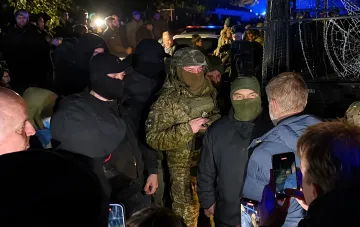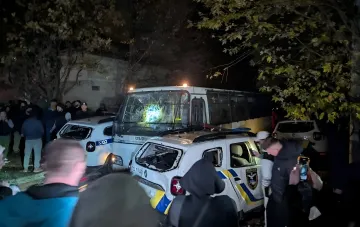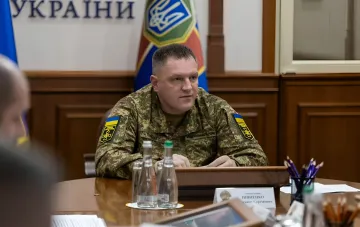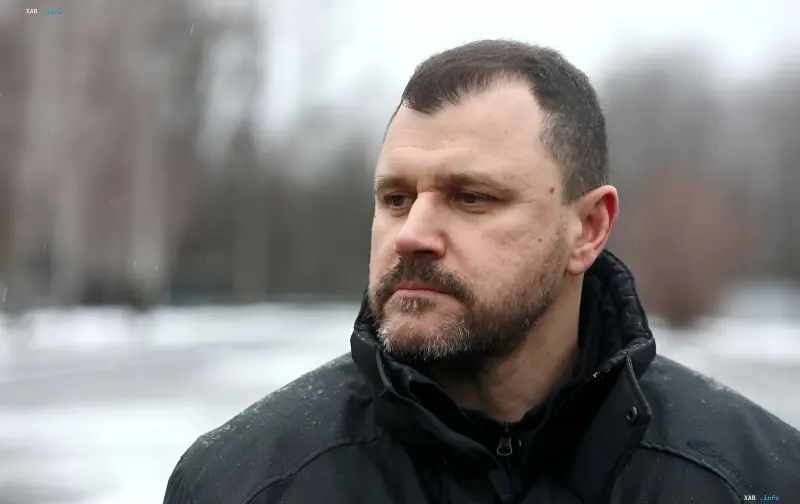
On November 2, 2026, mass riots broke out near one of the National Guard of Ukraine buildings in the urban village of Petropavlivska Borshchahivka, Kyiv region. Secretary of the National Security and Defense Council (NSDC) of Ukraine Oleksandr Klymenko (Ihor Klymenko) spoke with journalists to comment on the course of events, revealing details about the composition of participants and the nature of what happened. According to him, the crowd included a significant number of young people of non-conscript age, as well as children, and 29 active streamers were recorded among the participants.
"The information battle for mobilization has essentially been lost"
Klymenko specifically focused on the informational background against which the events unfolded. In his estimation, the topic of mobilization remains one of the most sensitive for society and "quickly ignites it." The NSDC Secretary acknowledged that the information field regarding mobilization has "essentially been lost," while refraining from naming a specific culprit and limiting himself to the phrase "perhaps all of us together." This assessment highlights the failure of the state narrative surrounding one of the key wartime issues.
Composition of participants: youth, children, and streamers
Commenting directly on Petropavlivska Borshchahivka, Klymenko reported that he had observed the rapid development of the situation and witnessed the people and their actions. He emphasized that there were many young people of non-mobilization age in the crowd, including children, and that information spread very quickly. According to the information available to him, 29 streamers were among the rioters. In addition, the NSDC Secretary noted that people from outside Kyiv and Petropavlivska Borshchahivka itself were present in the village, indicating the brought-in nature of part of the crowd.
Organized groups and profiting from provocations
Against the backdrop of the lost informational issue, according to Klymenko, groups are emerging that "simply make money": an order comes in, and they execute it. He characterized them as "fairly well-organized groups" and stated that the state needs to do a better job of identifying and preventing such provocations, especially under wartime conditions. Thus, official Kyiv connects the incident not only with social tension, but also with the targeted monetization of provocations.
The "torture chamber" version and the MIA's position
Prior to the riots, information appeared on social media about dozens of men allegedly being held in the basement of a private house, along with manipulative and unverified statements about abuse against them. Minister of Internal Affairs of Ukraine Ihor Vyhovskyi, in turn, stated that the loud reports about a "torture chamber" and deaths at the National Guard temporary deployment point near Kyiv are a provocation and do not correspond to reality. Thus, two incompatible pictures coexist in the public sphere: the viral version about victims and abuse, and the official stance declaring these claims false.
Chronology and context of the incident
The mass riots themselves occurred on November 2, 2026, near the National Guard building in Petropavlivska Borshchahivka. They were preceded by a wave of social media posts about men allegedly kept in a basement and subjected to abuse. Commenting on the situation, Klymenko pointed to a combination of several factors: the sensitivity of the mobilization topic, the speed of unverified information spread, and the participation of organized groups. Details of what exactly happened in Petropavlivska Borshchahivka were previously published in a RBC-Ukraine report.