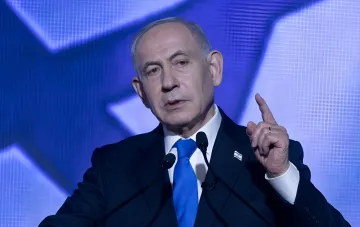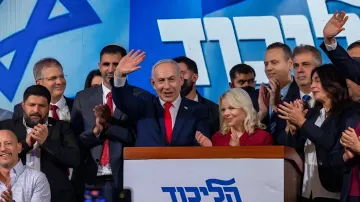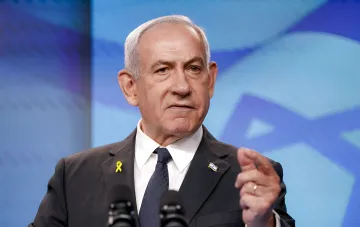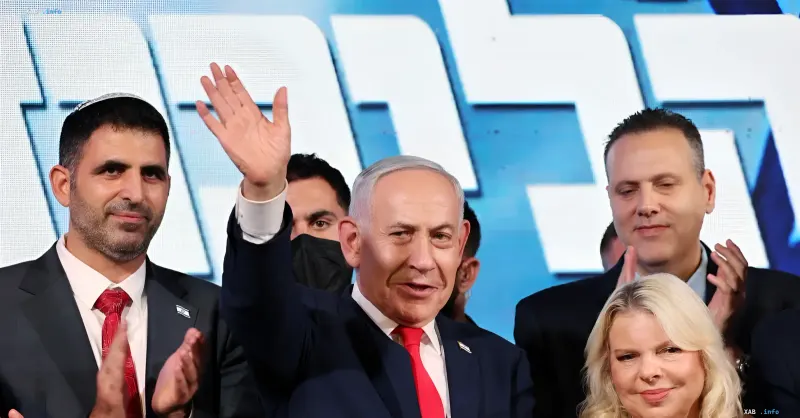
According to preliminary data from the Central Election Commission of Israel published after counting more than 84–85% of the votes, the bloc led by incumbent Prime Minister Benjamin Netanyahu is leading in the parliamentary elections to the 26th Knesset held on October 27, 2026. As of October 28, the alliance is winning about 53–54 seats out of 120, ahead of the opposition block led by former Chief of General Staff Gadi Eisenkot, which accounts for about 48–49 seats. Neither of the two main forces has crossed the 61-seat threshold required to form a government, immediately putting the country on the brink of protracted coalition negotiations.
Arab Parties — Record Result and Coalition Key
Particular attention is drawn to the performance of parties led by Arab politicians: the United List coalition and the Ra'am party together hold about 17–19 seats, which, according to Israeli and international media, is a record figure for Arab parties in the Knesset. Their votes could prove decisive in forming a majority, but reportedly neither Netanyahu's camp nor Eisenkot's alliance is willing to enter into a coalition with Arab parties, further complicating the arithmetic.
Individual Party Results
Among individual parties, Netanyahu's Likud maintains the lead — at various stages of the count it is credited with 26–27 seats, while Eisenkot's Yashar party takes second place with 22 seats. Falling below the 3.25% electoral threshold are Reserve (about 2.7%), the National Party of Israel (about 1.6%), and the Haredi community (about 0.2%). Israeli media emphasize that all figures are preliminary: ballots cast in double envelopes, including those from military personnel, diplomats, and certain categories of voters, will be counted later, and the final seat distribution may change.
Government Formation Mechanism and Deadlock Risk
Following the final count, Israeli President Isaac Herzog will hold consultations with the winning parties and task the candidate he deems most capable with forming a government — this does not necessarily have to be the leader of the largest party. The candidate is given 28 days to form a coalition, with the possibility of a 14-day extension. During this period, parties can negotiate political concessions and the distribution of ministerial portfolios. If a majority is not assembled, minority government scenarios or a power-sharing agreement with two rotating prime ministers are admissible.
What's Next: From Coalition Talks to New Elections
If the first candidate fails, the right to form a government will pass to another candidate over the next four weeks; in the event of a repeated failure, the Knesset will have a short period to nominate a new candidate, and in the event of a total failure, Israel will have to return to snap elections. Since Netanyahu's and Eisenkot's parties have emerged as the strongest forces in parliament, these two politicians are viewed as the leading candidates for prime minister, and the outcome of the coalition negotiations will determine the country's political course for the coming Knesset term.