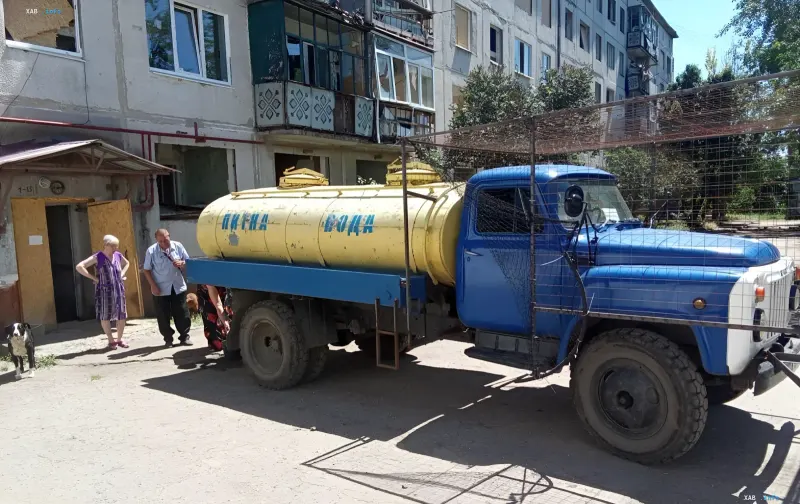
In recent weeks, Kramatorsk has found itself in a state where the water issue has ceased to be a mere utility topic and turned into a survival issue. According to the director of the Kramatorsk Water Utility, Valentin Yakovenko, the city actually receives about 3,000 cubic meters of water per day, and supply is provided daily, but not in all districts. In some micro-districts, water appears regularly; in others, it does not appear at all, and in some parts of the city, utility crews no longer risk traveling due to the threat of attacks. It is this combination of factors — damaged infrastructure, power outages, and the targeted hunting of people and equipment by drones — that makes the situation critical.
Figures that Speak for Themselves
Alternative water sources in the city hardly work as an insurance policy. The underground horizon is only accessible in the old part of the city, whereas in areas with an elevation above 100 meters, there are neither wells nor manual pumps. According to the utility's management, alternative sources can cover the needs of only 10–15% of residents. The rest depend on centralized supply and deliveries: in some areas, water is brought in, in others there are standpipes, and where crews cannot reach, information on how people provide themselves with water is simply missing.
"Safari" on Utility Workers: How They Work Under Threat
The organization of crew work is now built around threat assessment. Every day, the enterprise tracks FPV drone activity using detectors, receives data from the military and local groups about the most vulnerable areas, and based on this, decides where it is possible to go and where it is not. For travel, they use e-bikes provided by donors, protective vests, and helmets. As Yakovenko notes, the situation changes daily: what was a safe route yesterday might turn out to be an attack zone today, and the readiness of crews to repair networks no longer guarantees that they will be able to reach the site of an accident.
Staff Turnover and Systemic Failure
Against the backdrop of constant pressure, about 200 employees have left the enterprise in the last three months, unable to withstand the work under threat of attacks. The deterioration, according to the director, began back in May, and by August–early September, it escalated into a critical phase, which he compares to the "boiling frog" effect: the threat grows gradually, and getting used to it masks the scale of the problem. The consequences also affect social infrastructure: schools and kindergartens in the city are not working, hospitals function only partially and mostly in the center, and individual communal enterprises solve the water issue on their own, using their own wells and transport. Additional pressure is relieved by donors who transport water and distribute it to pensioners and the poor.