Major American news agencies reported that the Democratic Party regained control of the US Senate and House of Representatives, as well as several governorships, following the midterm elections held on November 3. The outcome prompted official statements in Moscow and Beijing, where high-ranking representatives of both states commented on the shift in the American parliament.
Kremlin's Position: Reliance on Trump and US "Internal Affair"
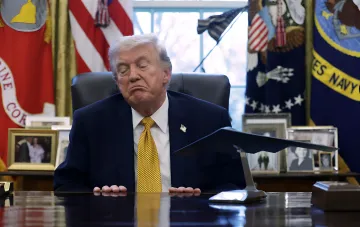
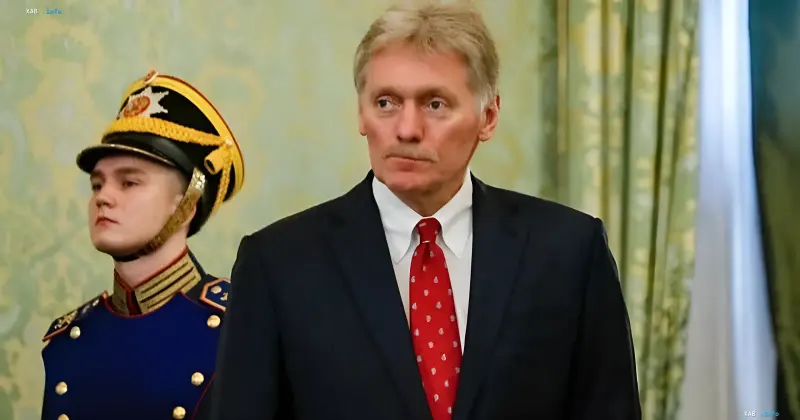
Russian Presidential Press Secretary Dmitry Peskov stated that Moscow hopes for the continuation of efforts to resolve the conflict in Ukraine following the midterms. "President Trump remains in office. We sincerely expect that he will continue to promote the peace process. Another round of trilateral negotiations will take place soon, and the peace efforts of US First Lady Melania Trump have been successful. We hope that all this will continue," Peskov emphasized. When asked whether the US Congress could hinder the American leader's peace efforts, he declined to speculate, noting that this is an "internal affair of the United States.">
Ryabkov: Moscow's Position Does Not Depend on US Elections
Russian Deputy Foreign Minister Sergey Ryabkov urged waiting for the final results of the midterm voting and pointed out that the leaders of the US Democratic Party hold a "negative" attitude toward relations with Moscow. At the same time, he emphasized that Russia will not change its position on the Ukrainian issue or its foreign policy in general simply due to the outcome of the American elections: "Our consistent and principled position on the Ukrainian issue does not depend on political events in other countries. We will continue our work in accordance with the instructions of the President of the Russian Federation.">
Beijing: Elections Are an Internal Affair, Commitment to "Constructive Strategic Relations"
Chinese Foreign Ministry spokesperson Mao Ning stated that Beijing will continue to maintain "constructive strategic relations" with the United States, emphasizing that the US elections are an "internal affair" of the country. "China is ready to cooperate with the US to protect and implement the important agreements reached by the two leaders, strengthen exchanges, properly handle differences, expand cooperation, and build constructive strategic relations based on respect and equality," Mao Ning said at a briefing in Beijing.
What Changes for Ukraine and Sanctions Policy
Efforts by Republican President Donald Trump to promote negotiations on ending the conflict in Ukraine have not yet yielded concrete results, according to a source. Meanwhile, the Trump administration recently suspended sanctions against Russia and reduced financial and military aid to Kyiv. Analysts believe that with the Democratic Party gaining control of both chambers of Congress, it may bring the issue of increased support for Ukraine onto the agenda, as Democrats generally advocate for continued military assistance to Kyiv.
Prospects for the Next Two Years
The Democratic Party's control over both chambers of Congress could influence the political situation in the US over the next two years, as well as Washington's foreign policy toward other countries. As observers note, for Moscow and Beijing, the key factor remains the extent to which the new alignment in Congress will limit or, conversely, strengthen President Trump's powers regarding sanctions policy, military aid, and the negotiation track on Ukraine.