Ukrainian intelligence has revealed details of a massive restructuring of Russia's agent network on the continent. Following the death of Yevgeny Prigozhin and the fall of his PMC "Wagner," Moscow not only failed to scale back its activity in Africa but intensified it, transferring key instruments of influence to the control of the Foreign Intelligence Service (SVR).
From "Wagner" to Intelligence: A New Architecture of Influence
Previously, the main tool of the Kremlin's expansion in the region was the "Wagner" PMC. After the failed armed mutiny in the summer of 2023, the structure was reorganized. The military component, known as the "African Corps," came under the command of the Russian Ministry of Defense.
However, the civilian and political component of Prigozhin's empire took a different path. The organization Africa Politology (also known as The Company), which dealt with lobbying and propaganda, was placed under full operational and financial control by the SVR. Now, this structure functions as a covert network of espionage and political influence.
Methods of Operation: From Disinformation to Corruption
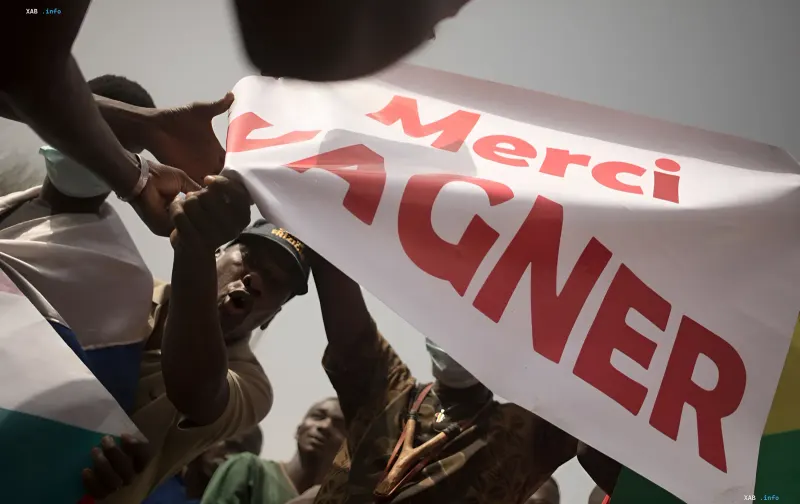
The tasks of Africa Politology go far beyond traditional diplomacy. According to intelligence data, the organization conducts systematic work to displace Western countries and the UN from African states. The structure's arsenal includes:
- Conducting disinformation campaigns and manipulating public opinion.
- Corrupting local journalists and bloggers to create the desired information backdrop.
- Coordinating pro-Russian media and Telegram channels.
- Supporting Kremlin-loyal politicians and discrediting democratic governments.
- Organizing protests and espionage activities.
The organization's sphere of active work covers the Central African Republic (CAR), Chad, Mali, Angola, Madagascar, Namibia, South Africa, and other countries.
Who Runs the Network: Names and Faces
The Ukrainian Security Service has released personal data of key figures managing Africa Politology. A central role in the transition of the organization to Kremlin control was played by Dmitry Fadeev, an SVR veteran.
Among the other individuals whose names have become public knowledge:
- Ilya Savelyev and Sergey Klyushkin.
- Sergey Mashkevich — previously oversaw Prigozhin's projects in Sudan.
- Dmitry Volkov — responsible for operations in Bolivia.
- Alexey Shilov, Taras Pribashin, and Nikolai Radkovsky.
- Yulia Afanasieva-Bereg and Ksenia Soboleva, who are already under US sanctions.
Financial Flows and Cash Operations
To finance its activities, the SVR uses complex schemes with shell companies. In particular, JSC "Inter" and LLC "Intertechtrade" are mentioned. Transactions between these structures allow the origin of funds to be masked, the role of intelligence to be hidden, and tax control to be avoided.
Intelligence has paid special attention to cash financing. A significant portion of funds is transferred in "envelopes." This not only allows them to bypass banking blocks but also gives executors the opportunity to inflate operation budgets, as the use of cash is practically immune to external control.
Real Consequences for Partners
The transfer of control to law enforcement agencies and intelligence has already made itself felt. According to the Main Directorate of Intelligence of the Ministry of Defense of Ukraine, the behavior of the "African Corps" raises questions among local partners. In particular, during hostilities in Mali, Russian military personnel left their allies to their fate, which led to catastrophic consequences for African fighters.