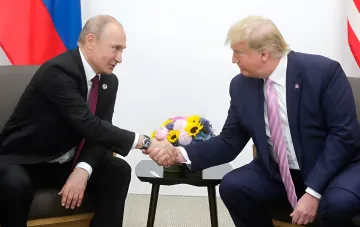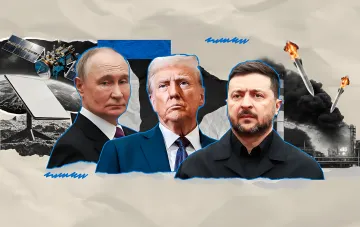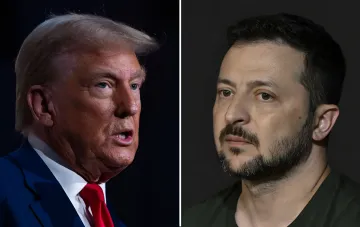
In the Kremlin, the deterioration of relations between US President Donald Trump and Ukrainian leader Volodymyr Zelenskyy is viewed as a sign of weakening Western support for Kyiv, which Moscow assesses as a diplomatic victory. This is reported by RBC-Ukraine, citing a publication by The Washington Post. According to the publication, the Russian leadership is counting not only on increasing pressure on the Ukrainian side, but also on using the current configuration to extract concessions, primarily regarding the Donbas, as well as to expand cooperation with Washington.
How Moscow Reads Signals from Washington
Citing The Wall Street Journal, the publication notes that within about ten days after Donald Trump's phone call with Vladimir Putin, the US administration took several steps that Moscow perceived as favorable to itself. In particular, Trump announced the easing of restrictions on the supply of Russian diesel fuel to the global market, suspended the introduction of new large-scale sanctions against Russia, and increased pressure on Kyiv. Simultaneously, according to the same data, Ukraine faced restrictions on access to a number of satellite systems and delays in the supply of interceptor missiles. On October 19, the US president again criticized Zelenskyy, stating that it was time for another person to negotiate on behalf of Ukraine.
"Checkmate": Kremlin's Reaction to Zelenskyy Criticism
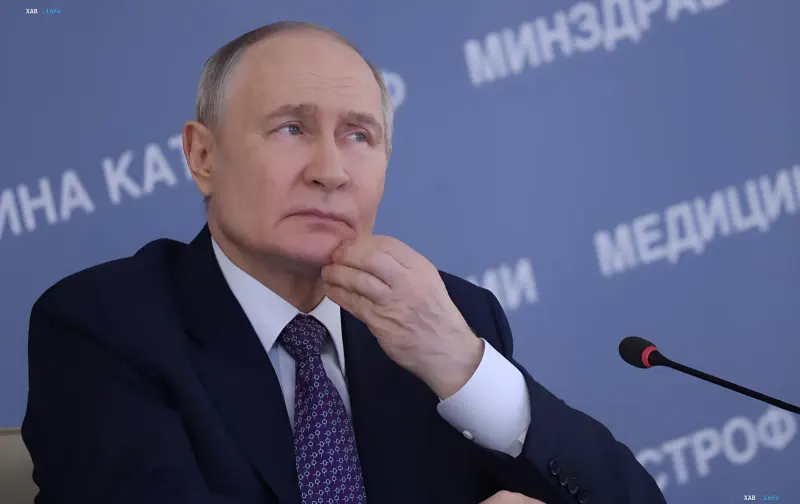
Moscow reacted sharply to these statements. Kremlin Special Representative Kirill Dmitriev commented on Trump's words with the message "Checkmate." Russian presidential press secretary Dmitry Peskov, in turn, stated that the Ukrainian authorities, in his words, are experiencing "the final signs of agony," and Kyiv's resistance cannot change the course of events. These statements, as noted by The Washington Post's sources, reflect the general line of the Kremlin, which perceives public disagreements between Washington and Kyiv as confirmation of its position.
Economic Partnership as the Next Step
Russian officials, according to the publication, view changes in US policy not only as a tool of pressure on Ukraine, but also as a prerequisite for a broader economic partnership with Washington. Kirill Dmitriev stated that the parties are discussing a number of economic and investment projects, naming the Arctic, energy, and liquefied natural gas production among possible directions. The Kremlin also positively reacted to Trump's decision not to impose harsh sanctions provided for by the legislative initiative associated with Senator Lindsey Graham.
What Lies Behind the Political Effect
At the same time, as The Washington Post's sources note, the agreement on Russian diesel fuel itself is unlikely to have a significant impact on American fuel prices, as it concerns relatively small supply volumes. For Moscow, according to the same sources, the political effect is more important than the economic one — the deepening of disagreements between Washington and Kyiv, which the Kremlin uses as an argument in favor of its own diplomatic line and as a basis for demands for concessions from Ukraine.