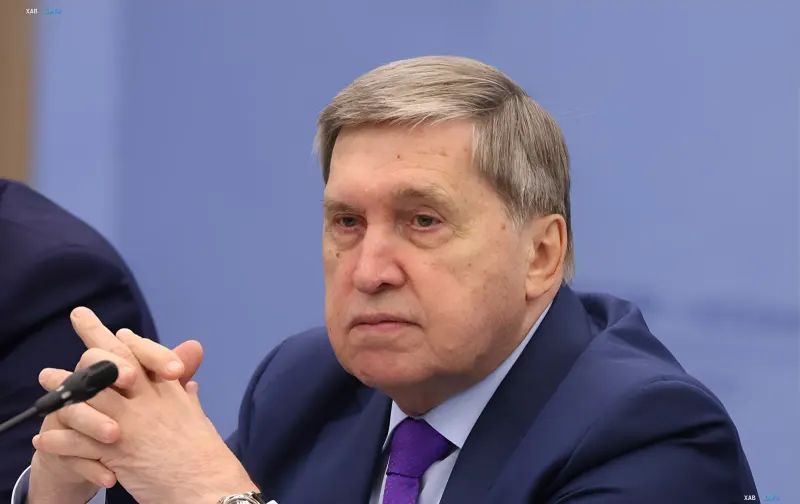
The Kremlin has once again given a firm answer to the question of a possible cessation of active hostilities in Ukraine. Russian President's Aide Yuri Ushakov categorically rejected the scenario of "freezing" the conflict along the line of contact, calling it unacceptable for Moscow. The statement came against the backdrop of a growing number of calls from international mediators and Russia's neighbors for a temporary ceasefire.
Official Moscow Position: "Freezing" is not in the plans
Yuri Ushakov, commenting on the desire of several countries to "freeze" the military confrontation, stated that Russia's position remains unchanged. "You know our position, it excludes this," emphasized the aide to the head of state. According to him, Moscow considers any proposals for a temporary ceasefire without eliminating the "root causes" of the conflict as unviable. The Kremlin insists that diplomatic efforts should be aimed at fully resolving the issues that, in Moscow's view, became the cause of the start of the special military operation.
Kazakhstan's Initiative and the Kremlin's Reaction
Particular resonance was caused by the proposal of the President of Kazakhstan, Kassym-Jomart Tokayev. During a personal meeting with Vladimir Putin, the Kazakh leader proposed to "freeze" the war and return to the negotiation terms discussed in Istanbul in 2022. However, judging by Ushakov's subsequent statements, this initiative found no echo in the Kremlin. Russia, apparently, uses such meetings to demonstrate its position but is not ready to make concessions that could be interpreted as capitulation to Western demands.
"Quiet" Diplomacy and Public Statements
Ushakov also touched upon the nature of diplomatic processes, noting that real diplomacy is always conducted "quietly." In his opinion, loud statements heard in the public sphere are often just part of the information war or an attempt to influence public opinion. This confirms that the Kremlin prefers to conduct negotiations in a closed format, avoiding pressure from international observers and the media.
Contradictory Data
Despite the categorical statements of the Kremlin, some experts and analysts point to possible contradictions in Moscow's position. On the one hand, Russia officially rejects the idea of freezing, on the other — there are assumptions that Moscow may be considering a temporary ceasefire as a tactical move to regroup forces or gain a respite. Furthermore, there are opinions that the Kremlin may use the rhetoric of the "unacceptability of freezing" to increase pressure on Ukraine and its allies, forcing them to accept tougher conditions in the future.
Consequences for International Diplomacy
Russia's refusal to freeze the conflict puts at risk the efforts of international mediators trying to find a compromise. Initiatives of countries such as Kazakhstan may prove ineffective if Moscow does not change its position. This also increases tension on the international arena and could lead to further escalation of the conflict. At the same time, the Kremlin's public statements may be aimed at showing Russia's determination to continue the war until its goals are achieved, which in turn could influence the decisions of other countries regarding support for Ukraine.