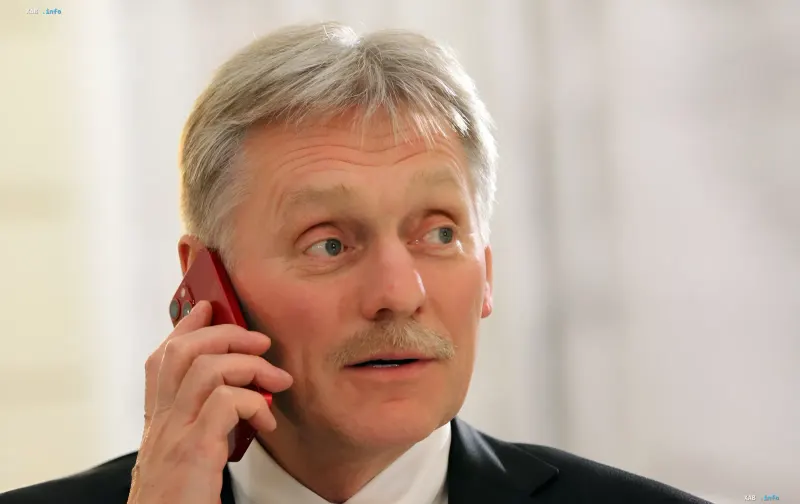
Official Moscow has responded to US media reports regarding plans by Donald Trump's presidential team to potentially revise sanctions policy against Russia. The discussion was sparked by reports in The Atlantic stating that Washington was considering a scenario of partially easing restrictive measures based on a quid pro quo principle. Russian Presidential Press Secretary Dmitry Peskov publicly commented on the initiative, calling the White House's approach flawed.
Essence of the US Initiative and the Kremlin's Reaction
According to insiders, US President's Special Envoy for Eastern Europe John Cole worked on developing the new Eastern European strategy in coordination with Steve Witkoff, who maintains contact with Moscow. It was assumed that easing sanctions pressure could pave the way for major business deals even before the conflict in Ukraine is resolved. However, the Kremlin stated that the proposed formula is unacceptable because it links economic issues with the release of individuals whom the West terms political prisoners.
Contradictory Data
While Western media outlets, citing sources, claimed that Washington was seeking compromise mechanisms to exchange sanctions relief for the release of individuals, the Russian side flatly rejected this framing. Dmitry Peskov emphasized that the Russian Federation allegedly has no political prisoners and that such a formulation of the issue is entirely inappropriate. Nevertheless, the Kremlin representative confirmed working contacts between relevant agencies and intelligence services of the two countries, which continue to maintain dialogue exclusively along the lines of practical exchanges of detained individuals, ruling out any concessions on sanctions.
Expert Assessments and Consequences
Analysts note that such information leaks indicate attempts by Donald Trump's inner circle to test the waters for changing the status quo in relations with Moscow. The idea of linking economic sanctions with humanitarian issues has sparked serious debate both within the American establishment—where many congressmen insist on intensifying pressure—and in the Kremlin, which is not ready to make political concessions in exchange for economic dividends.
The further development of the situation will largely depend on how prepared the US administration is to take into account the hardline stance of the Russian side and respond to internal resistance in Congress. Currently, the attempt to implement the quid pro quo principle has met with principled rejection from the Kremlin, which continues to insist on the unconditional lifting of sanctions without tying them to Russia's internal affairs.